
Officer was paddocks a decade ago. Now it's one of Melbourne's fastest-growing suburbs, sitting beside leafy Beaconsfield in the south-east. New estates, young families, and a community still figuring out who it is.
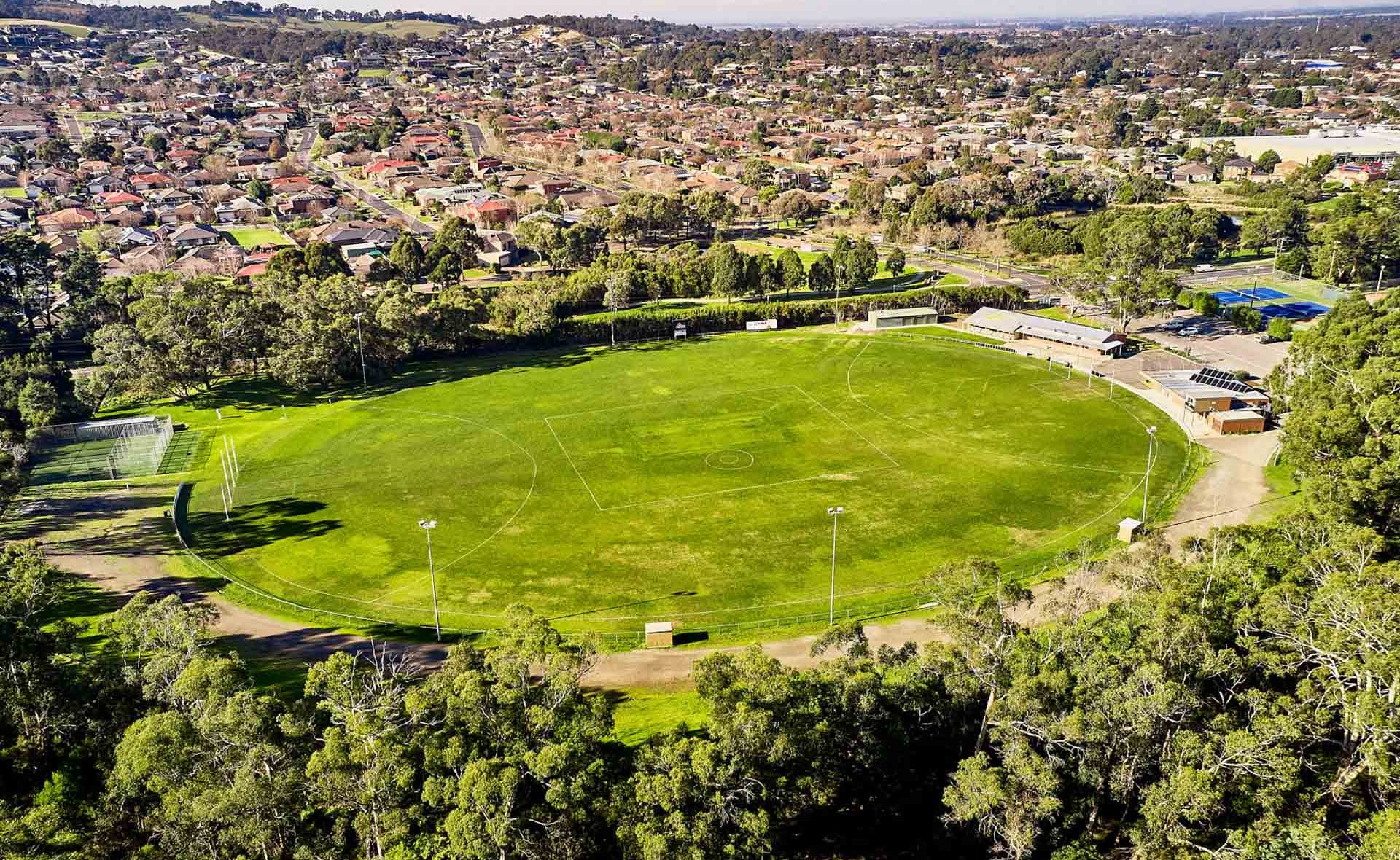
Drive south-east out of Melbourne, past Berwick, and you hit an area in the middle of becoming itself. Officer barely existed as a residential suburb fifteen years ago. Now it sits at the front of Cardinia Shire's growth, with master-planned estates still under construction and a brand-new town centre forming around the train station.
Beaconsfield, right next door, is older and leafier. A semi-rural retreat with a small commercial strip on the Princes Highway, a popular Sunday market at Akoonah Park, and roots that go back to a nineteenth-century farming settlement. Together they form one of the most concentrated young-family growth areas in Melbourne's south-east.
Mortgage stress is the everyday weight in Officer's newer streets. Buyers stretched into a seven-figure purchase and now watch the rates and the petrol bill. The commute grinds. Couples who moved out here for the home barely see each other on weekdays. In the newest estates, neighbours who arrived last year still don't quite know each other, and parents of young kids carry the loneliness of being far from family and the suburbs they grew up in.
The anchors are the school gates, the junior footy and netball clubs at Rob Porter Reserve, Akoonah Park Market on a Sunday, and the slow social gravity of the Beaconsfield strip. Nothing flashy. All of it the genuine connective tissue of a community trying to form itself in real time.
The demographic case is unusually strong. Twelve point seven per cent annual growth against a national average of one point three. A median age of thirty-three. Fifty-seven per cent of households are families with children. More than seven thousand young adults aged fifteen to thirty-four already live here, and the population is set to keep climbing for at least the next decade as the remaining estates fill in.
The cultural moment is just as significant. Officer is forming its identity now. The town centre is being built, the schools are filling, the sporting clubs are scaling up, the social fabric is being woven in real time. Churches that arrive in this window can become part of how the suburb learns to think of itself, rather than trying to break into a settled community years later.
The challenge is honest. Mortgage-stressed young families have little discretionary time. Distance and traffic shape every decision. The work will be slow, relational, and built on showing up at sidelines and school events long before anyone walks through a Sunday service. But the soil is open in a way it rarely is in established Melbourne.
Officer-Beaconsfield is roughly in line with the national average on religious affiliation, with about forty per cent identifying as Christian and thirty-eight per cent as having no religion. That is a more religious profile than inner Melbourne, but the trajectory is the same. Most young families here are not actively hostile to faith. They are simply busy, distracted, and one or two generations removed from any churchgoing memory. Belief is a private matter most have never been seriously invited to consider.

The existing Pentecostal and charismatic presence in the immediate area is thin for the population it serves. Hope Revolution sits inside Officer itself, a small charismatic community planted out of Beaconsfield Baptist. C3 Casey meets at the Federation University campus in Berwick, around ten minutes away. Planetshakers' south-east campus is fifteen minutes away in Narre Warren. The contemporary evangelical scene is stronger, anchored by Beaconsfield Baptist, Follow Church and CityLife Casey.
The gap is not the absence of churches. It is the gap between the existing capacity and a population growing by more than twelve per cent a year, dominated by young families with children, with seven thousand young adults aged fifteen to thirty-four. Even with current churches at full strength, most new arrivals will never walk through any of their doors.
Cost of Living and Housing. Officer's median house price has climbed past seven hundred thousand and the new estates keep coming. Beaconsfield runs higher again, especially the leafier pockets up the hill. Mortgage stress is real here. Most buyers are stretching into a thirty-year commitment on the strength of two incomes and a long commute.
Schools and Kids. The school list keeps growing as the population does. Officer Primary, Officer Secondary College, St Brigid's and St Clare's Catholic primaries, Maranatha Christian School, and St Francis Xavier College all sit within the suburb. Berwick Grammar's senior boys campus is here too. Kids' sport runs hard on weekends.
Weekend Life. Saturday morning is junior footy and netball at Rob Porter Recreation Reserve. Sunday is Akoonah Park Market in Beaconsfield, then a coffee on the Old Princes Highway. Bunyip State Park and the Dandenong Ranges sit a short drive away for families who want hills and gum trees.
Town Centre and Vibe. Officer's town centre is forming in real time around the station and Arena Shopping Centre. Beaconsfield has the older strip with cafes, a bakery, and the genuinely good restaurants. The whole area still feels suspended between paddock and suburb. Construction trucks share the road with school runs.
Nightlife and Culture. There is no real nightlife here, and most residents wouldn't want one. Dinner out usually means Beaconsfield's restaurant strip or a fifteen-minute drive into Berwick or Fountain Gate. For anything beyond that, the city is an hour away by train.
Melbourne CBD. 50 to 60 minutes by car via the Princes Freeway, around an hour by train from Officer or Cardinia Road stations on the Pakenham line.
Westfield Fountain Gate. 15 minutes by car. The major retail and entertainment hub for Melbourne's south-east, with cinemas, food, and most things a young family needs in one trip.
Berwick. 10 minutes by car. Established centre with cafes, the Federation University campus, Casey Hospital, and the closest Anglican and contemporary church options.
Casey Hospital. 15 minutes by car in Berwick. The main public hospital for the region.
Dandenong Ranges and Emerald. 20 to 30 minutes north. Bushwalks, Puffing Billy, and the cooler hill towns when the southern suburbs feel flat.
Phillip Island and the Bass Coast. Around 75 minutes south. The default summer escape for families across Cardinia.
Saturday morning at the Arena Shopping Centre carpark, the trolleys fill with weekly shops for households of four and five. Tradies in high-vis grabbing a coffee before heading on to the next site. Young mums pushing prams between the chemist and the bakery. Officer is a tradie, healthcare and young-family suburb. Construction, food manufacturing and motor vehicle parts run through the wider Cardinia economy, but most working residents commute out to Dandenong, the south-east industrial belt, or the city.
The cultural mix is broader than the older Cardinia townships. Indian, Sri Lankan, Filipino and Afghan families have moved in alongside the Anglo-Australian majority, drawn by new homes within reach of the south-east's job base. The First Nations population sits at six and a half per cent, well above the national average and one of the higher figures in metropolitan Melbourne. The median age is just thirty-three. This is a young suburb in the most literal sense.
Unpretentious, family-stage, comfortable in a tradies-and-young-mums world. Can talk school zones, mortgages, and AFL without forcing it. Patient with a community that is still forming and willing to spend years building before seeing scale.
Less suited: anyone wanting a polished, pre-formed cultural centre to plug into. There is no inner-city scene here, no warehouse aesthetic, no built-in young-adult subculture. The wins come from school gates, junior sport sidelines, and the slow work of being known.