
Beechboro is a multicultural pocket of north-east Perth where state housing meets first-home buyers, big block sizes meet new infill estates, and the Swan Valley sits twenty minutes up the road. Young families, working class, growing fast.
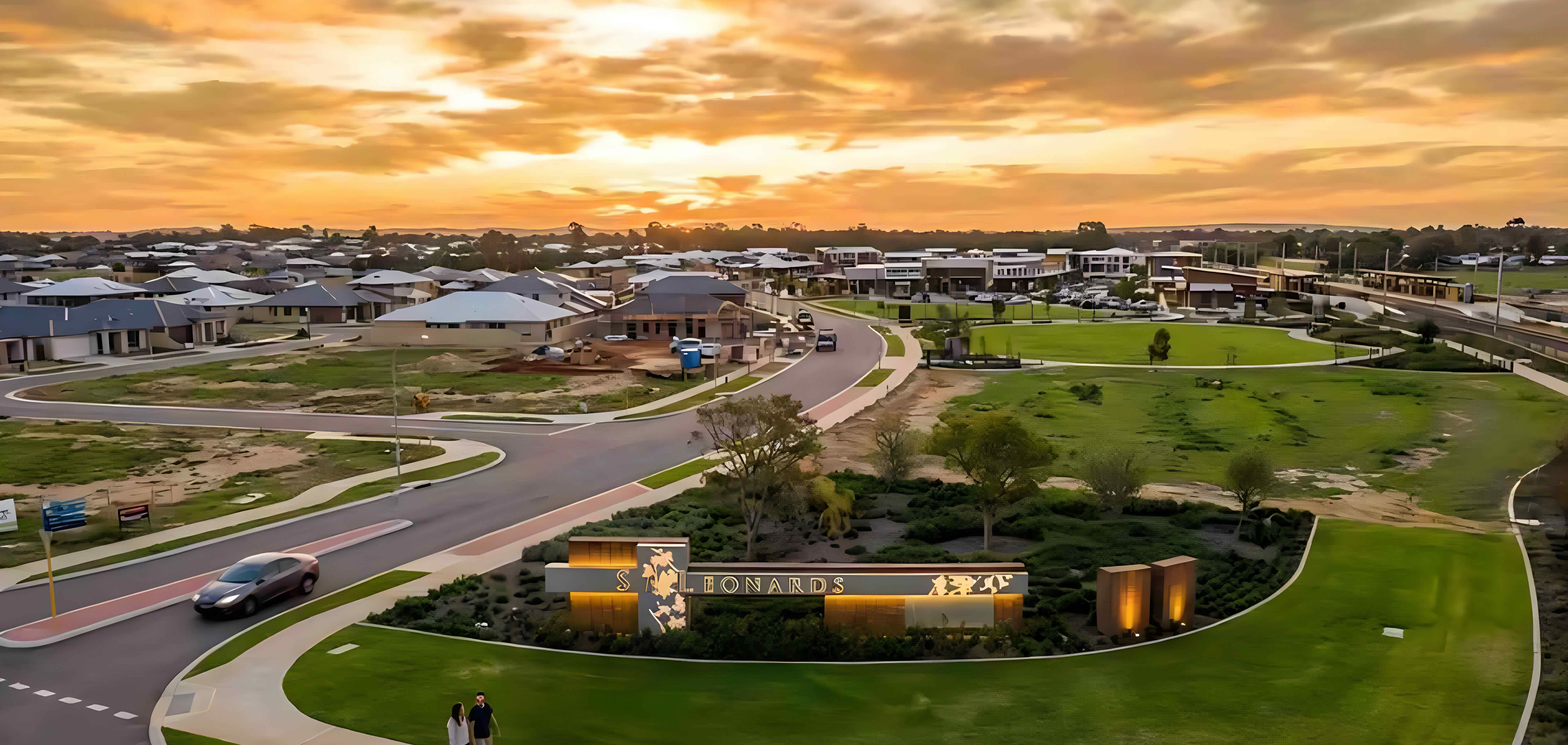
Drive twelve kilometres north-east out of Perth's CBD, past Bayswater and Morley, and the streets open up into wide brick-and-tile suburbia laid out in waves through the late 1970s and 1980s. Beechboro sits inside the City of Swan, bordered by Reid Highway to the north and Benara Road to the south, with Altone Park at its centre.
The suburb is changing. Roe Estate is bringing around 105 new green-title homesites onto the former John Septimus Roe Anglican school site, and Bennett Springs to the east has just finished its 600-home build-out. The shopping strips along Beechboro Road and Altone Road carry the suburb's daily rhythm, and the Swan Valley wineries sit on the doorstep.
The hard things here are quietly present. Mortgage and rental stress in a state-housing-heavy suburb where many families are stretched. Pockets of antisocial behaviour and property crime that locals talk about openly. Social isolation across cultural lines, where households from very different backgrounds share a street but not a kitchen table. Youth disconnection along the Lockridge edge. The kind of low-level loneliness that comes with shift work, FIFO rosters and parents simply trying to hold the week together.
The anchors are Altone Park with its pool, gym and library, the junior sporting clubs, the local primary schools, and the cluster of small churches scattered through the suburb. The City of Swan's community events programme pulls people out of their homes across the year. Most of all, Beechboro runs on neighbour-to-neighbour goodwill and cultural community networks operating just below the surface.
Beechboro presents a rare combination in metropolitan Perth: strong population growth, a young median age, an unusually high proportion of families with children, and a multicultural community that is already spiritually open. More than half of households are raising kids. Just under thirty per cent of residents are aged 15 to 34. The non-religious figure sits well below the national average.
Sitting alongside that is a genuine gap for a contemporary church speaking the cultural language of younger Perth. There are existing Pentecostal churches in the area, but the demographic the suburb is producing — second-generation migrant young adults, mortgage-stretched young families, First Nations residents at well above the metro rate — is largely unreached by anything that feels current.
It will be hard ground in places. State housing and pockets of social disadvantage mean ministry here costs something, and the multicultural complexity means leadership has to work harder to build genuine community across lines. But the soil is real. Families are arriving, the suburb is growing, and Perth's north-east is one of the most under-churched parts of the city for contemporary expressions of faith.
Beechboro sits well below the national average for non-religious identification, with around 30.5% ticking 'no religion' compared to 38.9% nationally. Christian affiliation at 38.8% is also softer than the national 43.9%, reflecting both the suburb's strong migrant communities (which carry significant Buddhist, Hindu, Muslim and Sikh populations) and a generation of younger residents drifting from cultural Christianity. The trajectory is gentler secularisation alongside genuine religious diversity, rather than the hard secularism of inner Perth. People here are open to spiritual conversation; many are practising something already.

Beechboro carries a surprisingly thick layer of small Pentecostal and charismatic congregations for its size. ACC, Foursquare, Potter's House and several independents are all represented within the suburb itself, and Morley, Bayswater and Malaga add more around the edges. What is largely absent is a contemporary, culturally-current Pentecostal church pitched at the under-forties demographic that Beechboro is full of. The existing churches tend to be smaller, longer-established and serving particular cultural or generational pockets.
The gap is for a contemporary expression that genuinely speaks to young Anglo, second-generation migrant, and First Nations families navigating modern Perth life. A church where the worship music sounds like what people listen to in the car, where the preaching engages with the real pressures of mortgage stress and shift work, and where multicultural Beechboro can find each other across the cultural lines that ordinarily keep people in their own networks.
Cost of Living and Housing. Beechboro is one of the more affordable footholds inside metropolitan Perth. Median weekly rent sits around the $350 mark and median monthly mortgage repayments come in below the Perth metro average. Block sizes are generous by modern standards, typically 600 to 800 square metres in the older sections, with newer infill on smaller lots. State housing is woven throughout, sitting alongside owner-occupied homes and a strong rental cohort.
Schools and Kids. Families have a mix of public primaries inside the suburb, the local high school catchment running through Lockridge, plus Beechboro Christian School and Anglican options nearby. The big draw for kids is Altone Park, with its swimming pool, gym, library and sporting fields all on the one site, plus the Pasterfield-style sense that local sport runs the weekend.
Weekend Life. Saturdays here often start at the local shops, head to junior footy or netball at Altone Park, and end up in the Swan Valley by mid-afternoon. The wineries, breweries and farm-gate produce of one of Western Australia's most celebrated wine regions sit ten minutes up the road. The Indian Ocean is twenty-five minutes the other way.
Town Centre and Vibe. Beechboro doesn't have a single town centre so much as several daily-life nodes. Beechboro Central with its Coles, the Altone Road strip with Woolworths and ALDI, the IGA and the small specialty shops in between. The vibe is practical, multicultural, unpretentious. People know their butcher and their bakery.
Nightlife and Culture. For an evening out, residents drift to Morley Galleria, the Bassendean strip, or push into the Swan Valley for a long lunch or a brewery dinner. The suburb itself is quiet after dark. Cultural life shows up at home and at church, in family gatherings, and through the events programme run by the City of Swan across the year.
Perth CBD. Around 12 kilometres south-west, 20 to 25 minutes by car via Tonkin Highway or Beaufort Street outside peak.
Morley Galleria. 5 to 10 minutes by car. The dominant shopping and entertainment destination for the north-east.
Swan Valley. On the doorstep. Wineries, breweries and the Caversham Wildlife Park all within 10 minutes.
Perth Airport. Both the international and domestic terminals sit roughly 15 minutes by car, a genuine asset for FIFO households and frequent travellers.
Midland Hospital. Around 20 minutes east. The major public hospital and health precinct serving Perth's north-east.
Bassendean Train Station. The closest passenger rail link, around 5 minutes by car or a longer bus ride. Buses on routes 350, 353, 354 and 355 connect Beechboro to Galleria, Mirrabooka and Whiteman Park.
Scarborough Beach. 25 minutes west when the traffic is kind.
Saturday morning at Altone Park, the carpark fills with utes and family wagons. Kids in football jerseys, parents juggling coffees and younger siblings, neighbours nodding hello across the boundary fence. This is a working-class and lower-middle-class community. Tradies, healthcare workers, hospitality staff, transport and logistics workers, plenty of FIFO families with the airport so close. First-home buyers who priced out of Bayswater or Inglewood and found their way here.
Beechboro is genuinely multicultural. Long-standing Anglo-Australian families sit alongside significant Vietnamese, Indian, Filipino, African and Middle Eastern communities, with state housing scattered through the older sections shaping a real socio-economic mix. First Nations residents make up just over six per cent of the population, well above the metropolitan average. The median age is younger than the national figure, and more than half of households are families with children. This is a suburb full of school runs, prams at the shops, and three generations under one roof in some streets.
Down-to-earth. Multiculturally fluent. Comfortable in a working-class room without performing it. Knows the Swan Valley but isn't precious about it. Can sit with a Vietnamese grandmother, a FIFO dad, and a single mum from the state-housing block in the same afternoon and have each feel respected.
This isn't a suburb where polished branding will carry you. The planter who thrives here is patient, consistent, present at the school gate and the football sideline, and willing to play a long game in a community that has seen plenty of churches come and go. Practical theology over conference theology. Faithfulness over flair.