
Boronia Heights and Park Ridge sit at the front edge of Logan's southern push. Once bushland and poultry farms, now one of South East Queensland's fastest-growing residential frontiers, with young families flooding in faster than the roads can keep up.
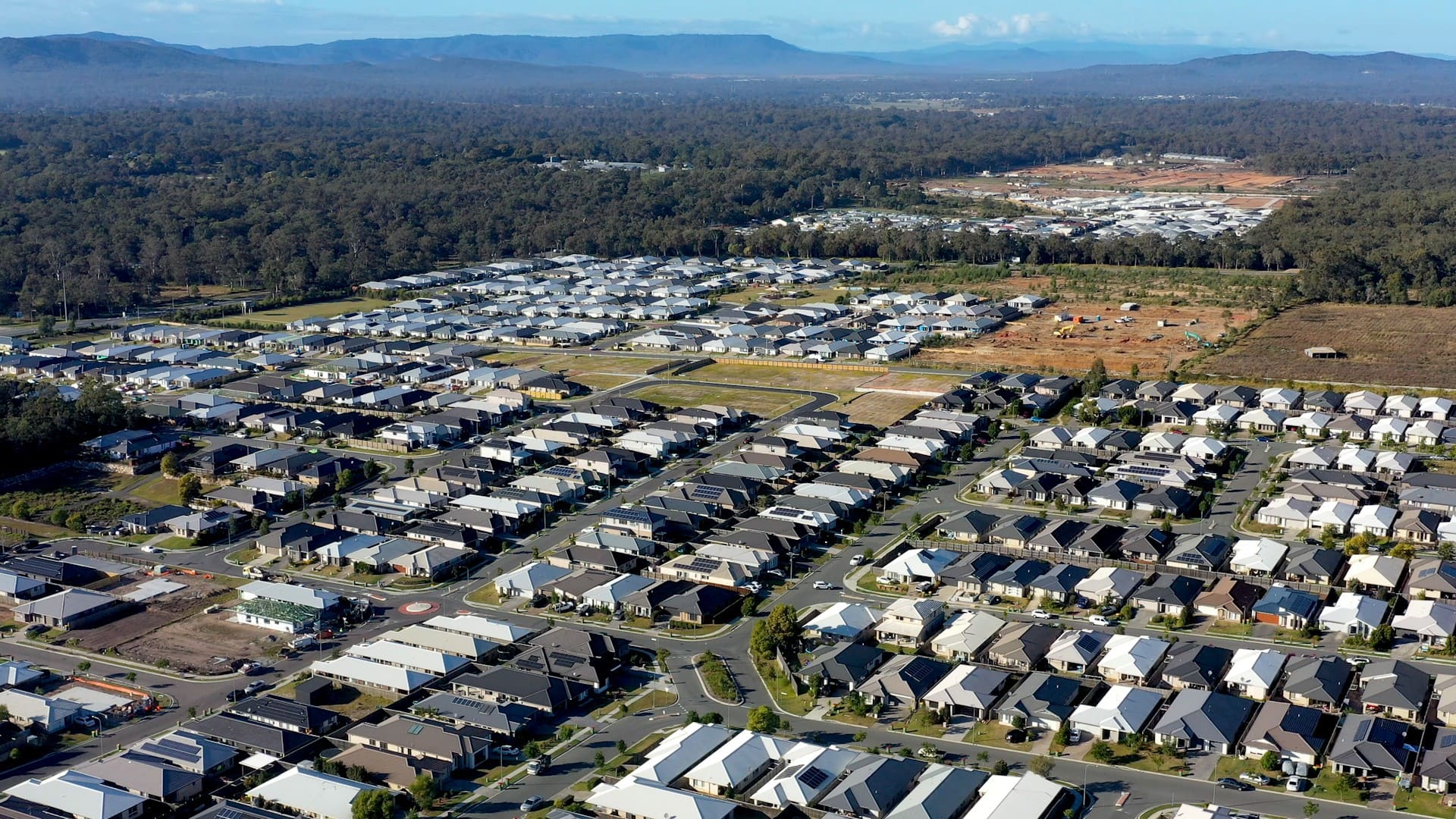
Drive south down the Mount Lindesay Highway out of Browns Plains, past the bushland reserves, and you cross into a part of Logan that is changing faster than almost anywhere else in South East Queensland. Boronia Heights is the older sibling, a 1990s housing estate hemmed in by Scrubby Creek and the Boronia Bushland Reserve. Park Ridge, sprawling east across the highway, is the newer story.
The State Government has earmarked Park Ridge for around 12,000 new dwellings and roughly 30,000 people by 2041. Bulldozers are working through what was paddock five years ago. New estates, new schools, a Park Ridge Connector road preserved for the next two decades. The community taking shape here is still figuring out who it is.
Mortgage stress, rental pressure and traffic dominate the kitchen-table conversations. Chambers Flat Road and the Mount Lindesay Highway are notoriously congested in peak hour, with road upgrades trying to catch up to a population that arrived first. Many residents have moved here from somewhere else in greater Brisbane and are still finding their feet. The newest streets in particular have neighbours who barely know each other yet, and the loneliness that comes with that is real, especially for young mums at home with small children.
The anchors are the schools, the junior sport clubs, the bushland reserves and the small handful of community spaces along Middle Road and the highway. The Browns Plains Early Years Centre runs free playgroups that pull young parents together from across the area. Christian schools and church communities carry a disproportionate share of the social glue. Almost everything that holds people together here is being built from scratch alongside the houses.
The demographic case is unusually strong. Population growth running at well over seven times the national rate. A median age in the early thirties. Almost one resident in three a young adult. Nearly half of all households are families with children. This is exactly the life stage that contemporary church most naturally connects with, gathered in volume in one of the most affordable parts of greater Brisbane.
The cultural moment is just as significant. Park Ridge in particular is being built right now. New estates, new schools, new neighbours arriving every month, all of them looking for community of some kind. There is a rare window where a church can grow up alongside the suburb rather than arrive after it has already settled into other rhythms.
The challenge is honest. There is little inherited church culture. Mortgage stress is real. Volunteer capacity in young-family households is always tight. But for someone willing to plant for the long haul in a place that is genuinely on the move, Boronia Heights and Park Ridge offer one of the clearest opportunities in South East Queensland.
Around four in ten residents tick no religion at the census, narrowly above the national figure, and Christian affiliation has slipped under forty per cent. The trajectory mirrors the wider Logan picture: identification with church is fading, but spiritual openness has not collapsed in the way it has in inner-city Brisbane. Pacific Islander, African and South Asian communities still carry strong faith identity into the area, and the sheer volume of young families means questions of meaning, parenting, marriage and belonging are very much live.

The existing Pentecostal and charismatic presence in the immediate area is thin. Parklands Christian Centre on the Mount Lindesay Highway is the long-established ACC anchor and the most visible Pentecostal option locally. Life and Legacy Church serves the Hillcrest end of the area. Beyond those, contemporary evangelical options are limited to a handful of Baptist congregations of varying styles in Park Ridge and Browns Plains.
For a population pushing 20,000 and forecast to keep climbing through the 2030s, that is a narrow field of contemporary church options. The gap is most obvious for young adults and young families looking for a modern worship expression, mid-week community life and ministry pitched at the life stage that defines this area: late twenties to mid thirties, kids under ten, working hard, time poor, hungry for connection.
Cost of Living and Housing. Boronia Heights and Park Ridge are still among the more affordable corners of greater Brisbane, though that gap is closing fast. Houses dominate, with very few apartments. Rentals make up close to half of all dwellings, and median rents and mortgages sit a touch under the Brisbane metro average. Land releases continue to draw first-home buyers priced out of inner Brisbane and the Gold Coast.
Schools and Kids. Boronia Heights State School and Park Ridge State School anchor the primary years, with Park Ridge State High School the main secondary option, now sitting at well over 1,500 students. Parklands Christian College runs alongside Parklands Christian Centre on the highway. New estates are pushing demand on every campus, and school carparks at 3pm tell the story of how young this area has become.
Weekend Life. Saturdays revolve around junior sport, the Boronia Bushland Reserve and the linear parks along Scrubby Creek. Kangaroos at dusk are still part of the deal here. Grand Plaza at Browns Plains, ten minutes north, soaks up the bigger shopping runs. Parents and kids cycle the bike paths or head out to Greenbank for the bushwalks.
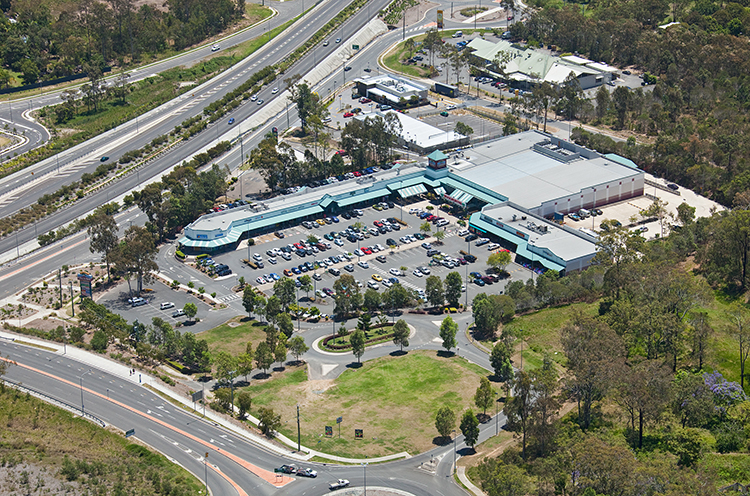
Town Centre and Vibe. There is no real town centre yet, and that is part of the story. The Short Street shops in Boronia Heights handle the basics. Park Ridge has a drive-in shopping centre opposite the primary school and a small but growing run of services along the highway. Most of the social and retail gravity pulls north to Browns Plains or south to Logan Reserve.
Nightlife and Culture. Quiet on a Friday night by design. The Park Ridge Tavern handles the local crowd, and most night-life happens further afield in Browns Plains, Springwood or down the M1. This is family territory, not a dining or bar scene. People here head home for a barbecue rather than out for a cocktail.
Brisbane CBD. Around 30 to 40 minutes by car via the Mount Lindesay Highway and the Logan Motorway, longer in peak. Translink buses run from the Park Ridge Park and Ride.
Browns Plains and Grand Plaza. Ten minutes north. Major shopping, cinemas, medical centres, and the regional retail anchor for southern Logan.
Logan Hospital, Meadowbrook. About 20 minutes east. The main public hospital for the Logan and Beaudesert region, with Griffith University Logan campus next door.
Gold Coast. Around 50 minutes south down the M1, putting beaches, theme parks and Surfers Paradise within easy weekend reach.
Brisbane Airport. Around 40 to 50 minutes via the Gateway Motorway, depending on traffic.
Yarrabilba and Flagstone. 20 to 30 minutes south. Two of the other major Logan growth areas, both planned to keep expanding rapidly through the 2030s.
Saturday morning at the local sports fields the carparks fill with utes and family wagons, kids in football boots, parents juggling coffees and younger siblings. This is tradie territory. Construction, healthcare, retail and manufacturing dominate the working week, in line with the broader Park Ridge employment picture. Many residents commute north to Browns Plains, Acacia Ridge or into Brisbane proper, while a growing number work in the Crestmead industrial estate or the new warehouses going up along Belvedere Drive.
The cultural mix is broader than a first drive through suggests. Pacific Islander families, particularly Samoan, have a long-standing presence here, alongside growing Indian, Filipino and African communities. First Nations residents make up around one in twenty people, well above the metropolitan average. Median age sits just above 32, almost six years younger than the national figure. This is a young, working, family-stage community where the next set of neighbours is usually a couple in their late twenties with a baby and a mortgage on a new build.
Down to earth. Comfortable in working suburbia. Can stand on the sideline at junior football, talk to a tradie at Bunnings, sit with a young mum exhausted in a new estate without making her feel judged. Cross-cultural intuition matters here. Pacific, African and South Asian families are part of the fabric, not an outreach project.
What will not work is a polished, attractional model that depends on inherited Christian curiosity. This is a build-from-the-ground community in every sense. The planter who thrives here is patient with slow relational growth, energised by young families, and willing to plant a flag in a place that is still becoming itself.