
Brisbane's CBD is a dense, fast-growing residential heart full of young professionals, international students and apartment dwellers. Half the population is under 35, two-thirds live alone or as couples without kids, and almost half tick no religion.
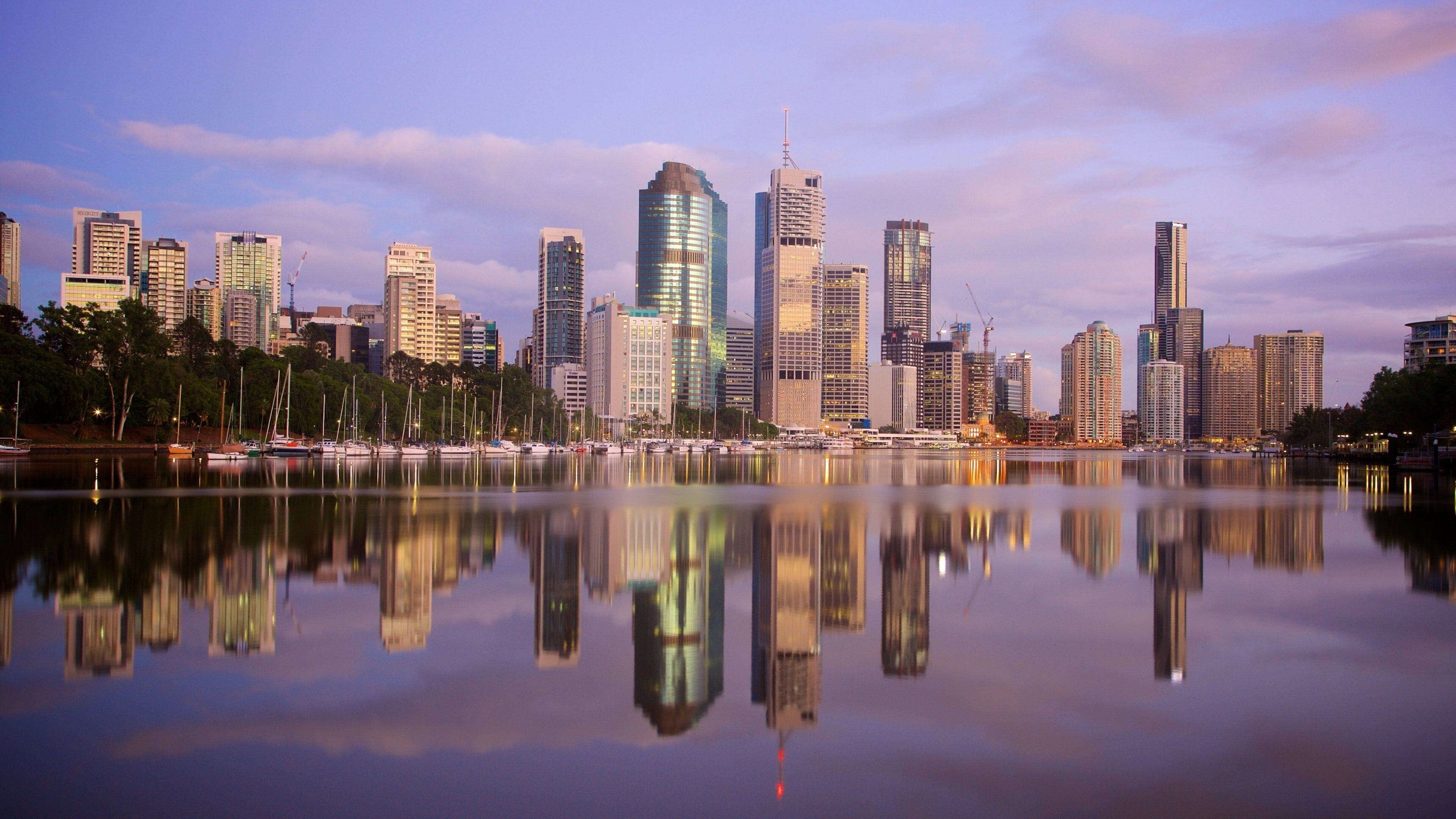
Walk through the Queen Street Mall on a Thursday evening and the city no longer feels like a place people just commute to. The towers above the shopfronts are full of one and two-bedroom apartments. Lights are on. Someone is cooking dinner forty floors up.
Brisbane City has quietly become one of the country's fastest-growing residential populations. Cross River Rail is reshaping the centre. Queen's Wharf has opened. The 2032 Olympics is on the horizon. And in the middle of all of it lives a community of young adults, students and downsizers who almost never appear in the church-planting conversation.
Loneliness is the defining ache of the Brisbane CBD. People live in buildings of three hundred apartments and don't know a single neighbour. International students arrive without family. Young professionals work long hours in towers and come home to a one-bedroom on the 28th floor. The rate of households living alone or as couples without children is far above the national picture, and mental health services in the inner city are stretched. Disconnection here is a quiet, mostly private thing.
The anchors are smaller and less obvious than in a suburb. The CityCat commute. The lunchtime run-clubs along the river. The Queen Street buskers. QUT student life. Howard Smith Wharves on a sunny weekend. The cafe where the barista knows your order. People here connect through routine and proximity more than through formal community.
Brisbane City carries one of the strongest young-adult concentrations in the country. Over half the population is between 15 and 34, against a national 27.2%. The growth rate of 5.5% per year sits more than four times the national average. The CBD is being reshaped by Cross River Rail, Queen's Wharf and Olympic infrastructure, and the residential population is climbing in step.
Almost half the residents identify as non-religious, and only 13.6% of households are families with children. This is a market for a church built around young adults, students and singles — a community that meets people in the loneliness of inner-city living and offers something deeper than the cafe and the gym.
It will not be a fast win. CBD plants take time to find rhythm and the transient population means a constant cycle of new faces and goodbyes. But the human density, the walkability, the cultural moment around the 2032 Olympics, and the sheer concentration of unchurched young adults make this one of the most strategic city centres in the country to consider.
Brisbane City is among the more secular pockets of Queensland. Almost half of residents (48.6%) tick no religion on the census, well above the national 38.9%, and Christian affiliation sits at 29.8% against a national 43.9%. The posture isn't hostile — it's mostly indifferent. For a generation of young professionals and international students living in the towers, faith is neither rejected nor explored. It simply doesn't come up. Any plant here begins by being interesting enough to notice.
The contemporary church footprint in the CBD is small relative to the population it sits among. Hillsong's Downtown Campus on George Street is the only Pentecostal/charismatic church meeting inside the city itself. Newlife Church gathers at St Andrew's Uniting on Ann Street, Gateway Baptist runs a city campus, and Your Church in Brisbane City (Churches of Christ) meets on Ann Street. City on a Hill sits across the river in South Brisbane.
Together these represent a thin presence for an inner city of more than thirteen thousand residents and a daytime population many times that. Most of the 7,000-plus young adults living here have no immediate, walkable contemporary expression of faith that is distinctly built around their stage of life and their experience of city living. The gap is not absence but density.
Cost of Living and Housing. The CBD is apartment country. One-bedroom rentals start around the mid-$500s a week and climb fast for anything with a river view. Buying in is expensive but smaller in footprint than the suburbs, which suits the demographic. Almost no one here owns a free-standing house.
Schools and Kids. Families with children make up just 13.6% of the population, well below the national 40.2%, so this is not a school-gate community in the traditional sense. The few families who stay tend to use Brisbane Central State School, Brisbane State High across the river, or the city's strong independent options. Most parents move out when the second child arrives.
Weekend Life. Saturday morning is South Bank, the riverside walk, the markets at Eagle Street Pier. Afternoons drift toward the Botanic Gardens, the GOMA cafe, or a CityCat to New Farm. The river is the spine of weekend life here in a way it isn't anywhere else in the city.
Town Centre and Vibe. The Queen Street Mall remains the daytime heart, but the energy has shifted toward Queen's Wharf, Howard Smith Wharves under the Story Bridge, and the laneway bars between Eagle and Edward Streets. The CBD has stopped emptying out at 6pm.
Nightlife and Culture. QPAC and the cultural precinct sit a bridge away in South Bank. Live music spills out of the Valley to the north. The Brisbane Powerhouse is a CityCat ride. Eagle Lane, Felons Brewing, the rooftop bars on Edward Street — there is more here on a Friday night than there has been in a generation.
Brisbane Central Station. In the CBD itself. Cross River Rail is reshaping how the centre connects to the rest of the city, with new underground stations opening within walking distance.
South Bank and the Cultural Precinct. 10 minutes on foot across the Victoria Bridge. QPAC, the State Library, GOMA and the Queensland Museum sit on the south bank of the river.
Fortitude Valley. 5 to 10 minutes by foot or train. Brisbane's nightlife and music heart, with a heavy young-adult overlap with the CBD apartment population.
Royal Brisbane and Women's Hospital. 10 minutes by car or bus, just north in Herston. The major public hospital and a significant employer of CBD-fringe residents.
University of Queensland (St Lucia). 15 to 20 minutes by CityCat or bus. QUT's Gardens Point campus sits inside the CBD itself, putting tens of thousands of students on the doorstep.
Brisbane Airport. 20 to 25 minutes by Airtrain or car. International and domestic terminals connect directly to Central Station.
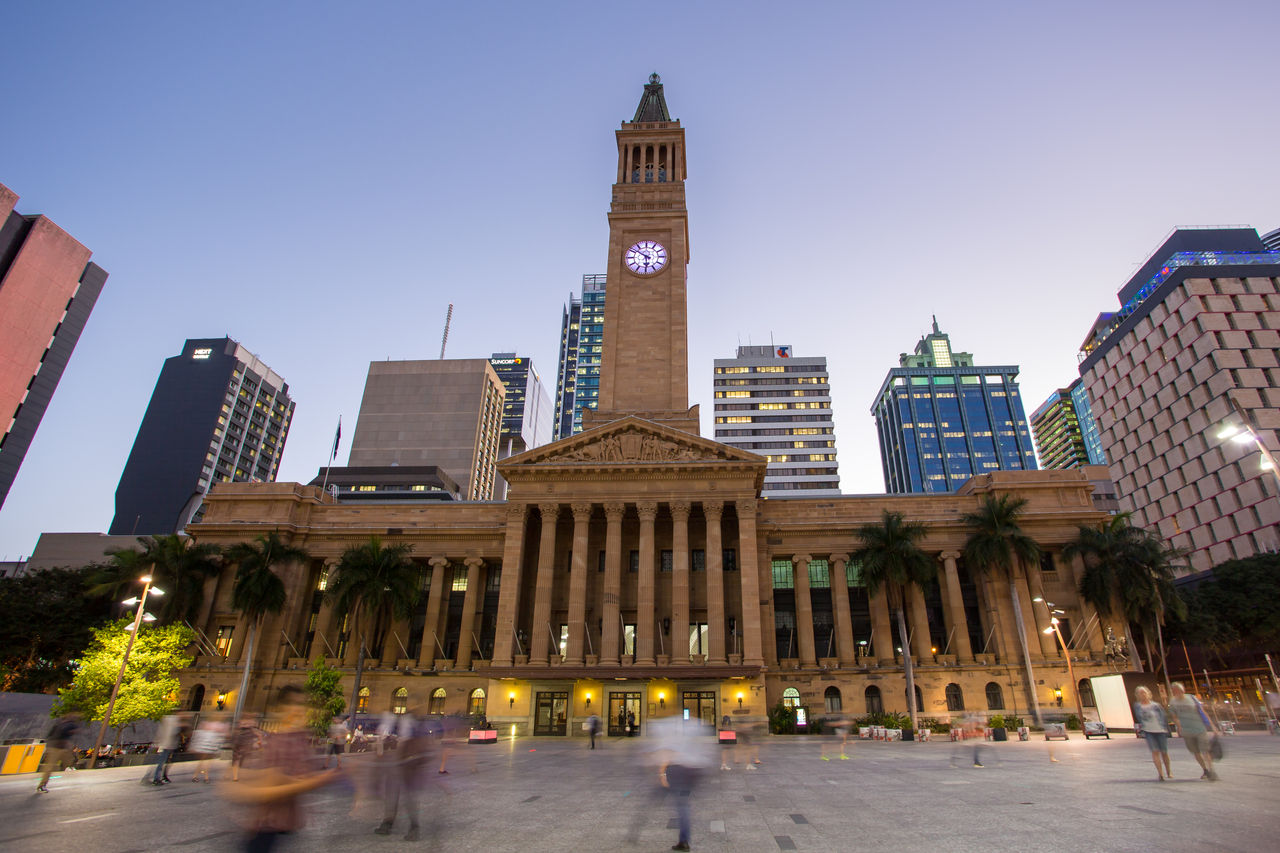
Tuesday morning at a King George Square cafe, the queue is QUT students with laptops, lawyers in good shoes, a couple of nurses heading off shift, and a tradie subcontracting on one of the towers going up two blocks over. More than half the people walking past are between 15 and 34. Half again are renting alone, or with a partner, in a building where they don't know any of their neighbours' names.
This is a young, transient, internationally connected population. International students from QUT and the city campuses of UQ and Griffith fill the mid-rise apartments around Edward and Margaret Streets. Young professionals in finance, law, government, hospitality and tech fill the towers. There are downsizers from Ascot and Hamilton in the premium apartments along the river. And under it all sits a steady undercurrent of people just passing through — six-month leases, working holidays, postgrad stints. The First Nations population sits at 1.1%, slightly below the national average for an inner city.
City literate. Comfortable in a third-space cafe, on a CityCat, walking into a tower lobby without feeling out of place. Probably late twenties to late thirties. Has lived in or loved a major city before and knows the rhythms — the late starts, the long hours, the Sunday-as-recovery-day reality of how young professionals actually live.
Hospitable, patient with transience, not threatened by people who come for six months and leave. Skilled at building community out of strangers and warmth out of cold buildings. A planter who needs full pews from week one will struggle here. A planter who can hold a small, faithful gathering and trust it to grow will find it.