
Byford was a rural township a generation ago. Now it's one of Perth's fastest-growing south-eastern suburbs, where young families on big blocks are reshaping a town that still remembers its hobby farms and brickworks.
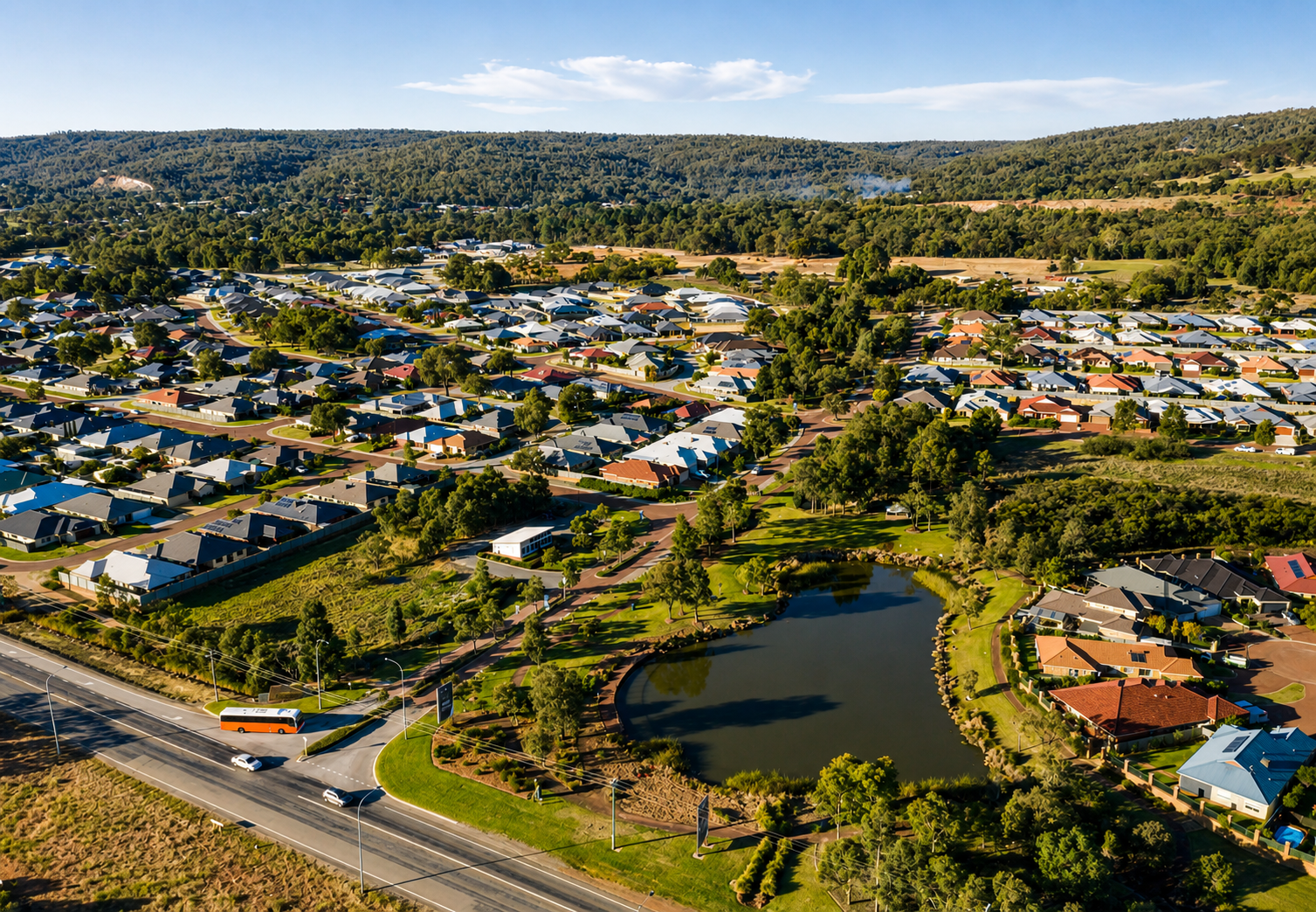
Drive south-east out of Perth along the South Western Highway, past Armadale and the foothills of the Darling Scarp, and you arrive in Byford. A decade ago this was paddocks, orchards and equine hobby farms. Today bulldozers are still turning bushland into family-sized blocks, and the new Metronet rail extension is lifting the suburb into the daily rhythm of metropolitan Perth.
The Shire of Serpentine-Jarrahdale is building a new town centre around Briggs Park, a library at Byford Hall and a planned health hub. Schools have multiplied. The community forming inside all this growth is young, family-heavy, and still figuring out who it is becoming.
Mortgage stress is real in the newer estates. Many families stretched into a house and land package and now feel the squeeze of interest rates and a long commute. Loneliness shows up too, particularly for parents who moved in eighteen months ago and still don't know their neighbours' names. Youth disconnection is rising as the secondary school cohort grows faster than the social infrastructure around it. And the older Byford locals, the ones who remember when this was a township of dairy farms and brickyards, sometimes feel quietly displaced by the speed of the change.
The anchors are the schools, the junior sport clubs, the Briggs Park recreation precinct, the new library at Byford Hall, and the slow gravity of school gates and side-line conversations. The Byford and Districts Country Club holds a long memory. Briggs Park, officially opened in April 2026, is becoming the new heart of community life. Nothing flashy. All of it essential.
The demographic profile is a planter's dream. A young population. A median age of 31. Nearly 30 percent young adults. Almost 60 percent of families have children at home. Annual growth running at 4.9 percent, almost four times the national rate. Thousands of new residents arriving every year into estates where neighbours are still introducing themselves.
The spiritual gap is just as clear. Half the suburb identifies as non-religious, but Christian affiliation is still over a third, and a meaningful proportion of those families would respond to a warm, family-focused church if one was within easy reach. The First Nations population at 7.4 percent calls for genuine cultural humility and partnership.
This is hard, slow ground in some ways. New suburbs take time to grow social roots, and a planter here is building something for the long arc of a community that is still becoming itself. But for the planter who can hold the long view and love the school gate, Byford carries every marker of strong opportunity.
Byford is more secular than the national average and noticeably so. Just over half of residents tick no religion on the census, while Christian affiliation sits at 36.3 percent, below the national figure. The trajectory is the familiar one: young families moving from secularising parts of metropolitan Perth, bringing with them a polite indifference to organised religion rather than active hostility. Faith here is not contested so much as quietly absent from most weekly conversations, even though many households would happily send a child to a Christian school or attend a Christmas service.

The Pentecostal and contemporary evangelical footprint inside Byford itself is light. Centrepoint Church Byford serves the suburb in the Pentecostal and charismatic stream, and Byford Baptist provides a longer-standing evangelical option. Beyond that, the closest contemporary churches sit in Armadale, around ten to fifteen minutes north, and most are working hard to reach their own catchments rather than Byford specifically.
For a suburb adding several thousand new residents a year, predominantly young families with children, that footprint is thin. Many of the new estates are growing faster than any single church can keep pace with, and the cultural mix and First Nations presence add layers that ask more of the local church than a single existing congregation can carry alone.
Cost of Living and Housing. Byford is built on big blocks. New estates around Glades and The Grove are still selling house-and-land packages, and the median house price sits in the high six figures, well below Perth's inner ring. Most homes are double-garage, four-bedroom, with room for a trampoline and a dog. Rents are tight; vacancies clear in a fortnight.
Schools and Kids. The school landscape has exploded. Byford Primary, Marri Grove, Woodland Grove and Beenyup all serve the suburb's primary cohort, with Byford Secondary College the only public high school in the shire. Salvado Catholic College runs Kindergarten to Year 12, and Byford John Calvin School serves the Reformed community. Junior sport runs through the local clubs and ovals.
Weekend Life. Saturdays mean kids' sport, the local IGA, a coffee from the Briggs Park precinct, and a drive into the Jarrah forest behind the suburb. The Darling Scarp is on the doorstep. Locals walk the trails at Wungong Regional Park, ride bikes through Cardup, or head to the wineries at Bickley and Carmel for a long lunch.
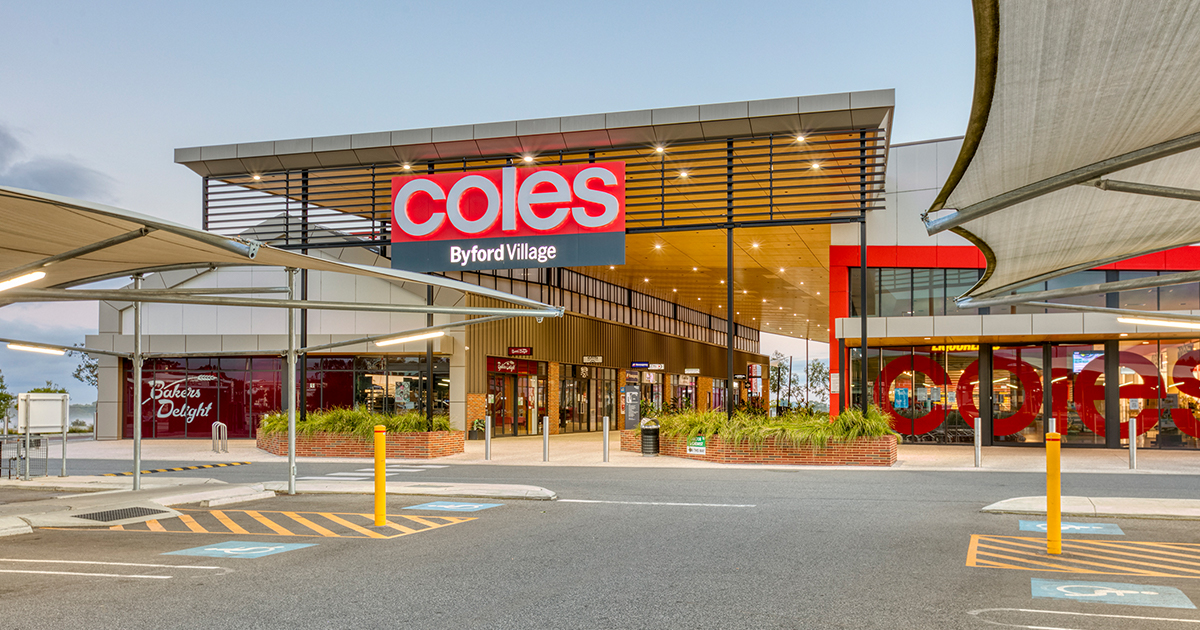
Town Centre and Vibe. The town centre is mid-build. The Shire is shaping a civic precinct around Byford Hall, the library, the splash park and the future health hub. There are bakeries, a new Woolworths, a tavern, and a handful of independent cafes. It feels like a town centre still earning its identity.
Nightlife and Culture. Honest answer: not much. The Byford Tavern is the local. For a night out, people drive into Armadale or Cockburn Gateway, or further into Perth. This is a suburb where the social rhythm runs through schools, sport and the back deck rather than bars.
Perth CBD. Around 45 minutes by car via the Kwinana Freeway, or a single train line away once Metronet's Byford extension is fully running.
Armadale. 10 to 15 minutes north along the South Western Highway. The nearest major shopping, hospital and train interchange.
Cockburn Gateway and Kwinana. 25 to 30 minutes west along Thomas Road. Major retail, the strategic centre, and the industrial employment base around the Kwinana strip.
Mandurah and the coast. 35 to 45 minutes south. The nearest beach run, weekend escape, and Peel region centre.
Perth Airport. Around 35 minutes north via Tonkin Highway. Reachable but not close.
The Darling Scarp and Jarrahdale. 15 minutes east into the hills. Forest, wineries, and the old timber towns that give this part of Perth its character.
Saturday morning at the Byford ovals, the carpark is full of dual-cab utes and family SUVs. Tradies in hi-vis grabbing coffee on their way to a job, mums coordinating the soccer roster, grandparents watching from camp chairs. This is a young, family-heavy suburb. Nearly six in ten households have children at home, the median age sits at 31, and a big share of the population is in the working years between 15 and 34. People moved here for the block size, the price point, and the chance to raise kids on a quiet street.
The cultural mix leans Anglo-Australian, with notable English, New Zealander and Indian-born communities and a meaningful First Nations population at 7.4 percent, well above the metropolitan average. You'll meet FIFO workers home for their week off, healthcare workers commuting to Armadale or Murdoch, small-business owners running trades from the home shed, and a steady stream of new arrivals still unpacking boxes. There's an equine subculture too: horse properties stretch east toward Cardup and Oakford, and the Saturday riding lesson is part of the rhythm of life here.
Unpretentious, family-comfortable, at home in tradie and FIFO culture. Can talk footy codes, can stand on a sideline, can fix something with the tools in their boot. Builds slowly, follows through, turns up.
A planter who needs the buzz of an inner-city scene will struggle. A planter who genuinely loves young families, who is happy to do school drop-off conversations and Saturday morning sport ministry, who is willing to plant for the long haul of a still-forming suburb, will find Byford full of open doors.