
Cranbourne West has more than doubled in a decade, paddocks turning into estates almost in real time. It's young, family-heavy, culturally mixed and growing fast. The community is still figuring out who it is.
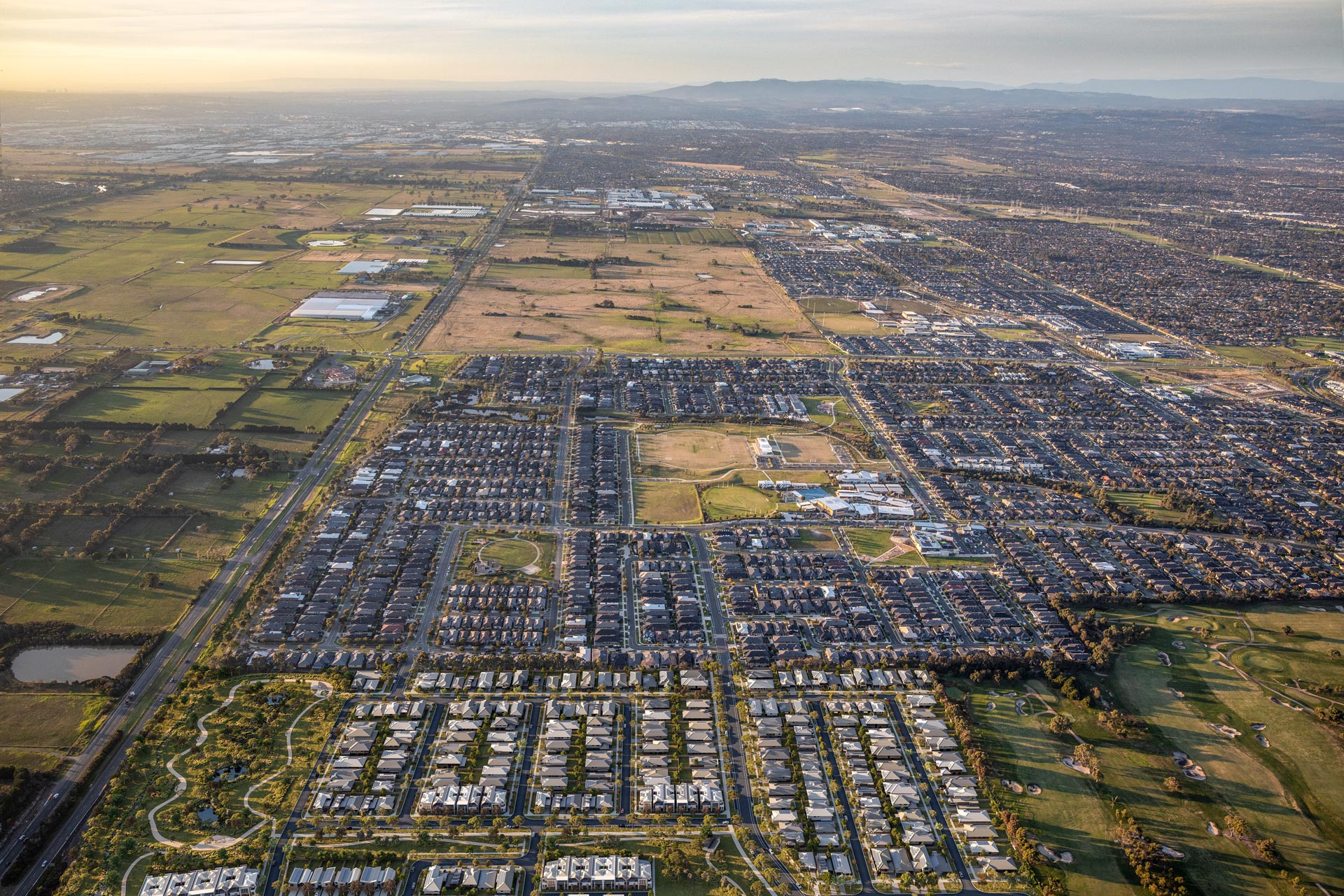
Drive south-east out of Melbourne, past Dandenong and through the edge of the City of Casey, and you arrive in an area where the bulldozers have barely stopped. Cranbourne West sits roughly 40 to 45 kilometres from the CBD, sandwiched between the Western Port Highway, the South Gippsland Highway and an industrial belt that includes the new Rangebank Business Park.
The suburb's population more than doubled between 2011 and 2021, and it has kept climbing. New estates, a Woolworths-anchored shopping centre, the Cranbourne West Community Hub on Flicka Boulevard, two primary schools and a secondary college have all arrived inside a single decade. The community living here now is overwhelmingly young, family-heavy and still in the process of forming.
Mortgage stress is real here. Rates have climbed, fuel and grocery prices bite, and many of the families who bought in the past five years are stretched. New estates can feel socially thin, with neighbours who moved in within twelve months of each other still learning each other's names. Young parents talk about isolation, the long commute eating into family time, and the difficulty of finding childcare. The First Nations community carries its own layered story of dispossession and resilience that the suburb's newness does not erase.
The anchors are simple and strong: junior football and cricket clubs, school communities, the Community Hub, the local mosque and temples, and the slow social gravity of the bigger Cranbourne township just down the road. The Royal Botanic Gardens Cranbourne functions as a shared backyard. Nothing flashy, all of it essential.
The demographic case is hard to ignore. More than 21,000 residents, growing at over seven per cent a year, with a median age of 32, more than three in five households raising children, and a young adult share above the national average. This is exactly the life-stage and family profile that contemporary expressions of church tend to reach well.
The cultural texture sharpens the opportunity. A genuinely multi-ethnic community, a sizeable First Nations presence, and a religious-affiliation profile that runs warmer than the national norm together suggest a population more open to faith conversations than the inner-Melbourne picture would lead a planter to expect.
The challenge is honest. New estates are socially thin. Mortgage stress, commute fatigue and the isolation of recent arrivals are real. Building genuine community here will be slow, relational work over years, not a quick launch. But for a planter willing to sit with that, Cranbourne West offers one of the clearest growth-area opportunities in Melbourne's south-east.
Cranbourne West sits noticeably more religious than the national picture, with around a third of residents identifying as Christian and another sizeable share holding to Hindu, Muslim, Sikh or Buddhist faith. The non-religious figure is well below the national average. That isn't a story of revival; it reflects the migrant make-up of the suburb. Faith is held seriously in many households here, often as a quiet inheritance rather than a public identity, and the cultural posture toward Christian belief tends to be open and curious rather than dismissive.

A handful of Pentecostal and charismatic churches operate in the wider Cranbourne area, including Aspire Church inside Cranbourne West itself, plus Connect Christian Church, Turningpoint and a CRC congregation in greater Cranbourne. Several Baptist churches add to the contemporary evangelical mix.
What is striking, given a population of more than 21,000 and a growth rate near six times the national average, is how thin the contemporary church footprint remains relative to the demographic surge. The cultural diversity of the area, especially the large South Asian, Pacific Islander and First Nations populations, is also under-represented in existing congregations. The gap is not a vacuum; it is a community growing faster than the existing churches can credibly reach.
Cost of Living and Housing. Cranbourne West is one of the more affordable corners of Melbourne's south-east, with median house prices well below bayside or inner-suburban benchmarks. Most homes are recent builds on smaller blocks. Owner-occupiers dominate, and many households are stretched on mortgages typical of a young-family growth area.
Schools and Kids. Two primary schools sit inside the suburb, Quarters Primary in the north and Barton Primary in the south, alongside Cranbourne West Secondary College on Strathlea Drive. St Peters College, a Catholic secondary school, anchors the southern end on Sladen Street. Demand on local schools is rising as fast as the housing.
Weekend Life. Saturdays revolve around junior sport, the local parks and the network of shared paths threading through the estates. The Cranbourne West Community Hub on Flicka Boulevard is a meeting point for young families. Many residents drive into greater Cranbourne for the Royal Botanic Gardens, Casey RACE aquatic centre or Casey Fields.
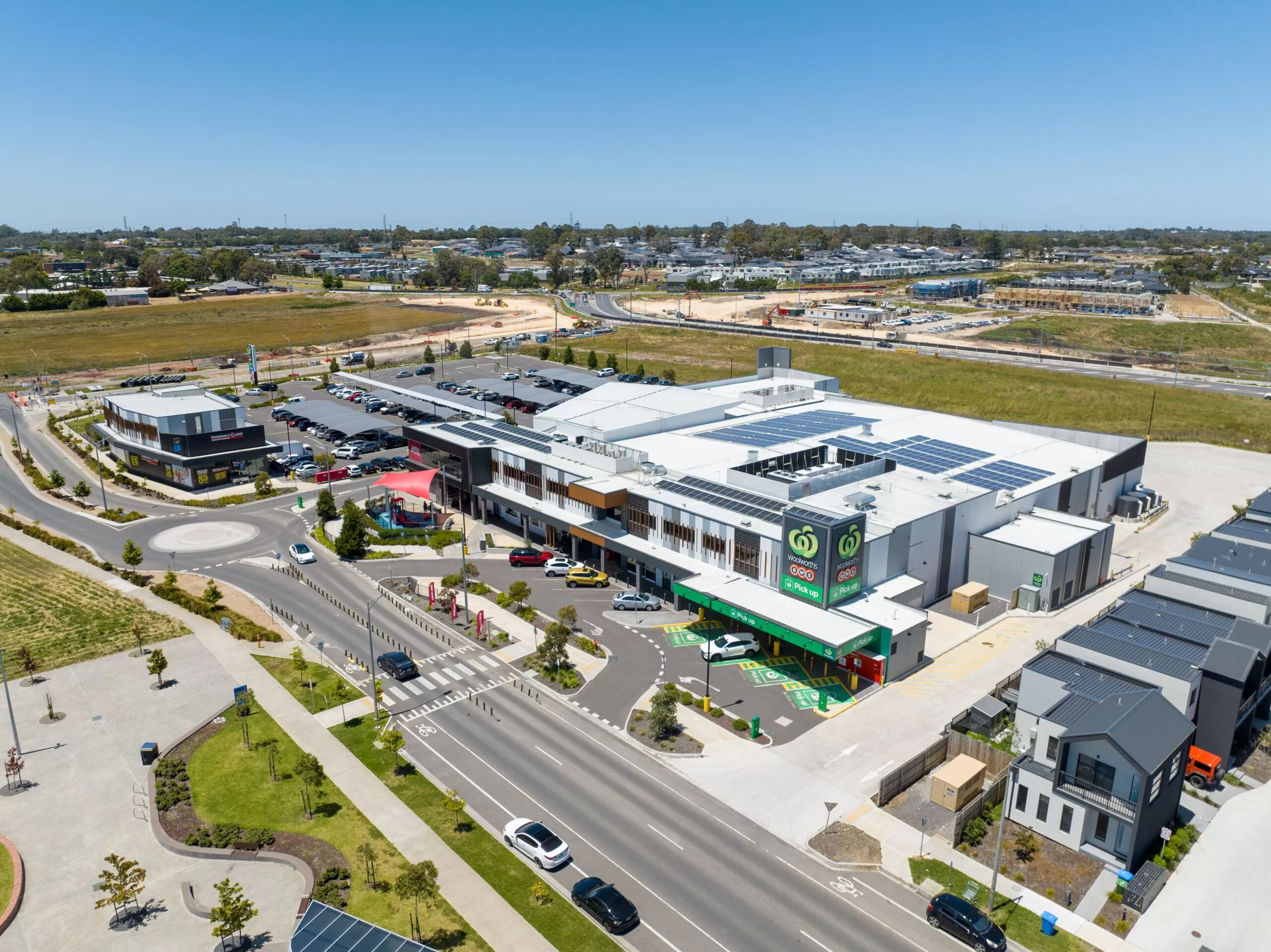
Town Centre and Vibe. The local shopping centre is functional rather than scenic, anchored by a Woolworths and a handful of food and service tenants. The Sandhurst Shopping Centre on the western edge picks up the rest. The bigger draw is Cranbourne Park Shopping Centre, a short drive east, which carries the major retailers.
Nightlife and Culture. There is no nightlife to speak of inside Cranbourne West itself. Restaurants, pubs and weekend hospitality cluster in older Cranbourne and along the corridor toward Berwick and Narre Warren. This is a stay-at-home, kids-in-bed-by-eight kind of suburb.
Cranbourne train station. Around 10 minutes by car or by frequent local bus, with direct services on the Cranbourne line into Melbourne CBD.
Melbourne CBD. Roughly 50 to 60 minutes by train, or 45 minutes off-peak by car via the Monash Freeway and EastLink.
Dandenong. Around 20 to 25 minutes by car. The major employment, retail and multicultural hub of Melbourne's south-east.
Frankston and Mornington Peninsula beaches. 25 to 30 minutes by car to Frankston and the start of the Peninsula. Western Port and Phillip Island are reachable south on the South Gippsland Highway.
Monash Medical Centre Clayton. Around 35 minutes by car. The closer Casey Hospital in Berwick is roughly 15 to 20 minutes away.
Royal Botanic Gardens Cranbourne. 10 to 15 minutes by car. A genuine asset for the area and a regular weekend destination for local families.
Saturday morning at the Community Hub on Flicka Boulevard, the carpark fills with young parents and pram-pushers. There are tradies in hi-vis grabbing a coffee before heading to a job, healthcare workers between shifts, and first-home buyers who priced out of bayside Melbourne and traded a bigger block for a longer commute. Cranbourne West skews young, with a median age in the early thirties and more than three in five households being families with children. Manufacturing has an above-average footprint thanks to the surrounding industrial estates, and a large slice of the workforce sits in trades and services occupations.
Culturally, this is one of the more diverse parts of outer Melbourne, with significant Indian, Sri Lankan, Filipino and Pacific Islander communities woven through the newer streets, alongside long-standing Anglo-Australian residents. The First Nations population sits noticeably above the national average. English is spoken at home in many households but rarely as the only language. The result is a suburb that feels genuinely multi-ethnic at the school gate and on the sporting fields, without the hardened cultural enclaves you'd find in older established migrant suburbs.
Down-to-earth, family-comfortable, unafraid of cultural difference. Someone who can sit with an Indian grandmother, a Pacific Islander dad and a Sri Lankan young adult in the same room and not flinch. Speaks honestly about money, mortgages and ordinary parenting pressure.
Patient with slow relational soil. Willing to plant in a place where nothing is yet established and the suburb is still working out its identity. Strong on hospitality, weaker on platform. A planter chasing a stage moment will not last.