
Docklands is Melbourne's waterfront experiment. A vertical suburb of harbour-edge towers two kilometres west of the CBD, dense with young professionals, international students and a growing pocket of young families still figuring out who they are together.
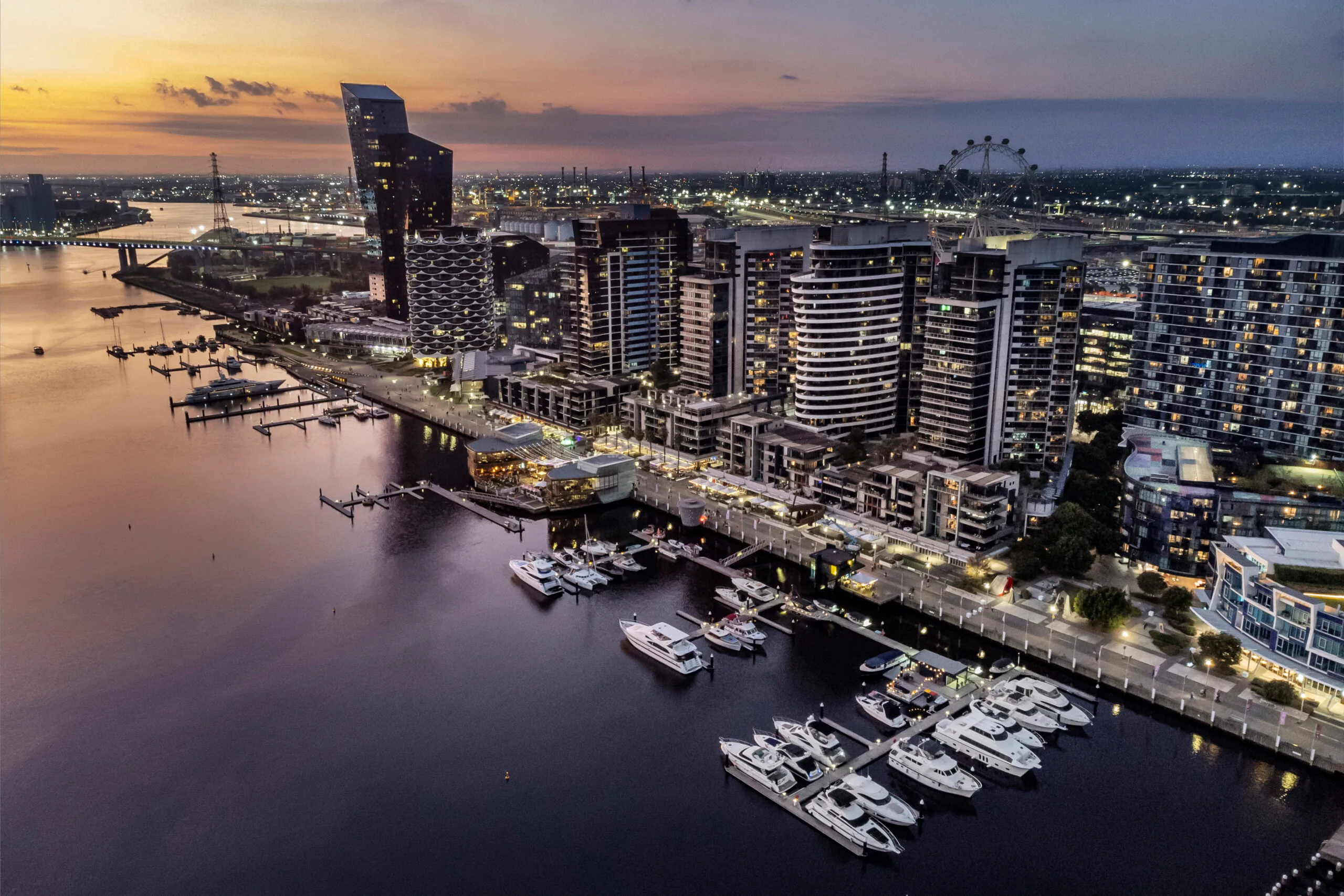
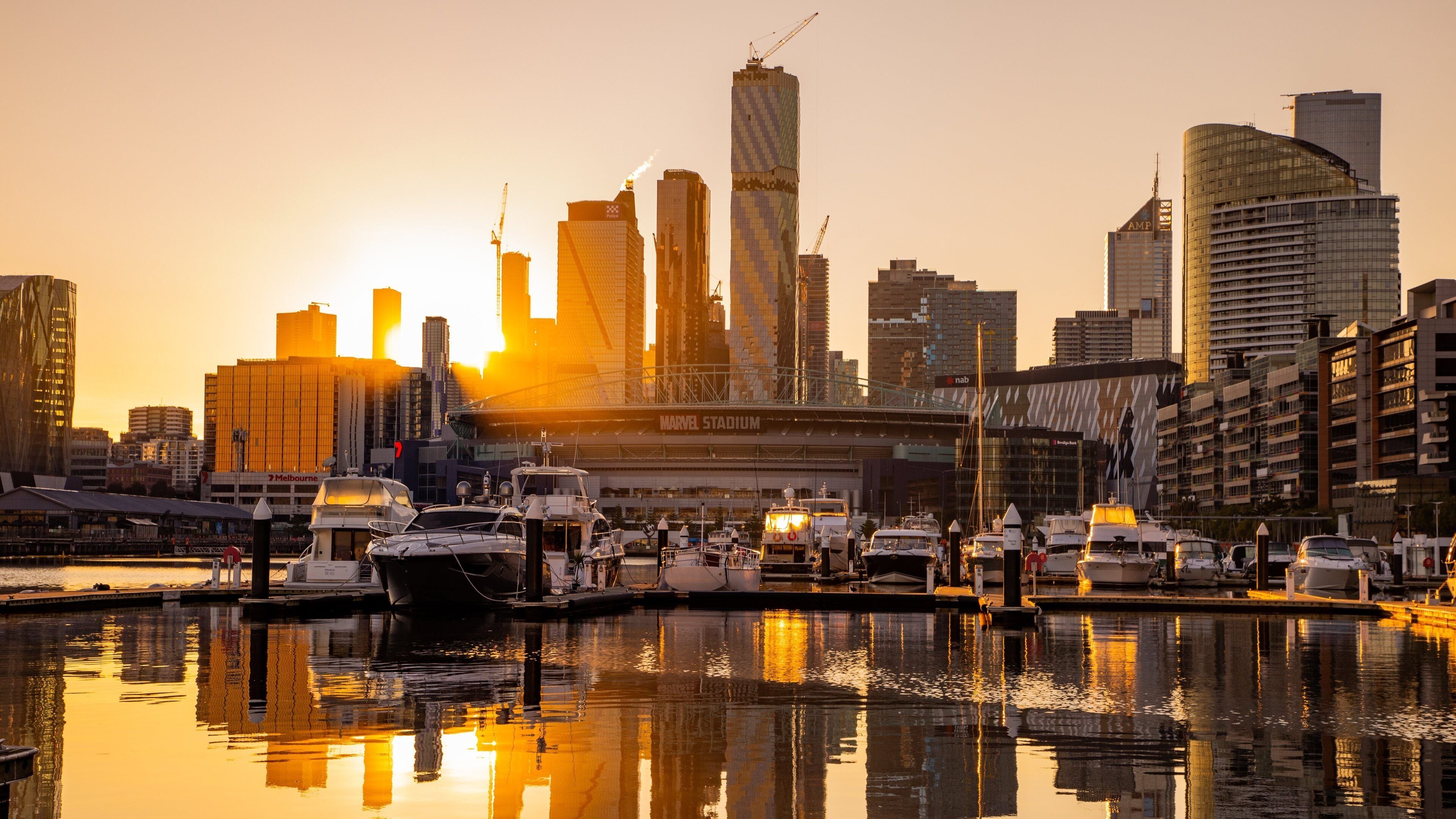
Walk west out of Southern Cross Station and the city changes. Glass towers rise straight out of the water. Trams glide along Harbour Esplanade. Marvel Stadium sits in the middle of it all, and on game day the streets fill with footy crowds before emptying back into the apartments above. This is Docklands, built on what was once the working port of Melbourne and now home to one of the densest residential populations in Australia.
It is still a suburb in the making. The masterplan is roughly two-thirds finished. New towers go up while older precincts settle into themselves. The community here is real, but it is young, mobile, and building from scratch.
Loneliness is the quiet ache of Docklands. High-rise living without an established neighbourhood means many residents do not know the people on their floor, let alone in the next tower. Renters cycle through on twelve-month leases. International students return home after graduation. Mortgage stress is real for owner-occupiers carrying body corporate fees alongside a CBD-priced loan. And the suburb itself, still half-built, can feel disconnected between its precincts.
The anchors are quieter than in older suburbs but they exist. The Library at the Dock, the Community Hub at The Dock, the Docklands Community Garden, the Docklands Sports Club running junior soccer, cricket and AFL, the dragon boating crews on Victoria Harbour, and the Firelight Festival each winter. Marvel Stadium provides a shared rhythm. The school gate at Docklands Primary is becoming, slowly, a meeting place.
Docklands carries a striking demographic profile for inner-city ministry. Half the population is aged 15 to 34. Annual growth runs at 7.2 per cent, more than five times the national rate. The suburb is still being built, both physically and socially, which means a community of faith planted now would grow alongside the place itself rather than into an established culture.
The missional reality is honest. Most residents have no Christian background to draw on. Renter turnover means relationships need to be deep early. Apartment living makes traditional door-knocking and street outreach largely irrelevant. Sunday gatherings will compete for attention with brunch on the waterfront and weekend trips home for international students.
And yet. Few places in Australia put this many young adults, this many internationals, this much openness to something new, in a single square kilometre. The harbour, the towers, the trams, and a generation of Australians figuring out who they are together. A community of faith embedded here would be embedded in one of the most strategically located mission fields in the country.
Docklands runs noticeably more secular than the country as a whole. Christian affiliation sits at 24.3 per cent, well below the national 43.9, while non-religious identification leads the suburb at 41.6 per cent. The cohort here is young, university-educated, internationally mobile and largely uninterested in inherited religion. Faith, when it is held, tends to be either privately practised or carried by migrant communities. The dominant posture toward Christianity is neither hostile nor curious. It is mostly absent.

Pentecostal and contemporary evangelical presence in inner Melbourne is real but concentrated. Planetshakers' city campus sits within Docklands itself, and Hillsong Melbourne City and C3 Melbourne both gather just over the border in West Melbourne. City on a Hill anchors the CBD evangelical scene from Melbourne Central. For a young person actively seeking a contemporary expression of faith, options exist within walking distance.
The gap is different. It is the 41.6 per cent who tick non-religious, the international student living three flatmates deep who has never been inside a church, the young professional whose only exposure to Christianity is what they have seen on social media. Docklands does not need another Sunday service competing for the already-churched. It needs the long, patient work of presence in apartment lifts, on the harbour walk, and at the cafe table.
Cost of Living and Housing. Docklands is apartment country. One and two-bedroom units dominate the market, priced below equivalent CBD stock but carrying body corporate fees that surprise first-time buyers. Rents skew toward young professionals and couples without kids. Almost no detached houses exist here, and the buy-in is a Melbourne mortgage rather than a Hunter or Geelong one.
Schools and Kids. Docklands Primary School opened in 2021 to serve the growing population of young families, with capacity for around 475 students. Childcare runs through Gowrie at The Harbour, an integrated 150-place centre. Secondary schooling means commuting into the broader inner-city catchment. The school-aged population is forecast to keep climbing.
Weekend Life. Saturday mornings belong to the waterfront. Joggers along Harbour Esplanade, dragon boats cutting across Victoria Harbour, families pushing prams toward Ron Barassi Senior Park. The District Docklands shopping centre and Costco anchor weekly errands. The Library at the Dock is busy with locals and remote workers.
Town Centre and Vibe. There is no village strip here. Docklands runs on precincts: NewQuay to the north, Victoria Harbour in the middle, Yarra's Edge to the south. Each has its own restaurants and waterfront, and walking between them takes time. The Hub at Docklands and Community Hub at The Dock function as the social glue.
Nightlife and Culture. Marvel Stadium drives the rhythm of the suburb. AFL season brings five home clubs through these gates. Big Bash cricket fills it in summer. The Firelight Festival pulls roughly 75,000 people across three winter nights. For everything else, the CBD is a 15-minute walk and the casino precinct sits just across the river.
Melbourne CBD. A 10 to 15 minute walk from most Docklands precincts to the Hoddle Grid. The free tram zone covers the entire suburb, so getting into the city costs nothing.
Southern Cross Station. 10 to 15 minutes on foot from most apartments. Direct trains to the airport bus, regional V/Line services, and every metro line in Melbourne.
Melbourne Airport. 20 to 25 minutes by car via the Tullamarine Freeway. The CityLink on-ramp is two minutes away.
Footscray and the Inner West. 5 to 10 minutes by car across the Bolte Bridge or the West Gate. A different cultural world starts immediately on the other side of the Yarra.
St Kilda and the Bay. 15 to 20 minutes by car or tram. Beach access without owning a car park near the sand.
Universities. The University of Melbourne is around 15 minutes by tram. RMIT sits at the eastern edge of the CBD, walkable from Docklands in 20 minutes.
Tuesday morning at a cafe on Collins Street, Docklands end. Laptops open, lanyards on, espresso machines running flat out. The crowd is overwhelmingly under 35: finance graduates working the towers above, NAB and ANZ staff streaming in from the Bourke Street tram, international students from RMIT and the University of Melbourne renting one-bedroom units with three flatmates, and digital nomads who chose the harbour view over a converted warehouse in Brunswick. Half the population is between 15 and 34. Families with children sit at sixteen per cent, well below the national average, but that number is climbing as Docklands Primary fills up and the parks get busier.
Cultural mix runs strongly international. The suburb has a substantial Chinese, Indian, and South-East Asian population, drawn by the apartments, the universities, and the proximity to the CBD. English is one of many languages spoken in the lifts. There is a small but growing cohort of long-term residents who bought early, raised kids here, and now run the community garden, the sports club, and the resident associations that hold the place together.
Urban-fluent, comfortable in apartment living, energised rather than drained by density. At ease with international students, finance professionals, and people whose default posture is sceptical or simply unfamiliar with faith. Patient. Hospitable. Willing to do small, slow, relational work over years rather than chase quick attendance numbers.
Probably young or mid-career, possibly bivocational, almost certainly someone who already loves the inner city rather than tolerates it. Not for someone who needs a backyard, a car-first rhythm, or a community that already gathers around a familiar shared culture. The planter here builds something genuinely new on ground that is genuinely new.