
Erskineville and Alexandria sit six kilometres south of the Sydney CBD, where Victorian terraces meet warehouse conversions. The area is young, secular, professional, and has quietly become one of the most socio-economically advantaged postcodes in the country.
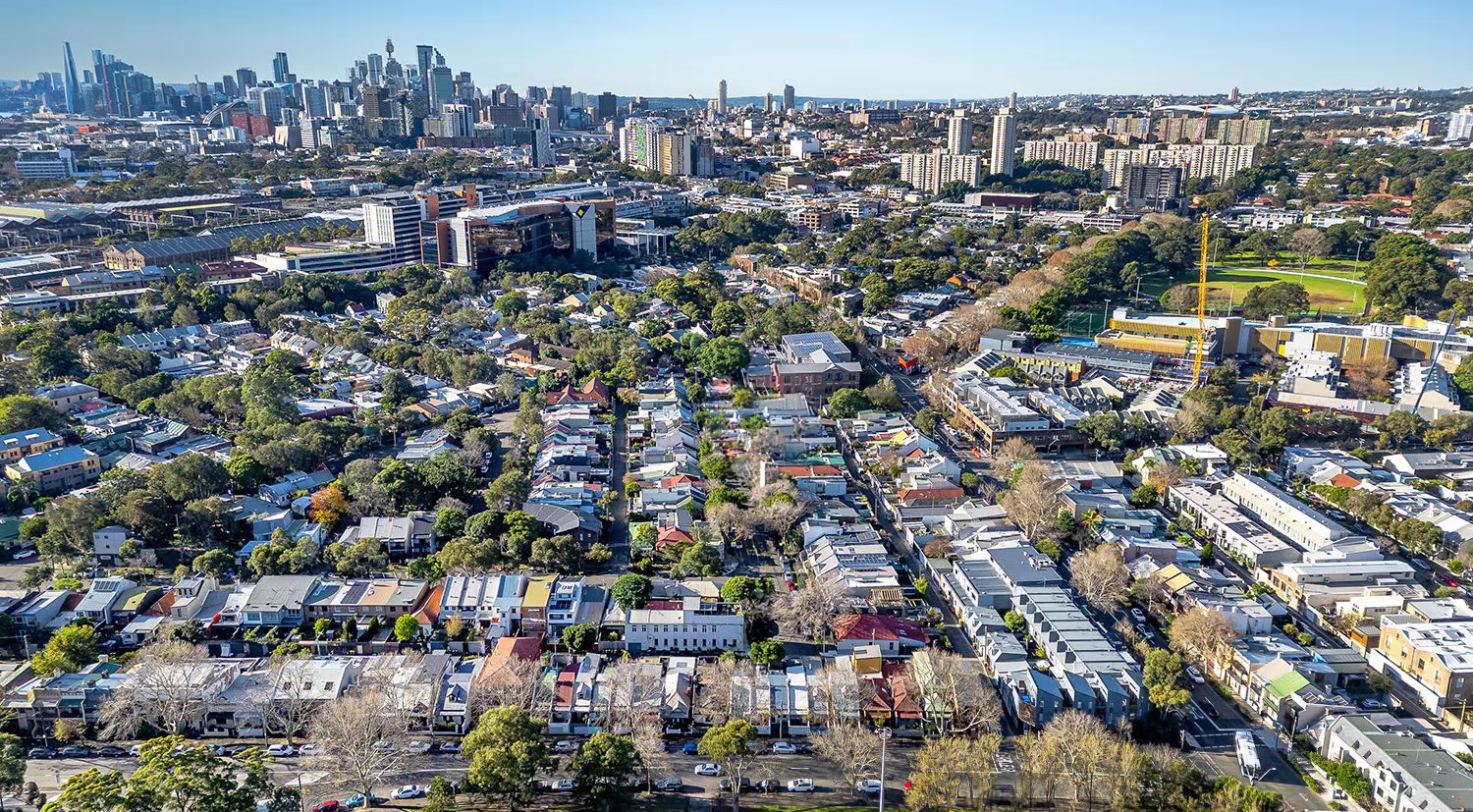
Walk down Erskineville Road on a Saturday morning and the place tells its own story. Heritage workers' cottages sit shoulder to shoulder with renovated terraces. The Imperial Hotel still pulls a crowd. Cafes spill onto footpaths, dog leads tangle outside the bakery, and the train rattles past every few minutes on the line into Central.
This is an old working-class corner of Sydney that gentrification has thoroughly remade. Brick kilns, tanneries and the Metters factory are gone. In their place sit warehouse conversions, design studios, and one of the most highly educated, secular, professional populations in the country. The area's industrial bones remain visible. The people inside them have changed.
The ache is quiet but real. Loneliness in a suburb full of share houses and one-bedroom apartments. Career pressure in industries that never switch off. Mortgage stress for those who stretched into a million-dollar one-bedder. A sense among many residents that they have built impressive professional lives without quite working out where deep friendship and meaning come from. Mental health and burnout are common conversations.
The anchors are the pubs, the parks and the cafes. The Imperial, the Erko, the Rose of Australia. Sydney Park on a Sunday afternoon. The dog community. The Eveleigh markets. The slow gravity of regulars at the same coffee shop every Saturday. Community here forms around third places more than around clubs or schools.
The demographic profile is striking. A dense, growing, highly educated, deeply secular young adult population sitting in one of the most desirable corners of Sydney. The young adult cohort alone numbers more than seven thousand five hundred people, and the area continues to grow at more than double the national rate.
The cultural moment also matters. A noticeable shift is underway among young professionals weary of late-modern individualism, looking for community, meaning and durable spiritual frameworks that hold up under scrutiny. Podcasts, books and conversations about faith are finding traction in places they would not have a decade ago.
This is hard ground. Conversion is slow, suspicion of Christianity is real, and the cultural barriers are significant. It is also one of the most strategically important pockets of Sydney, and the long-term fruit of patient, faithful, intelligent ministry here would shape neighbourhoods, professions and a generation.
This is one of the most thoroughly secular communities in Australia. Nearly two-thirds of residents identify as having no religion, well above the national figure. Christian affiliation sits at around a quarter, roughly twenty points below the national rate. The cultural posture is not hostile so much as quietly indifferent. Faith is treated as a private matter, mildly curious at best, irrelevant at worst, and any expression of it is expected to come with a high tolerance for difference, intellectual honesty, and a track record of not causing harm.

The area is not unchurched. Hillsong's Alexandria campus draws a young professional and creative crowd from across the inner south, and Newtown Erskineville Anglican has a long-standing evangelical presence with a strong young adult following. Outside these, contemporary Christian options thin out quickly within a fifteen-minute walk. There is no C3 presence in the immediate suburb, with the nearest C3 congregation a short drive away in Rozelle.
The gap is less about church planting saturation and more about reach. Tens of thousands of secular young professionals live within walking distance of every existing church, and the vast majority will never set foot inside one. The missional question is not whether another building is needed but whether a community can be formed that genuinely connects with people who would not naturally choose church.

Cost of Living and Housing. Housing is expensive and competitive. Median house prices sit comfortably above $1.8 million in Erskineville, with units in the high six figures to low seven figures. Rentals are tight. Most residents either bought in years ago, earn well above the city average, or share with housemates well into their thirties.
Schools and Kids. Family infrastructure is thin compared with the suburbs. Alexandria Park Community School covers K to 12 nearby, and Erskineville Public is the local primary. Newtown High School of the Performing Arts sits within catchment for some streets. Many families with school-age children eventually move further out.
Weekend Life. Sydney Park is the lung of the area. A hundred acres of grass, wetlands, brick chimneys and cycle paths, full of dogs and prams every weekend. The Saturday markets at Eveleigh, brunch on Erskineville Road, and a slow loop home through the back streets.
Town Centre and Vibe. Erskineville village is small but tightly held. Shopkeepers know regulars by name. Alexandria's character is more industrial-chic, all converted warehouses, breweries and design showrooms. Both have a village feel pressed up against the size of the city.
Nightlife and Culture. The Imperial Hotel runs live performances and drag shows that have been part of Sydney folklore for decades. The Erko, the Rose of Australia, and the Hive Bar fill out the local pub circuit. Newtown's King Street is a five-minute walk for live music, theatre and late-night food.
Sydney CBD. Six kilometres north. Fifteen to twenty minutes by train from Erskineville station. Most working residents commute in, and many walk to jobs in Surry Hills, Redfern or the Tech Central precinct.
Sydney Airport. Around fifteen minutes by car or train. The proximity is one of the area's quietest advantages for frequent flyers and creative-industry workers.
Newtown. A short walk west. King Street's bookshops, theatres, restaurants and live music scene have shaped the cultural identity of this whole pocket of Sydney.
The University of Sydney. A ten-minute walk or short ride. The proximity feeds a steady flow of postgraduate students, academics and adjacent professionals into the local rental market.
Eastern Beaches. Bondi and Coogee are a fifteen to twenty-five minute drive depending on traffic. Closer than they feel for a suburb this far inland.
Inner West. Marrickville, Enmore and Dulwich Hill sit within a few kilometres west, extending the cafe and live-music belt that runs from Newtown outward.
Sunday morning at the cafes on Erskineville Road, the tables are full of mid-twenties to mid-thirties professionals. Architects, designers, lawyers, software engineers, doctors-in-training, journalists, teachers, postgrads. Many are single, many are partnered, relatively few have small children in tow. Forty per cent of residents are aged fifteen to thirty-four. The median age sits at thirty-four. This is one of the youngest and most highly educated pockets in the country.
The cultural mix is particular. Long-standing Greek and Macedonian families remain from the post-war working-class era, alongside a noticeable LGBTIQ+ population that has shaped the suburb's identity since the 1980s. New arrivals tend to be young professionals from across Australia and overseas, drawn by proximity to the CBD and the creative industries. The First Nations community is small in proportion but historically rooted, with Redfern's Aboriginal community a few streets north.
Theologically grounded, culturally fluent, intellectually serious. Comfortable in a room of secular professionals, in a queer-friendly suburb, in conversations about ethics, politics and meaning that assume Christianity has to earn a hearing. Patient. Not easily flustered.
Probably late twenties to early forties. Likely without small children, or with a spouse who shares the calling and accepts the cost of inner-city ministry. Strong with words, slow to judge, allergic to hype. Genuinely loves people who are nothing like them, and stays in it for the long haul.