
The northern half of the Hoddle Grid: Queen Victoria Market, RMIT, State Library, high-rise apartment towers full of international students. A young, secular, transient population sitting at the dense heart of Melbourne.
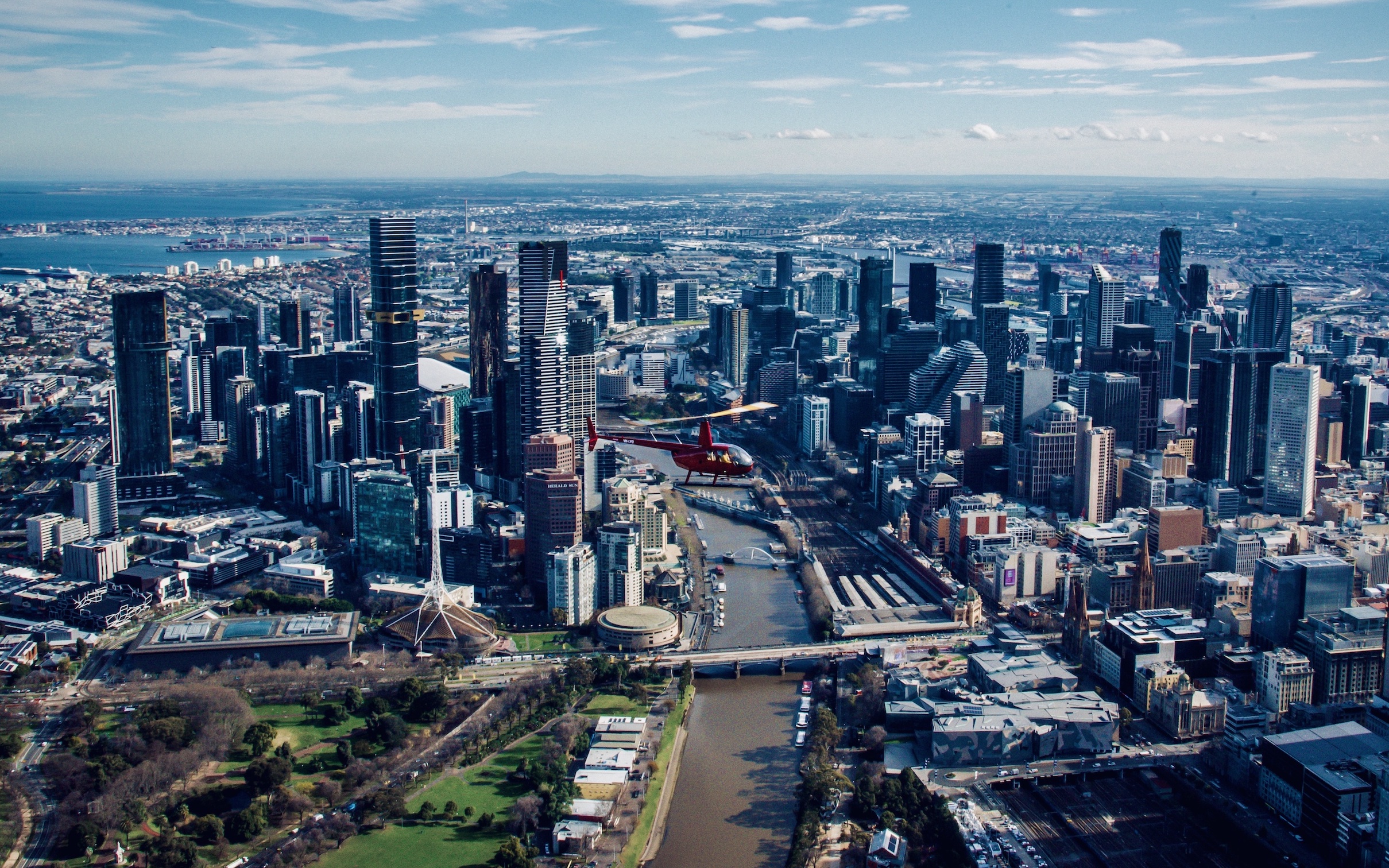
Walk north up Swanston Street from Flinders, past the State Library, past Melbourne Central, and you enter a different city. Tower apartments stacked above laneway cafes. RMIT campus blending into the streetscape. The Queen Victoria Market trading sheds opening at dawn. This is Melbourne CBD North, the slice of the Hoddle Grid above Lonsdale Street stretching to Victoria Street.
It is the densest residential pocket in Victoria. International students, young professionals, hospitality workers, and a steady churn of new arrivals live in vertical neighbourhoods of one and two-bedroom apartments. The Metro Tunnel and a redeveloped Queen Victoria Market are reshaping the area street by street. Few children. Few churches. Almost no Christian presence in the rhythms of daily life.
Loneliness is the defining ache of CBD North. People live three metres from a neighbour they will never meet. International students sit through entire semesters without being invited into a home. Mental health stress runs high among young adults far from family, often working night shifts in hospitality to pay rent. Housing is secure in supply but expensive, and the transience of the population means few deep friendships form. The pandemic emptied this suburb in a way few others experienced and the social fabric is still rebuilding.
Connection happens where people are funnelled together. The universities and their student clubs. The hospitality workplaces themselves. Sport at Melbourne Park and the MCG. Cultural festivals: Comedy Festival, Writers Festival, White Night successors, Lunar New Year on Russell Street. The Queen Victoria Market is a genuine community anchor, especially the Sunday Suzuki Night Market in summer.
Sixteen thousand people live inside roughly one square kilometre. Seventy-eight per cent are aged 15 to 34. The median age is 26. There is no other residential area in Australia with this combination of density, youth and secularity. A church planted here is a church planted in the demographic the global movement most longs to reach.
The international student population alone is a missionary field of staggering scale. Students from China, India, Indonesia and Vietnam come to Melbourne for two to four years, encounter Australian culture, and return home. A church that loves these students well sends the gospel back to nations that are difficult to reach any other way.
It will not be easy. Apartments are hard to gather. Transience erodes core teams. Costs are high and the spiritual climate is genuinely cold. But the prize is rare: a generation, in a city, at a hinge moment, asking quiet questions about meaning that almost nobody is helping them answer.
Half of CBD North residents say they have no religion, and the actively Christian share is among the lowest of any populated area in Australia. The young adult majority skews secular by life stage and life choice. But secular here does not mean hostile. It means uncatechised. Most residents have never been to a church service in Australia, never had a Christian friend invite them to one, and have no inherited framework for what church even is. Curiosity is more common than opposition.

Three Pentecostal churches sit within reasonable reach of CBD North residents: Planetshakers in Southbank, CityLife's city campus, and C3 Church Melbourne meeting at West Melbourne Baptist on the western edge. Each draws people from across the metropolitan area rather than primarily from inside the Hoddle Grid. Residential CBD North itself has very thin local Christian presence relative to its population density.
The gap is not for another conference-style city church. The gap is for a church that lives at street level among the apartment towers, that knows the names of international students, that runs midweek dinners small enough to remember faces, and that contextualises the gospel for a population where 50 per cent tick "no religion" and another quarter come from non-Christian backgrounds.

Cost of Living and Housing. Almost everyone rents, and almost everyone rents an apartment. One-bedroom units in the towers along A'Beckett Street, Franklin Street and around Queen Victoria Market dominate the market. Rents are high but the trade-off is that you pay nothing for transport and walk to most of life. Owning here usually means an investor landlord and a tight floorplan.
Schools and Kids. Families are rare. The few who stay use the City School at Docklands or commute to the inner suburbs. RMIT and the University of Melbourne dominate the educational landscape instead, with tens of thousands of students walking these blocks daily. This is a place built for adults in their twenties, not for prams.
Weekend Life. Saturday morning means the Queen Victoria Market, coffee at a laneway cafe, and a slow wander up to Carlton or down to the river. The Night Market runs through summer. Flagstaff Gardens and Carlton Gardens give locals their patch of green. Most weekends end somewhere with live music or a late dinner.
Town Centre and Vibe. The whole suburb is a town centre. Melbourne Central is the indoor anchor, the State Library the civic one, and Bourke Street Mall sits just to the south. The streets are walkable, the trams free inside the City Circle zone, and the laneway culture that Melbourne is famous for runs through every block.
Nightlife and Culture. Bars on Lonsdale, rooftops above Russell, comedy at the Melbourne International Comedy Festival, theatre at the Comedy Theatre and Her Majesty's. Live music sits everywhere from Cherry Bar's successors to free gigs at Federation Square. Culture is not something residents drive to. It is downstairs.
Flinders Street Station. 10 minutes on foot from the centre of CBD North. The whole metropolitan rail network meets here, putting most of Melbourne within 30 to 45 minutes.
Royal Melbourne Hospital and the Parkville biomedical precinct. 10 minutes by tram up Elizabeth Street. One of the largest concentrations of medical research and teaching hospitals in the country.
The University of Melbourne and RMIT. RMIT sits inside the suburb. Melbourne University is a 15-minute walk north into Parkville. The student population shapes daily life here more than any other single factor.
Melbourne Airport. 25 to 30 minutes by SkyBus from Southern Cross, or by car via CityLink outside peak. Easier from here than from almost anywhere else in Melbourne.
Southbank, the MCG and Olympic Park. 10 to 15 minutes on foot across the river. Australia's biggest sport and entertainment precinct sits within walking distance.
St Kilda and the bay. 25 minutes on the 96 tram. The closest beach, and the closest place to leave the city behind without leaving public transport.
A weekday morning at the Queen Victoria Market deli hall tells the story. Mandarin, Cantonese, Vietnamese, Korean, Hindi, Italian, English in a dozen accents. Students with laptops in cafes. Tradies grabbing coffee before a high-rise shift. Hospitality workers heading home at 11am after closing the night before. Young professionals walking to towers in Collins Street. The CBD North population is among the youngest of any populated area in Australia, and overwhelmingly transient: people pass through for two, three, five years and then move on to the suburbs or back overseas.
International students are the demographic centre of gravity. Chinese, Indian, Indonesian, Vietnamese and Malaysian communities are all substantial, sustained by the universities and English-language colleges that sit inside the suburb. Young Australian professionals from regional Victoria and interstate make up the next layer. First Nations residency is small but the area sits on Wurundjeri country and Aboriginal cultural life is visible at Federation Square, Birrarung Marr and through institutions like the Koorie Heritage Trust. Almost nobody who lives here grew up here.
Urban-fluent, culturally curious, comfortable with diversity. Speaks the language of young adults who grew up online. Probably without small children, or with children whose parents are content raising them in apartments. Has the stamina for late nights and the patience for slow relational evangelism with people who will move countries in two years.
Not a planter who needs a building to feel real, who measures ministry by Sunday attendance alone, or who finds suburban family life essential to identity. The CBD does not reward those instincts. It rewards presence on the footpath, in the cafe, at the table.