
Murrumba Downs and Griffin sit either side of the North Pine River, 25 kilometres north of Brisbane. Two suburbs growing fast on family money, train-line access and new estates rising out of what was farmland a decade ago.
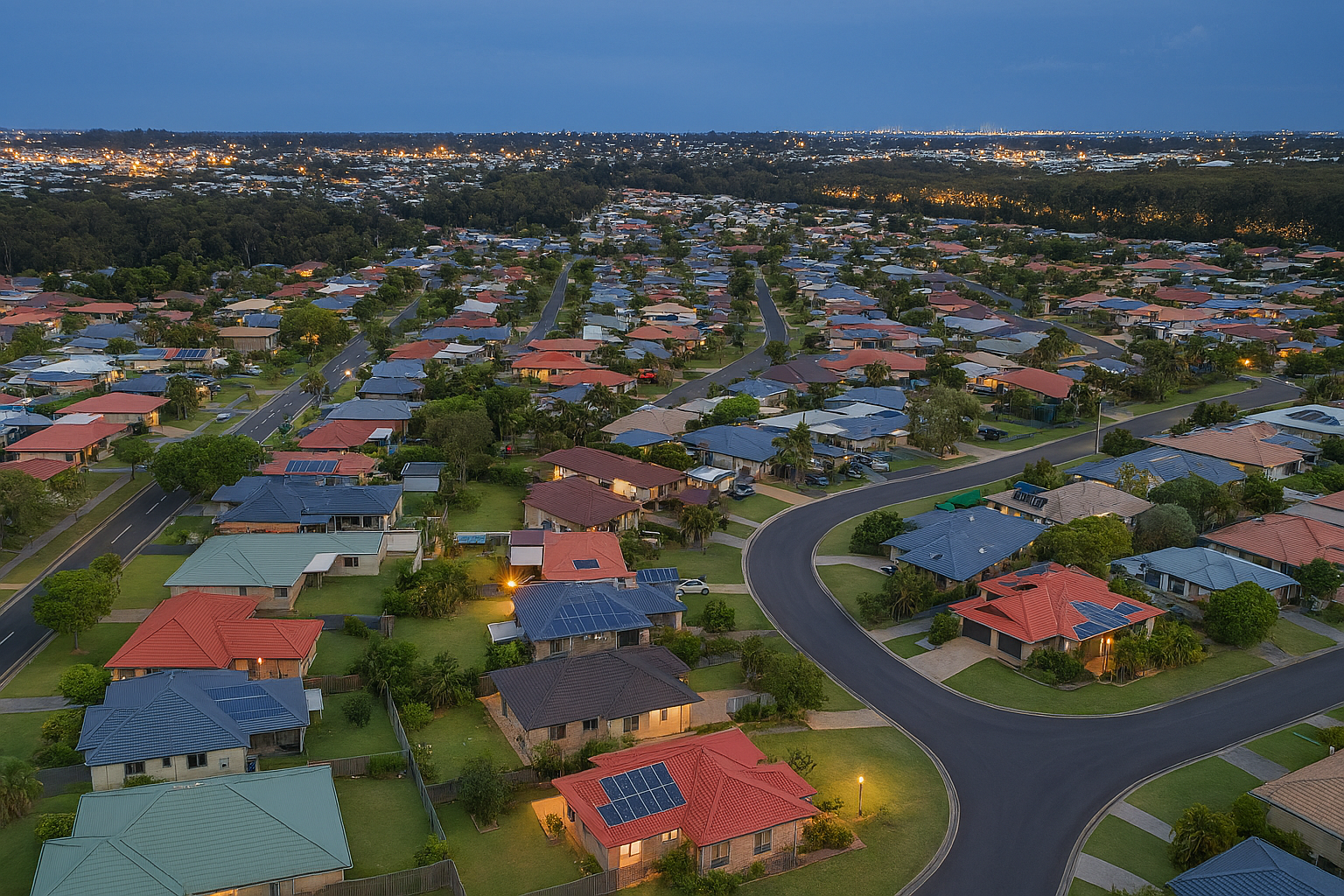
Drive north up the Bruce Highway from Brisbane and you cross the North Pine River into a part of Moreton Bay that has been rebuilding itself for fifteen years. Murrumba Downs grew first, anchored by its train station on the Redcliffe Peninsula line and a town centre around the Coles on Dohles Rocks Road. Griffin came later, paddocks turned into Freshwater Estate and River Breeze, with shops still being staged in.
The two suburbs share a postcode, a school catchment, and a feel: young families, mortgages, utes in driveways, kids' bikes on the front lawn. Osprey House sits on the river, the boat ramp on Dohles Rocks Road points toward Moreton Bay, and on a Saturday morning the cafes near the station fill up with parents in activewear and tradies in hi-vis.
Mortgage stress is the quiet weight in this part of Moreton Bay. Households stretched into a million-dollar purchase are watching rates and grocery bills, and the sense of being time-poor is real. New estates can feel isolating in their first few years, when streets are full of houses but short on connection. Loneliness shows up most in the parents of young children and in the older residents whose suburb has changed around them.
The anchors are the school gates, junior sport at the local fields, the river and its boardwalks, and the slow gravity of weekend coffee at the cafes near the station. Westfield North Lakes plays the role of the town square for the whole area. Nothing in the social life here is grand. All of it is real, and most of it forms one school pickup at a time.
The demographic profile here is one of the strongest in the country for a contemporary church plant. Population growth is running at more than four times the national rate. The median age is six years below the national figure. More than half the households are families with children, and seven thousand young adults aged fifteen to thirty-four sit inside the two suburbs.
The cultural moment is favourable too. People are moving in faster than the social fabric can keep up, which means church can play its historic role of belonging-before-believing for households who genuinely need a community. The train line, the new town centres and the family demographic all point in the same direction.
The challenge is real. Mortgage stress, time poverty and a fading default toward faith mean a plant here will need patience and warmth more than novelty. The opportunity, for the right team, is to plant alongside a generation of young families at the exact moment they are deciding what kind of life they want to build.
Murrumba Downs and Griffin sit close to the national average on Christian affiliation but track several points above on the non-religious figure, with more than four in ten residents choosing 'no religion' on the census. The trajectory is the standard outer-Brisbane story: faith is fading as a default, people will engage with a church for a school connection or a wedding, and most households are running too hard to think about it the rest of the time. Posture toward Christianity is open rather than hostile, but indifferent unless something genuinely connects.

The immediate area has a meaningful Pentecostal and evangelical presence concentrated five minutes north in North Lakes, with Church Alive, Life Centre Church and Encounter Church all serving the wider growth area. Pine Rivers Assemblies of God anchors the southern side around Kallangur, and North Pine Baptist sits inside Murrumba Downs itself. St Benedict's Catholic Parish covers Mango Hill, North Lakes and Griffin.
Despite this, the population has grown faster than the church footprint. With over twenty-three thousand residents in the immediate two suburbs and seven thousand young adults, there is genuine room for a contemporary, family-focused church planted in Griffin or central Murrumba Downs that reaches the young-families demographic these suburbs were built around. The gap is less about the absence of churches and more about scale relative to growth.

Cost of Living and Housing. A house in Murrumba Downs now sits around the million-dollar mark, with rents pushing past seven hundred dollars a week. Griffin is a touch cheaper but catching up fast. Most owners here are paying down a mortgage rather than sitting on equity, and rate rises bite hard in households where both parents work to make the numbers add up.
Schools and Kids. Murrumba State Secondary College draws hundreds of teenagers each morning, and Undurba and Griffin State Schools fill the primary side. Northpine Christian College sits in the catchment too. The local primary schools all have waiting lists, a sign of how many young families have moved in.
Weekend Life. Saturdays run on junior sport, the river, and the drive to Westfield North Lakes. Osprey House and the boardwalks along the North Pine River fill with walkers and birdwatchers. The Dohles Rocks Road boat ramp launches tinnies heading down to Bramble Bay before breakfast.
Town Centre and Vibe. The Murrumba Downs train station and the Coles complex form the practical heart of the suburb. Griffin is still building its retail centre out, with construction staged through the next few years. For anything bigger, locals drive five minutes to North Lakes.
Nightlife and Culture. Nightlife is not the point here. Most evenings end at home, on the back deck, or at the local clubs and pubs around Kallangur and Petrie. Anyone wanting more drives into Brisbane or up the coast on the weekend.
Brisbane CBD. 30 to 35 minutes by car down the Bruce Highway, or around 40 minutes by train direct from Murrumba Downs station.
Westfield North Lakes. Five minutes by car. The dominant retail and dining hub for the whole northern Moreton Bay area.
Brisbane Airport. Around 25 minutes south on the Gateway Motorway. A real factor for FIFO workers and families with interstate ties.
Redcliffe Peninsula and the bay. 15 minutes east. The closest swimming beaches, fish and chips on the foreshore, and the Settlement Cove lagoon.
Sunshine Coast. 45 minutes north up the Bruce Highway, close enough for day trips and weekend getaways.
University of the Sunshine Coast Moreton Bay campus. 10 minutes north at Petrie. A growing tertiary presence drawing local school leavers.
Saturday morning at the Coles end of Dohles Rocks Road, the carpark fills with young parents pushing prams, tradies grabbing a coffee before site, and grandparents heading to the bakery. This is a family suburb in the most literal sense. More than half of the households are couples with children, and the median age is six years below the national figure. Most adults are working their way up in trades, healthcare, retail or government, commuting south to Brisbane or staying local around North Lakes and Petrie.
The cultural mix is mostly Anglo-Australian with strong New Zealand and South African contingents, plus a noticeably higher First Nations population than most outer-Brisbane areas. English is spoken at home in the great majority of households. Newcomers are still arriving every month, drawn by the train line, the schools and the price gap to inner Brisbane, which means the social fabric is still forming. People are friendly but most neighbours are still learning each other's names.
A planter who fits here is unpretentious, family-stage, and comfortable in the rhythms of suburban Australia. Can hold their own at a junior footy sideline, a school P&C meeting and a Bunnings sausage sizzle. Has the patience for slow community-building in a place where most people are time-poor and still settling in.
What would not work is a model that depends on city-style cool or quick crowds. Murrumba Downs and Griffin reward consistent, neighbourly presence over scene-building. Planters who love young families, who can speak plainly about money and marriage and parenting, and who are willing to plant for the long haul will find traction.