
Riverstone is one of Sydney's oldest country towns, now caught in the middle of the North West Growth Area. Old weatherboards, level-crossing boom gates, and 9,000 new homes rising in the paddocks around it.
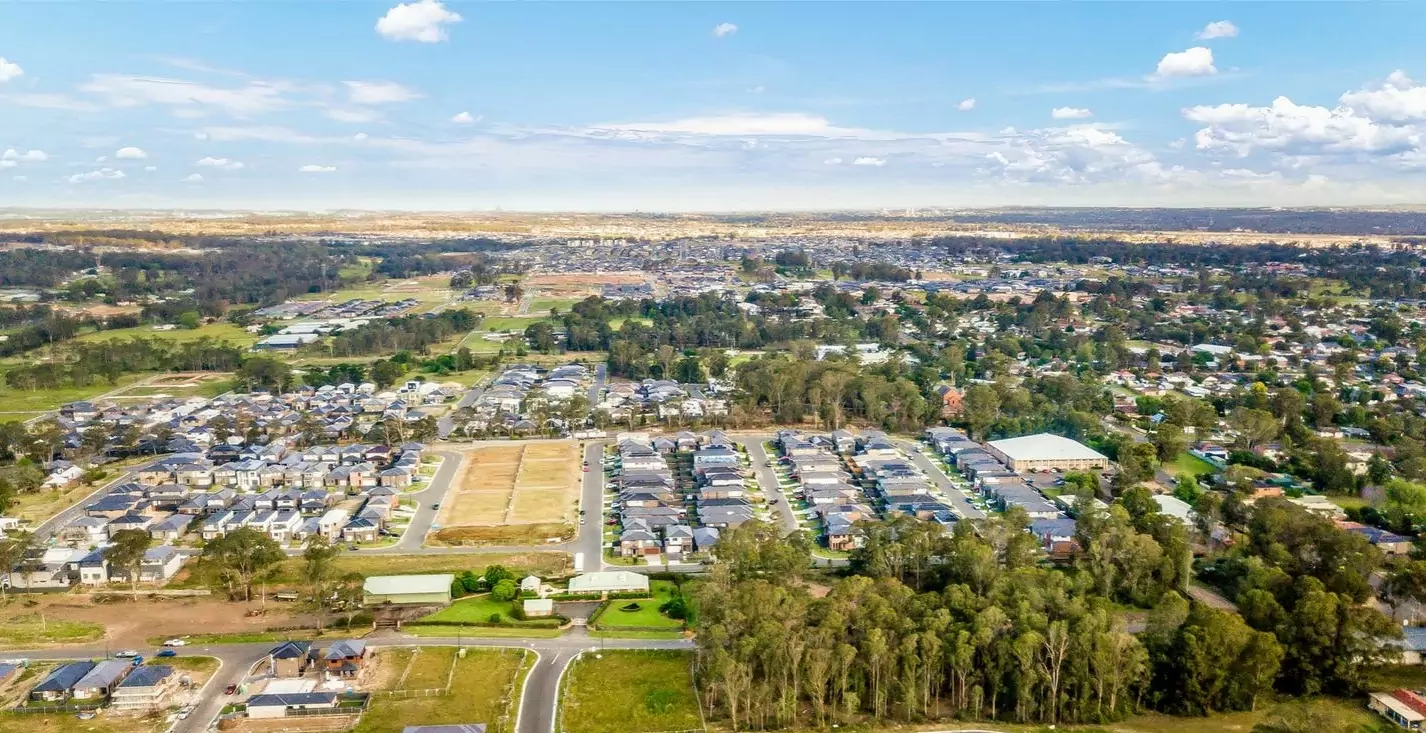
Drive 48 kilometres north-west of the Sydney CBD, past Blacktown, and you reach a town that has been here since 1803. Riverstone grew up around a meatworks, a railway line, and the Hawkesbury floodplain. The meatworks closed in 1992. The boom gates at the Garfield Road level crossing still come down for every train.
Now the paddocks on every side are being turned into estates. The state government has earmarked the area for up to 9,000 new homes, and Blacktown Council is planning a town centre that could absorb close to 30,000 new residents over coming decades. Old Riverstone and new Riverstone are still figuring out how to share the same postcode.
Mortgage stress shadows the new estates, where buyers stretched into purchases on fast-developing streets and now watch interest rates and traffic congestion climb together. Floods are real here. The 2021 event submerged homes along Marsden Road, and the memory of 1867's record waters still sits in the local imagination. There is a quiet grief in old Riverstone about what is being lost as paddocks turn into rooflines, and a corresponding loneliness in the newest streets where neighbours have not yet met.
The anchors are recognisable. Riverstone Park and the swimming centre. The historical society and museum keeping the meatworks story alive. Junior sporting clubs, the schools, and the small handful of community events still run out of the old town. The Royal Hotel for those who want a beer and a chat. None of it polished, all of it essential to the place holding together as it doubles in size.
The numbers tell a clear story. A young population with a median age of 32, more than 4,300 young adults aged 15 to 34, families with children well above the national average, and a still-healthy Christian affiliation rate. The North West Growth Area planning means tens of thousands more residents will arrive over the coming decades, and most of them will be young families looking for a community to belong to.
The cultural moment is unusual. Riverstone is not yet fully secularised, the family demographic remains strong, and the multicultural Christian presence is growing rather than shrinking. There is genuine spiritual openness across South Asian and Pacific communities settling here, and a generation of young couples in new estates who have moved away from family supports and are quietly looking for connection.
The challenge is honest. The town centre is small, traffic is constant, floods will come again, and the church history here is long enough that any new work needs to honour what has gone before. But the opportunity to be the contemporary, Spirit-led church for a doubling population in one of Sydney's last country towns is real, and it is sitting open.
Riverstone runs noticeably more religious than the national picture. Christian affiliation sits at nearly 48 per cent against a national average of 44 per cent, and only a quarter of residents identify as having no religion, well below the national 39 per cent. Migration from South Asia and the Pacific brings strong Christian, Hindu and Muslim communities into the suburb, and the family-heavy demographic tends to hold faith and tradition more closely than younger inner-Sydney populations. Secularisation is happening, but slower and softer than in inner suburbs.

Riverstone has deep church history. St Paul's Anglican has been here since 1885, St John's Catholic since 1882, the Baptist church since 1964. New Light Anglican Church (formerly Life Anglican) is the most contemporary evangelical option in the immediate area, and Riverstone Baptist serves a faithful local congregation out of Norwest Christian College.
What is missing is a Pentecostal or charismatic expression of any size within Riverstone itself. The nearest large Pentecostal congregation is Hillsong's Hills campus, around 25 to 30 minutes away in Baulkham Hills. For a population of nearly 14,000 that is set to grow toward 30,000-plus over coming decades, with a young, family-heavy, multicultural profile and notable First Nations presence, the gap for a contemporary, Spirit-led church meeting in the local town centre is significant and growing.
Cost of Living and Housing. Riverstone has been a release valve for buyers priced out of inner and middle Sydney. Newer estates around the suburb sit at the lower end of Greater Sydney pricing, but mortgage stress is real, and rental costs have climbed alongside the construction. Old weatherboards in the original township sit beside brand-new four-bedders on small blocks.
Schools and Kids. Riverstone Public School traces back to 1883 and still anchors the old town. Norwest Christian College, birthed out of the local Baptist church, runs from the same precinct. Newer public primaries and high schools have opened across the surrounding growth area, and weekday afternoons see a steady flow of school uniforms walking home along Garfield Road.
Weekend Life. Riverstone Park, the swimming centre, and the train line out to the Blue Mountains shape weekends here. Saturday morning sport runs through the local clubs. The Hawkesbury River is close enough for a fishing run, and the M7 ramp at Richmond Road puts the rest of Sydney within reach.
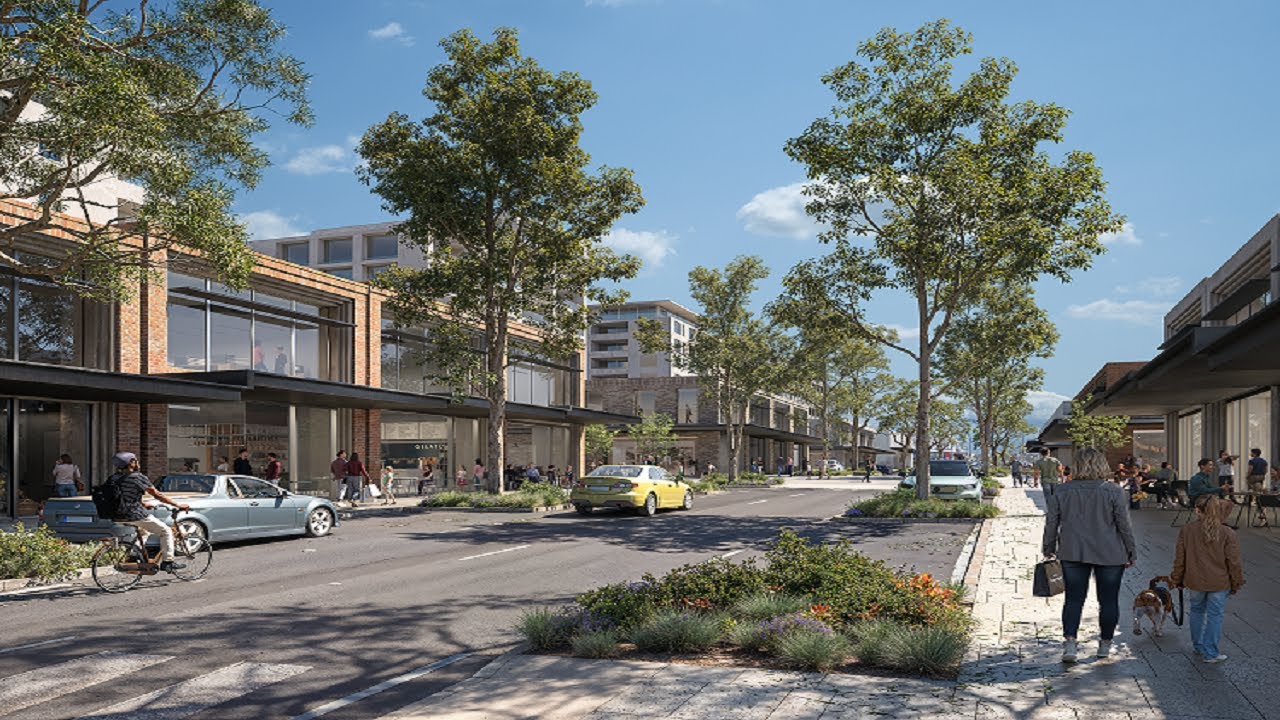
Town Centre and Vibe. The town centre is small and unmistakably country. Garfield Road, the level crossing, the old shopfronts, and the railway station make Riverstone one of the few suburbs in Sydney that still feels like a 1950s rural town. Council's masterplan is set to change that, with higher-density development flagged around the station.
Nightlife and Culture. Riverstone is not a nightlife suburb. The Royal Hotel and the local clubs handle most of the evening trade. For a bigger night out, residents head to Rouse Hill Town Centre or further into Parramatta. The cultural pull here is community-based: school events, sporting clubs, and the museum run by the local historical society.
Sydney CBD. Around 48 kilometres south-east. Direct trains on the T1 Richmond Line run roughly every 30 minutes through the day, with limited-stops services into the city in peak.
Parramatta. 25 to 30 minutes by car or train. Sydney's second CBD and the working heart of western Sydney for retail, jobs, and services.
Rouse Hill Town Centre. 15 minutes east. The closest large shopping centre, with cinemas, dining, and the Tallawong Metro terminus.
Blacktown. 15 to 20 minutes south. Westpoint Shopping Centre, Blacktown Hospital, and the largest commercial centre in the LGA.
Windsor and the Hawkesbury. 15 minutes north along Windsor Road. Historic river town, weekend markets, and the gateway to the Hawkesbury for boating and bushland.
Tallawong Metro. Around 10 minutes by car. The Sydney Metro line connects through to Chatswood and the lower North Shore.
Saturday morning at Riverstone Park, the carpark fills with utes from the older streets and SUVs from the new estates. Parents in junior footy jerseys, grandparents from families that have been in town for four generations, recent arrivals still learning the lay of the land. The mix here is unusually wide for an outer-Sydney suburb. Old Riverstone families whose forebears worked the meatworks. Young couples who bought a brand-new house off the plan in the past five years. Strong South Asian communities, particularly Indian and Pakistani families, who have settled in growing numbers across the broader North West.
The First Nations population sits at nearly 6 per cent, well above the Sydney average, and Riverstone has historically been home to a notable Aboriginal community. Median age is 32, families with children make up over 60 per cent of households, and the area carries a working-family feel: tradies, healthcare and aged-care workers, retail and warehouse staff, and a growing professional cohort commuting to Parramatta or the CBD. It is more multicultural than many older suburbs in this part of Sydney, but the texture is different from inner-west diversity. Less inner-city, more outer-suburban family life.
Unpretentious. Comfortable in a town that still feels like the country and yet is filling up with young families who arrived last week. Can talk to a fourth-generation Riverstone local at the bowls club and to a new Indian-Australian family in a Grantham Farm townhouse, and feel at home with both.
Patient. The growth here will run for twenty years, not two. A planter who thrives in Riverstone is willing to put down roots in the school carpark and the junior footy sideline, build trust slowly, honour the older church communities already here, and play a long game with multicultural ministry.