
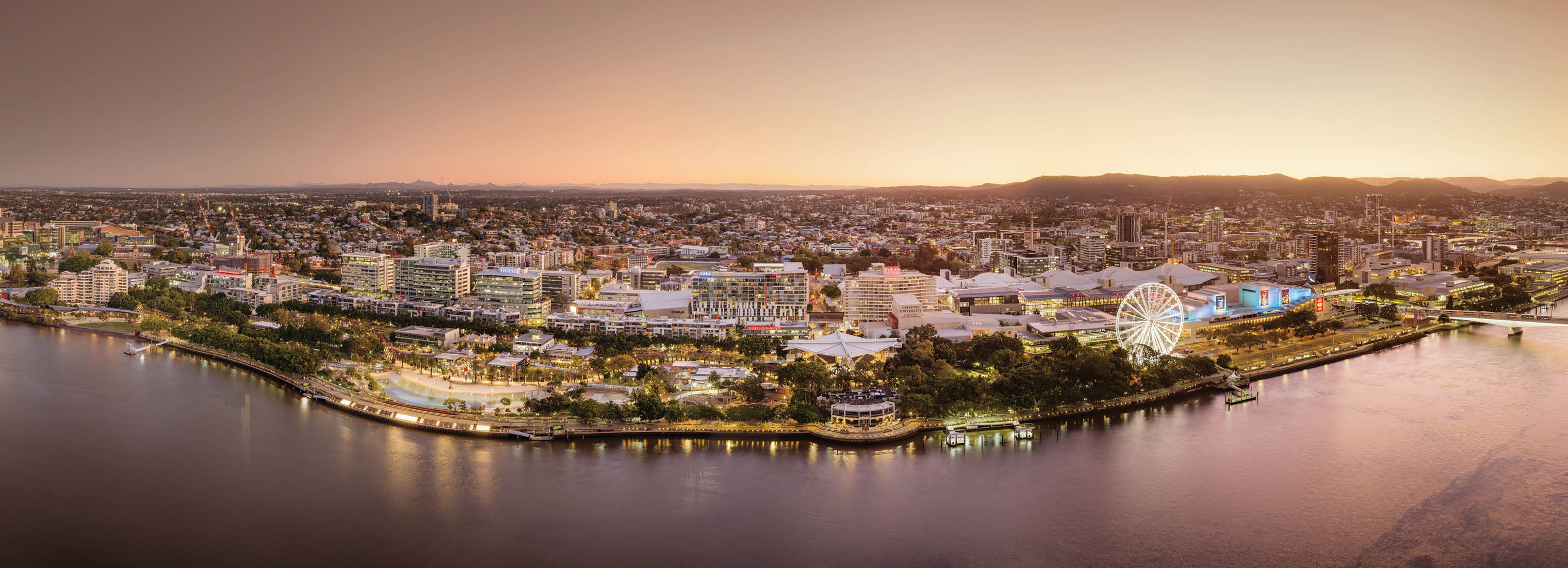
South Brisbane is the cultural heart of the city. Galleries, the river, the universities and a tower of new apartments built for young professionals and students. Median age 29. One of the youngest, fastest-growing pockets in the country.

Cross the Victoria Bridge from the CBD and you land in South Brisbane. Streets Beach on the river, GOMA and the State Library a few minutes' walk apart, the Conservatorium and Queensland College of Art around the corner. This is the suburb the city designated as its cultural precinct, and the apartment towers have followed.
A decade ago much of this was warehouses and surface car parks. Now it is high-rise residential beside the Brisbane River, packed with students from Griffith and the surrounding universities, young professionals, and a steady churn of newcomers drawn by the walkability and the lights of South Bank. The community here is still settling into itself.
The ache here is loneliness in plain sight. People living three storeys above a packed street can go weeks without a real conversation. International students stretched thin by tuition and rent. Young professionals working long hours, dating through apps, keeping their world small. Renters cycling through one-year leases, never quite belonging. Mental health pressures run high in a population this young and this transient, and the housing pressure on those without family money is real.
The anchors are the cultural institutions, the universities, and a handful of community spaces around Musgrave Park. South Bank itself functions as a kind of communal living room: people gather there because their apartments are small. The arts scene knits people together. So do shared meals on Boundary Street and the slow social pull of regular cafes where the baristas know your order.
South Brisbane carries an unusual concentration of the people contemporary churches across Australia spend years trying to reach. Young adults make up more than half the population. Growth is accelerating year on year as new towers come online. Cultural backgrounds are global. And the existing church footprint inside the precinct is sparse.
The opportunity is to build something that feels native to this place rather than imported into it. Something walkable, intellectually serious, generous with food and conversation, unembarrassed about Jesus. A church that meets the loneliness of the towers head on, that takes international students seriously as future leaders, that speaks the language of the cultural precinct without losing the Spirit-filled core.
It will be hard. Renters move. Students graduate and leave. The secular tilt is real. But the harvest field here is one of the youngest, most diverse and most spiritually open inner-city populations in the country, and the timing for a contemporary plant in this corner of Brisbane is rare.
South Brisbane sits well above the national average for non-religious affiliation, with just over half of residents ticking 'no religion' on the census and Christian identification noticeably below the country as a whole. Faith here tends to be private, intellectually engaged, and held loosely. The arts and academic cultures that shape the suburb prize curiosity and pluralism over inherited belief, and many residents have arrived from places where Christianity has little public presence at all. None of that means hearts are closed. It means the conversation begins differently.
The contemporary Pentecostal and charismatic presence inside the inner-city core is thin. Citipointe runs a campus on the UQ St Lucia campus, and Hillsong Brisbane meets at Mount Gravatt around 15 minutes south by car. There are historic Catholic, Anglican, Greek Orthodox and Uniting parishes around the peninsula, and St Mary's South Brisbane has long carried a progressive social-justice flavour. What is missing is a Sunday option in the cultural precinct itself: contemporary, Spirit-led, walkable from the apartment towers, designed for the young single, the international student, the creative who would never drive 20 minutes to a suburban auditorium. The gap is not for another mega-campus. It is for a church that belongs to the neighbourhood.
Cost of Living and Housing. South Brisbane is apartment country. New towers along Grey Street and Merivale Street command serious rents, and one-bedroom units that would house a single professional in many suburbs are shared by students here to keep costs down. Owning is for the well-paid or the well-connected. Most people rent.
Schools and Kids. Brisbane State High sits in the suburb and pulls families from across the inner south who manage to land inside its catchment. Somerville House and St Laurence's College are also nearby. There are fewer young children than the national average, but the schools that are here carry serious weight.
Weekend Life. Saturday morning is South Bank Parklands, Streets Beach, the riverwalk, brunch on Grey Street. The Green Flea Markets at Davies Park in neighbouring West End are a fixture. Sundays drift between gallery openings at GOMA, river ferries, and long lunches at the small bars tucked into the side streets.
Town Centre and Vibe. There isn't a traditional town centre here. The action runs along the river, through the cultural precinct, and into the dining strips of West End next door. The vibe is urban, dense, walkable, and unmistakably arts-leaning.
Nightlife and Culture. QPAC, the Queensland Museum, the State Library, GOMA and the Conservatorium are all within walking distance of one another. Live music, theatre, indie cinema, late-night bars. This is one of the few corners of Brisbane where you can leave the apartment at 9pm and still find the night beginning.
Brisbane CBD. A 10-minute walk across the Victoria Bridge or one stop on the train. The city's office towers, courts and major employers are all within a kilometre.
South Bank. Inside the suburb. The parklands, Streets Beach and the cultural institutions are walking distance from anywhere in South Brisbane.
University of Queensland (St Lucia). Around 10 minutes by car or a short ferry ride. A major reason so many young adults live in South Brisbane is the proximity to UQ, Griffith and QUT.
Mater Hospital and PA Hospital. Mater is on the southern edge of the suburb. The Princess Alexandra is around 10 minutes south. Significant health and biomedical employment sits within reach.
Brisbane Airport. Around 20 to 25 minutes by car or AirTrain via South Bank station.
Gold Coast. Around an hour south down the M1 for beaches and weekend escapes.
Walk along Grey Street at 8am on a weekday and the foot traffic tells the story. University students with backpacks heading for ferries to St Lucia. Young professionals in business attire walking to offices across the river. International students from China, India, Vietnam and South Korea, drawn by Brisbane's universities and concentrated in this corner of the city. Artists and arts workers connected to the cultural precinct. The median age here is 29, and you feel it.
Families with young children are notably scarce. The towers are mostly singles, couples and share-houses. There is a meaningful First Nations presence, partly historical and partly tied to community organisations and Musgrave Park nearby. The neighbouring suburbs add layers: Greek heritage and Vietnamese community in West End, Sudanese and East African communities further south, and a steady flow of new arrivals drawn by the inner-city lifestyle. It is one of the most culturally textured pockets in Brisbane.
Curious, culturally fluent, comfortable around art and ideas. Reads widely. Can sit with someone who has serious doubts and not flinch. Hospitable in small spaces, because the planter's apartment will probably be one. Comfortable building community across nationalities and life stages.
Not someone who needs a building to feel like a church. Not someone whose ministry rhythm depends on suburban family life. The fit here is a planter who genuinely loves the inner city and would choose to live in it whether or not they were planting.