
Spring Farm is a young, family-heavy suburb on the east bank of the Nepean River, fifteen minutes south of Narellan and an hour from Sydney. New estates, primary-school-aged kids everywhere, and a community still figuring out who it is.
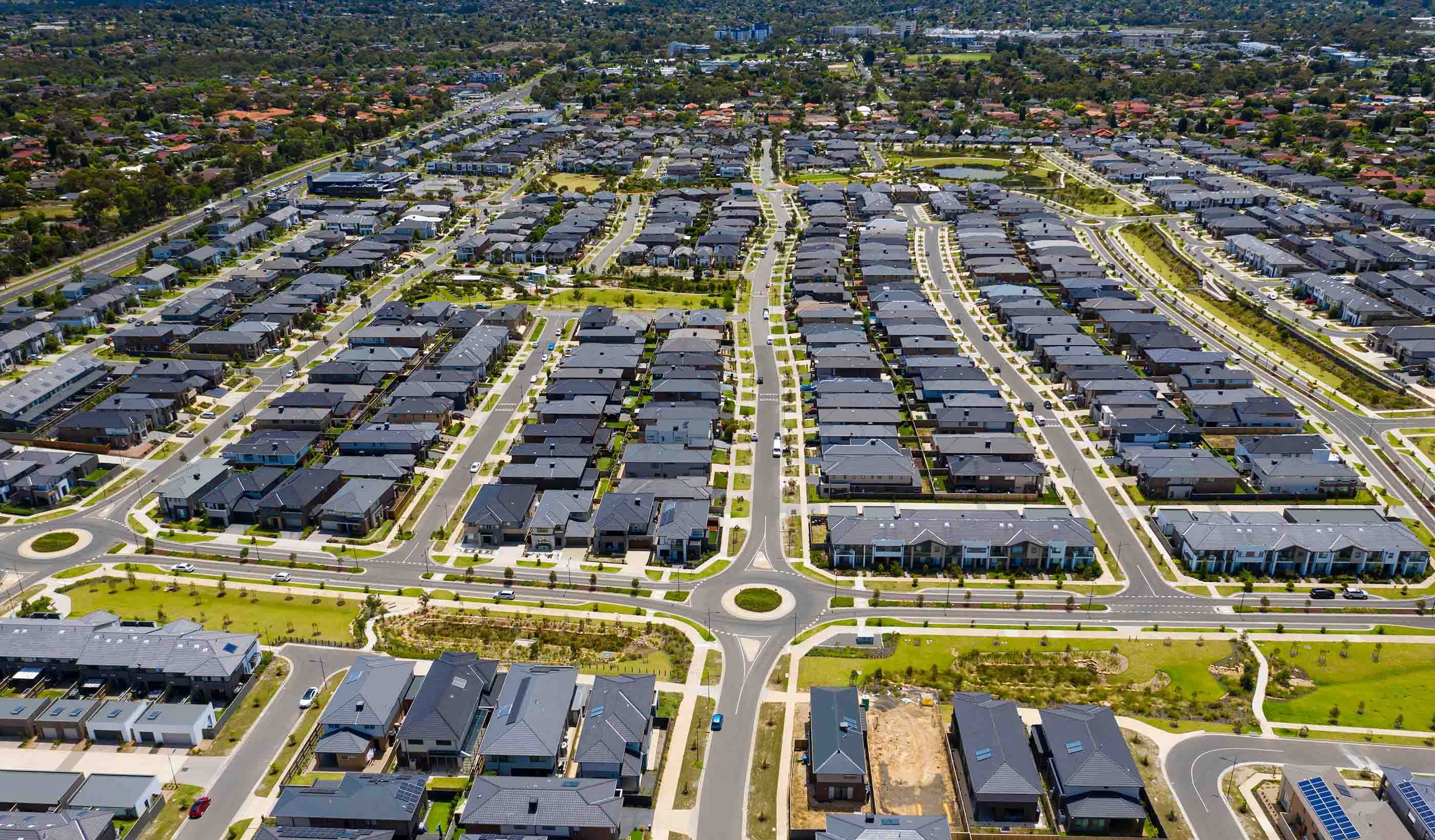
Drive south out of Narellan, cross the Camden Bypass and drop down toward the Nepean. Twenty years ago this was paddocks, vineyards and poultry sheds. Now it's a master-planned suburb of around four villages, ringed by bush corridors and the river bend, with the Blue Mountains on the western horizon.
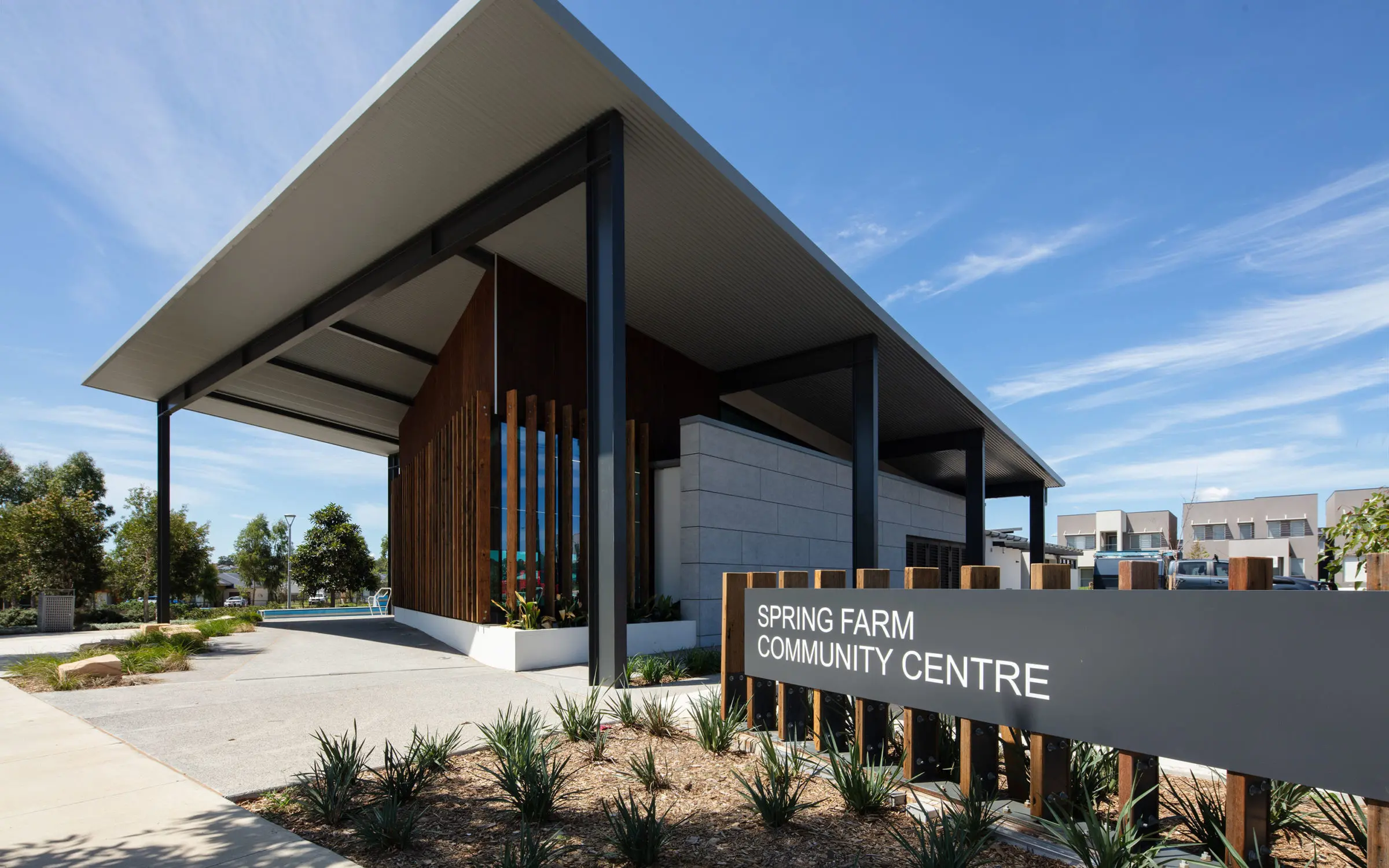
The first estate opened off Richardson Road in 2007. Three developers carved up roughly 3,900 lots between them. Springs Lake, the dog park, the Spring Farm Shopping Centre with its Woolworths, and a community centre at 275 Richardson Road now anchor daily life. The houses are new, the trees are young, and the families inside them are mostly under forty.
Mortgage stress is the loud quiet thing in Spring Farm. Households stretched into a new-build during the boom and are now feeling the rates climb. The commute is long. Many families moved here without a network, and three years in they still don't quite know their neighbours. Loneliness in young motherhood, dad fatigue, and the slow grind of two-income parenting are real currents underneath the surface.
The anchors are gentle and ordinary. Junior footy and netball at the local fields. The school gates at Spring Farm Public. The Spring Farm Community Centre on Richardson Road. Walking laps around Springs Lake at dusk. Coffee at the shops on a Saturday. None of it spectacular, all of it the connective tissue of a community still being knit together.
The demographic profile is unusually concentrated. A median age of thirty, a third of the population in the young adult bracket, more than sixty per cent of households being families with children, and a population just under ten thousand still pressing upward as the master plan fills out. This is a sweet spot for a young-family contemporary church.
The First Nations share at six per cent is also striking for outer Sydney, opening a real opportunity for a church that takes Indigenous welcome and partnership seriously from day one. Christian identification is high enough that there is residual openness to faith conversations, but church habit is thin enough that almost everyone is a fresh start rather than a transfer.
The challenge is honest: Spring Farm households are stretched financially, time-poor and tired, and a planter has to win trust at the school gate and the dog park before anyone will walk through a Sunday door. The opportunity is equally honest: this is the kind of suburb where a church that genuinely loves young families could become woven into the everyday life of the place within a single decade.
Spring Farm sits noticeably more religious than the national average, with Christian affiliation around fifty-four per cent against a national figure closer to forty-four, and non-religious identification at thirty-five per cent against thirty-nine nationally. But the dominant Christian story here is heritage Catholic and Anglican identification, much of it nominal. Younger residents are quietly drifting toward the secular average, and most of the cultural air the suburb breathes (kids' sport, screens, school life, weekend trade work) is shaped by everyday secular rhythms rather than any active church habit.

The closest Pentecostal presence is C3 New Hope at Currans Hill, around eight minutes from Spring Farm on Narellan Road, plus Inspire Church Macarthur in the Narellan area and an Apostolic Pentecostal congregation in Campbelltown. Beyond Pentecostal options there are evangelical Anglican parishes in Camden and Narellan, plus Catholic and traditional Protestant churches scattered through the older town centres.
What is genuinely missing is a contemporary, family-shaped church that lives inside Spring Farm itself, on its streets, at its school gates, in its community centre. The young families pouring into the new estates are a long way from any single Sunday gathering that feels like it belongs to them. The gap is not denominational competition; it is local presence in a suburb that has grown faster than its church planting has kept up with.
Cost of Living and Housing. Spring Farm is a buy-in-your-thirties kind of suburb. Most of the housing stock is detached new-build on small to medium lots, sold by Mirvac, Landcom and the Cornish Group across the four planned villages. Mortgages here stretched a lot of young families, and the rate cycle has been felt sharply. Rentals exist but the market is dominated by owner-occupiers.
Schools and Kids. Spring Farm Public School sits inside the suburb, with high schools and additional primaries close by in Camden, Mount Annan and Elderslie. Catholic and independent options run through the broader Macarthur area. With more than three in five households here being families with children, school drop-off and pick-up shape the whole rhythm of the week.
Weekend Life. Saturdays look like junior sport, the dog park near Springs Lake, the boardwalk around the lake itself, and barbecues at Starke Street Park or Riverside Park. Many families head into the Australian Botanic Garden at Mount Annan, ten minutes away, for the open lawns and free entry.
Town Centre and Vibe. The local Spring Farm Shopping Centre, opened in 2016, with its Woolworths and small strip of shops, handles everyday needs. For a bigger run it's Narellan Town Centre or the Crossroads Homemaker Centre on Camden Valley Way. The vibe is new-suburb quiet: lots of cul-de-sacs, lots of strollers, a hum of construction still going somewhere most days.
Nightlife and Culture. There isn't really a Spring Farm nightlife. Cafes and casual dining sit in Camden's heritage main street, eight minutes' drive away, alongside pubs and the historic streetscape. For a bigger night out it's Campbelltown or Sydney itself. The cultural pull here is the river, the bushland corridors and the slow gravity of family life.
Camden town centre. Around 8 minutes by car. Heritage main street, cafes, the historic St John's Anglican Church on the hill, and the Camden Hospital.
Narellan Town Centre. Around 10 minutes. The big regional shopping hub for the Macarthur area, with Coles, Kmart, Target and a wide food court.
Macarthur train station and Campbelltown. Around 15 to 20 minutes. The nearest rail link to Sydney, plus Western Sydney University's Campbelltown campus and Campbelltown Hospital.
Western Sydney Airport (Badgerys Creek). Around 25 to 30 minutes via the Camden Valley Way. Set to reshape the whole south-west on opening.
Sydney CBD. Around 60 to 75 minutes by car off-peak via the M5, longer in traffic. Around 75 to 90 minutes by train from Macarthur.
Wollongong and the South Coast. Around 45 minutes south through Picton. The closest beaches are an hour or so via the Illawarra escarpment.
Saturday morning at the Spring Farm dog park near the lake, the carpark fills with young couples, prams, kids on scooters, and a steady stream of parents balancing takeaway coffees from Camden. This is a young-families suburb in a hurry. Median age of thirty, more than three in five households with kids under the roof, and a third of all residents in the fifteen to thirty-four bracket. People moved out here because Sydney was unreachable on a single income and Camden still felt like the country.
The work mix runs from trades and construction to clerical, healthcare, sales and community services, with a steady commuter flow up the M5 and Camden Valley Way. The cultural picture is mostly Anglo-Australian, with a noticeable First Nations population at around six per cent, well above the metropolitan Sydney average. Faith identification is higher than the national norm here, with more than half of residents still ticking a Christian box on the census, although that figure carries a lot of nominal Catholic and Anglican identification more than weekly church practice.
Down to earth, family-anchored, comfortable in a tradie-and-young-mum culture. Someone who can talk school catchments and mortgage rates without flinching, who shows up at the junior footy sideline and means it, and who is not in a rush to look impressive.
Patience is the deep need. Spring Farm is still becoming itself. The planter who thrives here is willing to give five to ten years to building slowly with young families, not chasing a quick crowd. Someone whose own kids will grow up alongside the suburb.