
Tarneit is one of Melbourne's fastest-growing suburbs, a multicultural family-heavy outer-west community where former farmland is being turned into housing estates faster than churches can keep up. The harvest field is enormous and visibly under-resourced.
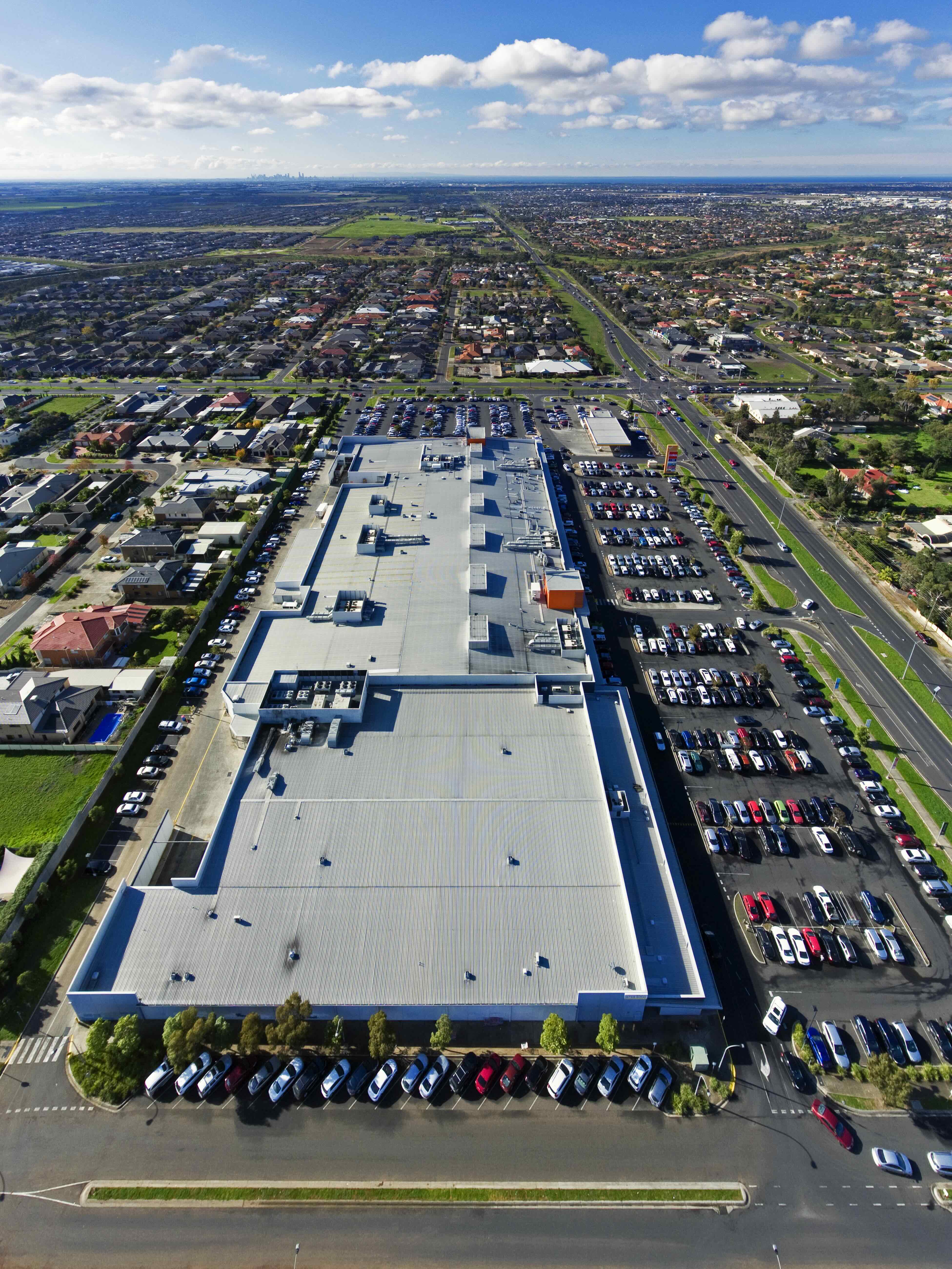
Drive 25 kilometres west of Melbourne's CBD, past Hoppers Crossing, and you arrive in a place that barely existed as a suburb fifteen years ago. Tarneit was grazing land. Today it is home to tens of thousands, with new estates pushing further into the paddocks each year and the Tarneit West train station planned to serve communities still being built.
The shape of old farms is still visible in the road layout. Bluestone walls and Dry Creek run through new subdivisions. But the suburb itself is overwhelmingly young, overwhelmingly family, and overwhelmingly migrant. The Age called it Melbourne's happiest suburb in 2023. It is also one of its most spiritually open, and one of its most under-churched.
The ache here is the ache of a suburb assembled too quickly. Neighbours don't know each other. Backyards are smaller than the parents grew up with. Mortgage stress and long commutes hollow out the week. Loneliness sits beneath the surface for newly arrived migrants whose extended families are an ocean away. Youth disconnection is showing in the schools. And the lack of a town centre means there are few natural gathering points for the community to actually meet.
The anchors that exist work hard. Junior cricket and footy clubs. The shopping centre food courts on a Saturday. Cultural festivals like the Tarneit Kite Festival, Firefly Night Markets, and the Pasifika Rise Up showcase. Temples, mosques and gurdwaras carry significant social weight. Schools are the closest thing to a parish for most families. The Wyndham council's Meet Me in Tarneit programme exists precisely because the council knows belonging here has to be deliberately built.
Tarneit carries almost every marker of strong planting opportunity in one place. A young median age of 30. Over 30% of residents aged 15-34. Families with children making up 71% of households. A First Nations population of 7.8%. Migrant communities arriving every week. Affordable housing still drawing new families. And a population already projected to more than double by 2041.
Spiritually, the suburb is open in a way few Australian places still are. Faith is socially normal. The default secular drift of Anglo-Australian culture has not yet taken hold. People talk about God without embarrassment. The challenge is not breaking through unbelief but offering a clear, Christ-centred, contemporary expression of church for a generation of young families forming their identity in this place.
The honest difficulty is real. Building community where neighbours barely know each other takes years. Cross-cultural ministry is slower than monocultural ministry. Mortgage-stressed families have less to give in time and money. But for the right planter, with the right team and the right patience, Tarneit is one of the most strategic mission fields in suburban Australia.
Tarneit sits well below the national average for non-religious affiliation at just 13.3%, and the Christian figure of 29.5%, while lower than the national 43.9%, sits alongside large Hindu, Sikh, Muslim and Buddhist populations. This is not a secular suburb. It is a religiously plural one, where faith is normal, family-shaped and openly practised, and where Christianity is one option among several rather than a default. Spiritual conversation flows easily. The mission challenge is not unbelief but distinguishing the gospel of Jesus from the cultural Christianity many migrants left behind.

For a suburb of this size and growth trajectory, the visible Christian footprint is remarkably thin. CrossCulture Tarneit, a recent church plant, has named the gap explicitly: aside from a Jehovah's Witness Kingdom Hall, a Unitarian congregation and a handful of ethnic churches meeting in community centres, there are almost no visible church buildings serving the wider population.
Three Pentecostal congregations are active in or around the suburb: Vision Pentecostal Church of Community, Gateway Christian Church (ACC) planted in 2008, and Equip Church International just over the boundary in Hoppers Crossing. None are large by outer-Melbourne standards. With a population pushing past 28,000 in this SA2 alone and the wider Tarneit area heading toward 130,000, a contemporary, English-language, family-focused, multicultural Pentecostal church has plenty of room to flourish.

Cost of Living and Housing. Tarneit's draw has always been affordability. House prices sit at roughly half their eastern-suburbs equivalents and land and house packages are still being released in master-planned estates like Bluestone and Newhaven. Median rents run lower than inner Melbourne but mortgage stress is real for the young migrant families who stretched into a first home here.
Schools and Kids. Schools are everywhere and growing. Tarneit P-9 College, Tarneit Senior College, Baden Powell College, Tarneit Rise Primary, Thomas Carr Catholic College, the Islamic College of Melbourne, Westbourne Grammar and Al-Taqwa College all sit in or around the suburb. With 71% of households being families with children, the school gate is the social hub.
Weekend Life. Saturdays mean junior sport at one of the dozens of local ovals, a trip to Tarneit Central or Wyndham Village shopping centres, and a wander along the Werribee River wetlands. The Kite Festival and Firefly Night Markets bring tens of thousands out each year. Western United FC's new Ironbark Fields stadium on Sayers Road has given Tarneit its first piece of A-League sporting identity.
Town Centre and Vibe. There is no single old town centre. Tarneit Central, opened in 2017 with Coles, Aldi, Kmart and Harris Scarfe, anchors the south. Wyndham Village serves the east. A formal central village is planned for the future. The vibe is new, cosmopolitan, and unfinished, with construction fences part of the everyday view.
Nightlife and Culture. Nightlife is family nightlife. Hotel 520 on Sayers Road draws bistro crowds. Indian, Sri Lankan, Punjabi and Filipino restaurants line the shopping strips. Cultural life runs through the Pasifika Rise Up festival, Indian community events, and the Wyndham council's Meet Me in Tarneit activations rather than through pubs and clubs.
Melbourne CBD. 30 to 40 minutes by car along the Princes or Western Freeway, or a direct 40-minute train into Southern Cross from Tarneit station.
Werribee and Pacific Werribee. 10 to 15 minutes south. The regional shopping centre, Werribee Mercy Hospital and the Werribee Open Range Zoo all sit within easy reach.
Geelong. Around 40 minutes by V/Line train or car. The second city of Victoria and a growing employment alternative to Melbourne.
Avalon Airport. About 30 minutes by car. Melbourne Airport is a similar drive in the other direction.
Footscray and the inner west. 25 minutes east. The closest cluster of universities, hospitals and inner-city culture, including Victoria University and Sunshine Hospital.
Saturday morning at Tarneit Central, the carpark is a portrait of multicultural Melbourne. Indian, Sri Lankan, Filipino, Punjabi and Pasifika families load groceries into people-movers. Around a quarter of residents claim Indian ancestry. Punjabi, Hindi and Tagalog spill out of conversations as freely as English. Many were born overseas, many more are the children of migrants, and almost all of them moved to Tarneit in the last decade with one shared story: a first home, a backyard, a school down the road, a better life for the kids.
The First Nations population at 7.8% is unusually high for outer Melbourne, reflecting both the suburb's relative affordability and active Indigenous community presence. Median age sits at 30. Children under fifteen make up nearly a third of residents. Incomes are modest to middling, occupations spread across trades, healthcare, transport, hospitality and an emerging professional cohort who commute by train. This is aspirational, working, multicultural, family Melbourne, raising the next generation in a community still figuring out who it is.
Cross-culturally fluent. Comfortable in a room where five languages are being spoken and English is the second one for most people. Hospitable on a level that goes beyond Sunday morning. Patient with new arrivals, with mortgage stress, with families who have never been inside a Pentecostal church.
Probably a young family themselves. Likely from a migrant background, or married to one, or with significant cross-cultural ministry experience. Excited rather than intimidated by the school-gate-and-shopping-centre rhythms of outer-suburban life. Not wedded to inner-city aesthetics. Willing to plant for the long haul in a community that is still being built around them.