
Thornlands sits on Brisbane's bayside edge, a fast-growing Redlands suburb where new estates push south into old fruit-farming country. Young families, tradies and bay commuters are reshaping a community still finding its identity.
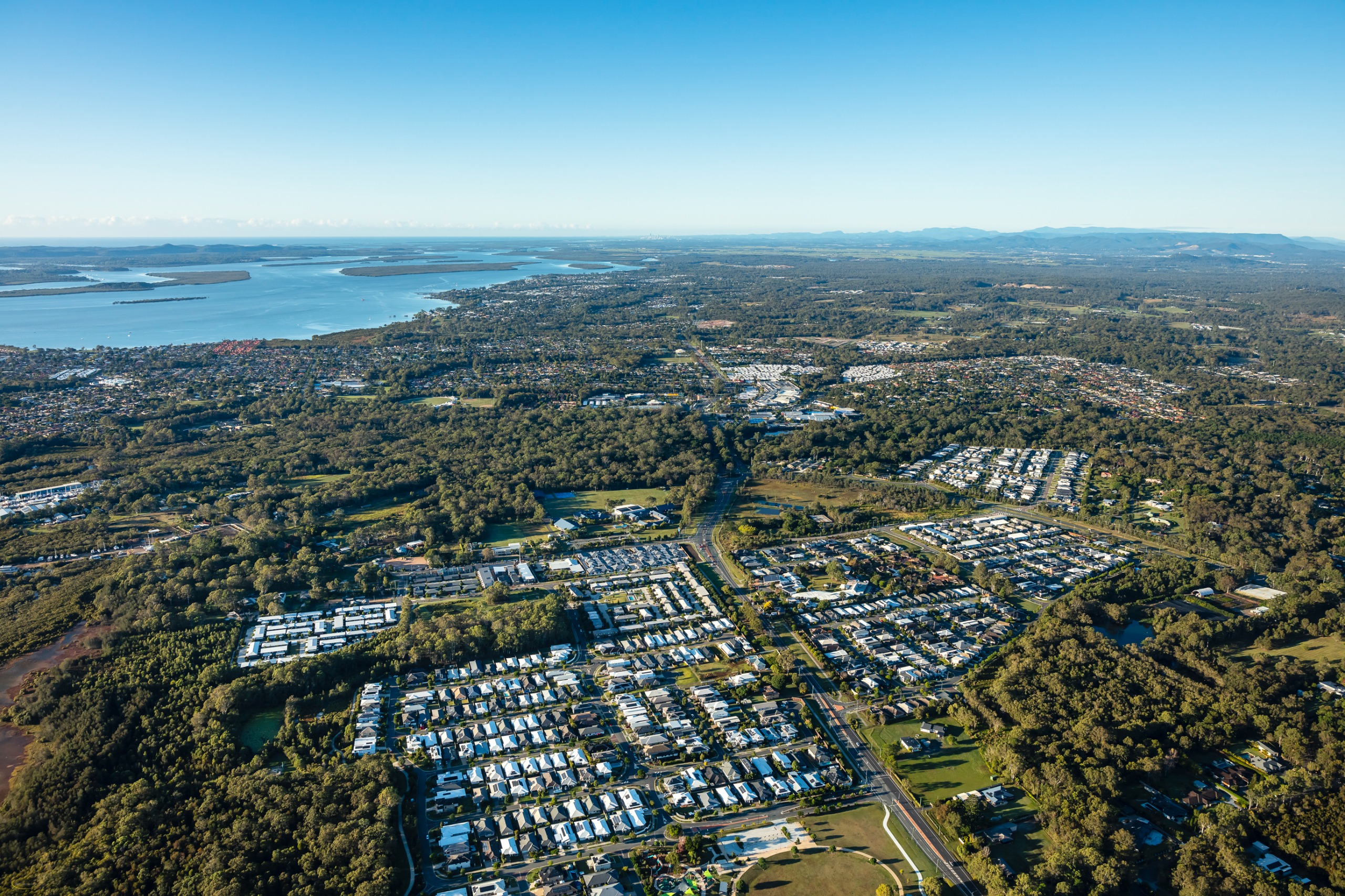
Drive 30 minutes south-east of Brisbane CBD and the streets soften into the Redlands. Thornlands sits between Cleveland and Victoria Point, hugging the bay side of Boundary Road. Once a patchwork of pineapple, strawberry and citrus farms, the suburb has spent the last two decades filling with new housing estates while a rural fringe survives in the south.
It is coastal but not beachfront, suburban but not urban. The bay sits ten minutes east, the Mount Cotton bushland rises to the south, and a steady stream of young families keeps arriving for backyards, schools and the slower pace. The community forming here is still working out who it is.
The ache here is mortgage stress, isolation in newer estates, and the slow loneliness of a suburb where everyone drives and nobody walks. Mental health pressure is real, especially for men in trades and for teenagers cut off from a town centre that does not really exist. First Nations residents carry their own histories of displacement and grief. And the older Thornlands cohort sometimes feels left behind as the new estates roll past their farm gates.
The anchors are the schools, the junior sports clubs, the Cleveland foreshore, the bay islands, and the slow social gravity of the school gate and the bakery queue. Faith Lutheran College, Carmel College and the state schools quietly hold a lot of community life together. Nothing flashy. Most of it volunteer-driven, and most of it essential.
Thornlands carries strong markers of a planting opportunity. Population is growing well above the national rate, families with children make up more than half the households, and there are nearly 5,000 young adults aged 15 to 34 within the suburb alone. The Christian affiliation rate is meaningfully above the national figure, suggesting a residue of openness even as the no-religion line climbs.
The cultural moment is real. Redland Hospital is mid-expansion. The Brisbane 2032 Olympics is bringing a whitewater venue and infrastructure investment to the Birkdale precinct just north. New estates keep arriving, and with them families who do not yet have a community here.
It will not be easy. Mortgage pressure is high, the suburb has no obvious centre to gather around, and existing churches in the wider Redlands have a head start. But for a planter willing to live the schools, the sport, the bay and the long Saturday afternoons, there is a community here genuinely worth building a church inside.
Christian affiliation in Thornlands sits noticeably above the national average, but the no-religion figure is climbing fast and now sits above 42 per cent. The cultural posture is not hostile to faith, more quietly indifferent: church is something other people do, or something the older generation grew up with. Many families have a Christian school connection through Faith Lutheran or Carmel College without any active church involvement, which is its own kind of soft, drift-prone secularism the suburb hasn't fully reckoned with yet.

The Redlands has more church infrastructure than many growth suburbs. Cleveland Baptist, Victoria Point Baptist, Redlands Presbyterian at Capalaba and a handful of Uniting and Lutheran congregations cover the traditional and contemporary spread, and there is a small Pentecostal presence in the area through Rhema Redlands, New Covenant in Capalaba and the IPHC church.
What is thinner on the ground is a contemporary Pentecostal expression sitting inside Thornlands itself, rather than 10 minutes up the road in Capalaba or Cleveland. With nearly 5,000 young adults and a high concentration of young families with children, there is room for a culturally fluent church that speaks the language of the new estates, the school run and the bayside lifestyle without feeling imported from the city.
Cost of Living and Housing. Thornlands is not cheap. The median monthly mortgage repayment sits well above the Brisbane metro average, and weekly rents are noticeably higher than the national figure. Almost nine in ten dwellings are houses, most on a generous block, and that is the trade families come here to make: more land, longer commute, bigger mortgage.
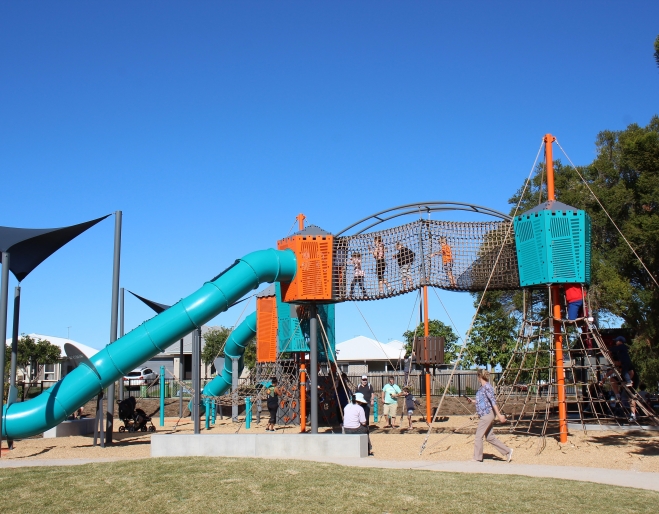
Schools and Kids. The school run is a real anchor of life here. Thornlands State School and Bay View State School handle the public side, while Carmel College and Faith Lutheran College draw families from across the Redlands. There is no government high school in the suburb itself, so older kids head to Cleveland or Victoria Point. Junior sport runs through the local clubs every weekend.
Weekend Life. Saturdays orbit around bay and bush. Cleveland's foreshore is ten minutes north, the Mount Cotton hinterland and Sirromet Winery sit a short drive south, and Coochiemudlo and Stradbroke ferries leave from Toondah Harbour. Plenty of families do nothing more glamorous than the morning bakery run, footy at the local oval, and a swim somewhere by lunchtime.
Town Centre and Vibe. Thornlands does not have a true town centre of its own. Daily life flows toward the Cleveland-Redland Bay Road shops, the small Thornlands shopping village, and the larger centres at Victoria Point and Cleveland. The vibe is suburban, family-heavy, dog-walker friendly, and tied to the rhythm of the bay.
Nightlife and Culture. Nightlife is modest. The bigger pubs and clubs are at Cleveland and Victoria Point, and anything more involved usually means a drive into Carindale or the city. Cultural life is low-key: school concerts, community markets, the Redlands Performing Arts Centre at Cleveland, and the slow gravity of bay-side living.
Brisbane CBD. Around 40 minutes by car off-peak, longer in the morning crawl. The Cleveland line train from Cleveland or Ormiston station runs into Roma Street in roughly an hour.
Redland Hospital. About 10 minutes away in Cleveland, currently in the middle of a major multi-stage expansion that has added an ICU, a new mental health building and hundreds of car spaces.
Carindale and Westfield. 20 to 25 minutes west by car. The default destination for serious shopping and the nearest large cinema complex.
Toondah Harbour and the Bay Islands. 10 minutes north to Cleveland, where ferries run to Coochiemudlo and North Stradbroke Island. For many local families, this is the weekend.
Brisbane Airport. Around 40 to 50 minutes by car via the Gateway Motorway.
Gold Coast. Roughly an hour south down the M1, putting Surfers Paradise within day-trip range.
Saturday morning at the Thornlands shops, the queue at the bakery is families in activewear, tradies grabbing a pie before a job, and grey-haired locals who have lived here since the suburb was farms. The carparks fill with utes, four-wheel drives and people-movers. This is a community of construction workers, healthcare staff at Redland Hospital, public servants commuting to the CBD, and small-business owners running things out of their garage. Plenty of young couples have stretched into a house here because it is one of the last bayside suburbs where the maths still works.
The cultural mix is predominantly Anglo-Australian, with the Redlands historically drawing English, New Zealand and South African migrants. The First Nations population is meaningful at well above the national average, with deep Quandamooka connections through Stradbroke Island just across the bay. There is also a quieter cohort of older residents who arrived as young families in the eighties and nineties and never left, watching the paddocks around them slowly turn into estates.
Family-stage, outdoor-comfortable, at home in bayside Brisbane. Can hold a conversation with a tradie at the bakery and a school principal at pick-up. Patient enough to build slowly in a suburb that is still figuring out its identity.
Loves kids and youth ministry, takes school partnerships seriously, and is willing to plant their own family deep into local sport, schools and community life. Not someone chasing a city-stage platform. Someone who actually wants to live here for the long haul.