
Thornton was a quiet rail-line suburb a generation ago. Now it's the fastest-growing pocket of Maitland, a young-family belt of new estates and old streets sitting between Newcastle and the Hunter Valley.
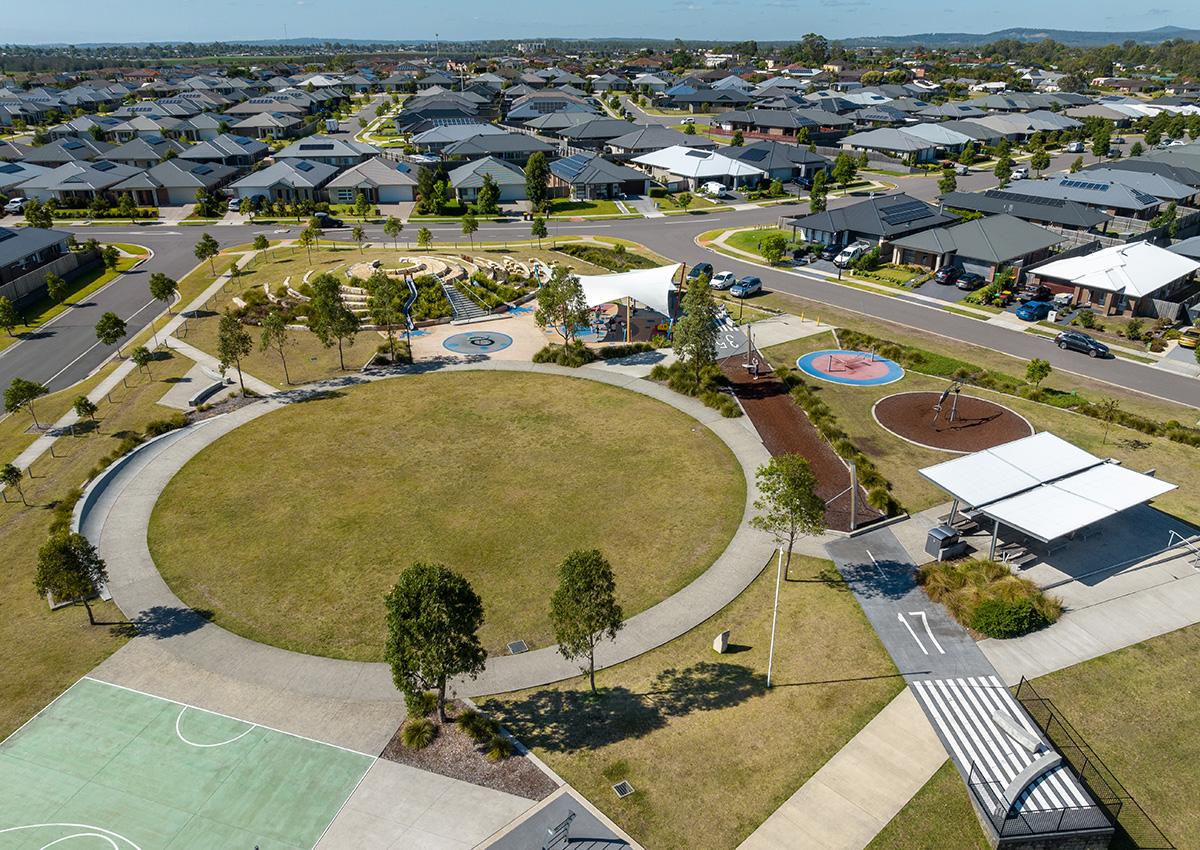
Drive west out of Newcastle along the New England Highway and within twenty minutes you hit Thornton. Once a small railway village, it has become one of the busiest residential frontiers in the Hunter, with new estates pushing north and east into Chisholm, Somerset Park and Millers Forest. Bulldozers, display villages and freshly poured kerbs are part of the daily backdrop.
Maitland City Council has flagged $155 million in road works to keep up with growth, and the East Maitland Catalyst Area next door is set to deliver thousands more homes around the new Maitland Hospital. Thornton sits in the middle of all of it, still figuring out who it wants to be.
Mortgage stress is real here. Buyers stretched hard into a million-dollar purchase and then watched the rates climb, and renters are competing against very tight supply. Traffic on Government Road and Haussman Drive grinds through peak hour while the road network catches up. In the newer streets, neighbours who moved in eighteen months ago still don't quite know each other, and isolation creeps in for young mums home all day with toddlers in a cul-de-sac.
The anchors are familiar Hunter ones. Thornton Park and the local sports fields. The library on Taylor Avenue. Thornton Public and the school gate. Junior footy, netball and soccer clubs. The bakery and the cafes in the shopping centre. Nothing flash, all of it doing the slow work of holding a fast-growing place together.
The demographic numbers in Thornton are striking. Population growth at almost 10% per year against a national figure of 1.3%. Median age of 33, well below the national 38. Families with children at nearly 55%, around fifteen points above the national average. A young-adult share of close to 30%. These are precisely the markers of a community in formation, with thousands of new residents each year arriving without a church, a community or a sense of who their neighbours are.
Christian affiliation is still high here, but the gap between cultural Christian identity and active discipleship is widening fast among the young families moving in. A planter who can build a warm, relational, contemporary expression of church — one that takes mortgage stress, blue-collar life and young-family chaos seriously — would step into a community that is both spiritually open and practically under-served.
The challenge is honest. Tight family budgets, time-poor parents, traffic congestion, a community still figuring out its identity. But the opportunity is just as real: thousands of young families looking for somewhere to belong, in a corner of the Hunter where the church footprint has not kept pace with the people.
Thornton runs against the national grain spiritually. Christian affiliation sits well above the Australian average, and the non-religious figure is fractionally below it. This is still a culturally Christian community, with church identity carried by older families, Catholic schooling and a residual Anglican presence. But the trajectory among the young-adult cohort moving into the new estates looks like the rest of suburban Australia: warm to faith in principle, disconnected from a local church in practice, and unlikely to walk into a Sunday service without a relational invitation.

The contemporary church footprint in Thornton itself is thin. H2O Baptist on Pipeclay Avenue is the closest contemporary congregation in the suburb. Hunter Christian Life Centre in Beresfield, just five minutes south, is the only Pentecostal church identified in the immediate area, and Goodlife Church Maitland sits nearby. Beyond that, candidates would need to drive to Hillsong Newcastle at Waratah, around twenty-five minutes away, for a larger Pentecostal expression.
For a young-adult-heavy, family-saturated community of nearly 16,000 people growing at almost 10% a year, that is a real gap. Most of the people moving into the new estates have no existing church connection in the area, and the demographic that contemporary Pentecostal churches reach most naturally — young families, tradies, frontline workers in their twenties and thirties — is exactly who is buying here.

Cost of Living and Housing. Thornton sits in the upper end of Hunter affordability now. Median house values have climbed past $900,000 in some streets, and the new estates push higher again. Rents around $560 to $620 a week are common. First-home buyers stretch hard to get in; many are people who priced out of Newcastle proper and traded a longer commute for a backyard.
Schools and Kids. Thornton Public School anchors the older village. Aspect Hunter School at Thornton offers K-12 schooling for students with autism, drawing families from across the Hunter. Catholic options sit just down the road at St Aloysius, with St Bede's College in nearby Chisholm. Junior sport runs hard out of Thornton Park and the local ovals on Saturdays.
Weekend Life. Mornings at the bakery, the playground at Thornton Park, then over to Green Hills at East Maitland for the supermarket run. The Hunter Valley vineyards are forty minutes west; Stockton Beach and Port Stephens are forty minutes east. Plenty of families simply do both in the one weekend.
Town Centre and Vibe. The heart of Thornton is the shopping centre on Taylor Avenue, with the library next door and the railway station a short walk away. It is unpretentious, practical, designed to do the week's errands. The new estates feel different again: wide streets, double-garage facades, kids on scooters at dusk.
Nightlife and Culture. Thornton itself is quiet after dark. Most nights out happen in East Maitland, Maitland CBD or down in Newcastle, all under thirty minutes away. The Levee in Maitland runs a steady program of festivals and events; Newcastle's bar and live-music scene is a short train ride from Thornton station.
Newcastle CBD. 25 to 30 minutes by car, or 18 minutes on the express Hunter Line train from Thornton station. Most professional commuters head this way for work.
Maitland CBD and The Levee. 10 to 15 minutes west along the New England Highway. Council services, hospitals, festivals and the riverfront precinct.
The new Maitland Hospital. 10 minutes at Metford. Opened in 2022 as the regional public hospital, anchoring the East Maitland Catalyst Area.
Newcastle Airport and Williamtown RAAF Base. 25 minutes north via the M1. Direct flights to Sydney, Melbourne, Brisbane and the Gold Coast, plus a significant defence employment base.
Hunter Valley wine country. 40 minutes west via the Hunter Expressway. Pokolbin, Cessnock and the cellar doors are an easy day trip.
Stockton Beach and Port Stephens. 35 to 45 minutes north-east. The closest surf, sand dunes and dolphin coast.
Saturday morning at Thornton Oval the carpark fills with utes, work vans and family wagons. Tradies coffee in hand, kids in footy and netball strips, parents catching up on the sideline. This is a tradie-and-trades-worker belt: a noticeably high share of technicians and trades workers, manufacturing, construction, healthcare and retail. Defence force families are a real presence here too, drawn by Williamtown RAAF up the road. Professional work sits well below the state average, but household incomes are reasonable because two adults are usually working.
The cultural mix is predominantly Anglo-Australian, with English the home language for the great majority of households. Thornton also carries a notable First Nations population, well above the national figure, in line with the broader Lower Hunter. The young-adult share is strong and the proportion of families with children sits comfortably above the national average. Plenty of new arrivals are Sydney refugees who sold a unit out west and traded the commute for a yard, a school and a mortgage they can actually breathe under.
Unpretentious, practical, comfortable in Hunter culture. Can talk Knights NRL, footy sidelines, trades, kids' sport. Drives a ute or a wagon. Turns up at the school fete and means it. Knows how to build a church through relationships and barbecues, not just slick Sundays.
This is not a place for a city-slick communicator who wants a downtown vibe. It is a place for a planter and family who can settle into school drop-off, junior footy training and a long-term posture of belonging. Patience, blue-collar warmth and the ability to disciple young couples through mortgage stress, parenting and faith from scratch will matter more than platform polish.