
A young, fast-growing pocket of Melbourne's outer west where new estates rise out of paddocks and Indian, Filipino and African families are putting down roots together. Median age 30, two-thirds of households raising children, and barely a contemporary church in sight.

Drive west from Melbourne along the Western Freeway and the city falls away into a patchwork of construction zones, display villages and recently completed estates. Truganina North sits at the edge of Melbourne's growth front, straddling the City of Melton boundary and absorbing thousands of young families a year. A decade ago this was farmland. Today it is one of the most rapidly built places in the country.
The streets feel new because they are. Brick-and-render homes, wide arterials still being widened, primary schools opening with full enrolments before they finish landscaping. Half the cars on the school run carry families who arrived in Australia in the last ten years. The community here is forming in real time.
The ache here is the ache of any rapidly built outer suburb: people are tired, mortgages are heavy, and the social fabric has not yet caught up with the scale of arrivals. New residents often know nobody on their street. Couples juggle long commutes, shift work and small children with limited family support nearby. Loneliness sits behind tidy front doors, especially among recent migrants whose extended family is still overseas.
The anchors are the school gate, the cricket and soccer clubs at the local reserves, the Arndell Park Community Centre, and the cultural and faith communities that bind people across language. Birthday parties, religious festivals and weekend sport carry most of the social weight. Connection happens slowly, in small circles, around children.
Truganina North carries an unusual combination of indicators. The population is overwhelmingly young, the median age of thirty sits eight years below the national figure, and almost forty per cent of residents are in the fifteen to thirty-four bracket where most first lifelong faith decisions are made. Two-thirds of families are raising children. The area is still being built, which means the community itself is still being built.
The cultural profile demands a different posture. This is not a post-Christian suburb to be re-evangelised. It is a multicultural, multi-faith new community where Christianity is one option among several, held by a real but minority share of households who are largely under-served by existing contemporary churches. There is room for honest friendship, hospitality, and a Christian community that genuinely reflects the people on the streets around it.
It will be slow work, with real cultural learning required. The reward is a generation of children growing up in a church that knows their families, speaks their languages, and sits inside the suburb rather than across town.
Truganina North does not look like the rest of secular Australia. Only one in ten residents tick 'no religion', well under a third of the national figure, while Hindu, Muslim, Sikh and Christian identifications together cover the vast majority of households. This is not a secular suburb refusing faith. It is a deeply religious suburb where the dominant faiths are not Christianity, and where Christian identification sits at half the national rate. The spiritual openness is real, but it is plural, and it cannot be assumed.

Three small Pentecostal congregations are active within the suburb itself, alongside a large Islamic college and mosque on Sayers Road and various Hindu and Sikh gathering places nearby. There is no large contemporary English-speaking Pentecostal church serving the wider Truganina North area, and the closest major contemporary churches sit a fifteen to twenty minute drive away in Werribee, Hoppers Crossing or Footscray.
The gap is not the absence of religion, it is the absence of contemporary Christian community at a scale that matches the population. Around nine thousand people in this SA2 alone, more than a fifth identifying as Christian, are mostly travelling out of the suburb to find a church or quietly disengaging from one altogether.
Cost of Living and Housing. Truganina North is one of the more affordable corners of Melbourne for a brand-new four-bedroom home, which is precisely why young families keep arriving. Mortgages are stretched and many households run two incomes to make it work. Rentals are tight, with new builds turning over quickly.
Schools and Kids. Schools are opening as fast as estates can fill. Truganina P-9 College, Westbourne Grammar's long-established Truganina campus and a growing roster of new state primaries serve the area. Childcare centres sit on every second corner. Demand outstrips supply almost everywhere.
Weekend Life. Saturday mornings revolve around junior sport, the Tarneit Central food court and a slow loop through Bunnings or Costco at Williams Landing. Families pile into cars for Werribee Plaza, Point Cook beach or the Federation Trail bike paths along Skeleton Creek.
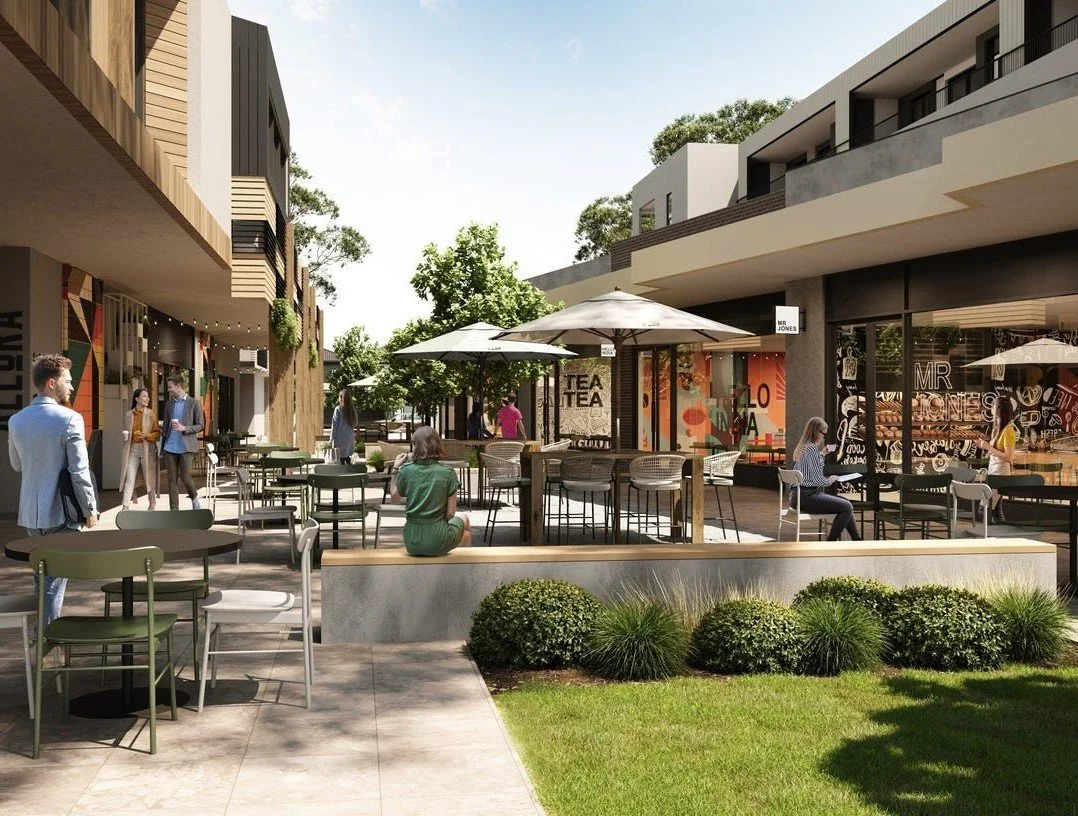
Town Centre and Vibe. There is no real town centre yet. Daily life happens at strip shops along Sayers Road and Dohertys Road, and at the Tarneit and Williams Landing centres a short drive away. The vibe is suburban, multicultural, and unfinished, with new shopfronts opening as the population catches up.
Nightlife and Culture. Nightlife is mostly takeaway curry houses, family-run South Asian restaurants and a strong cafe scene oriented to young families rather than singles. Religious and cultural festivals shape the calendar. Anyone wanting bars and live music heads to Footscray or the city.
Melbourne CBD. Around 25 to 30 minutes by car off-peak via the Western Freeway, longer in traffic. The train from Tarneit or Williams Landing reaches Southern Cross in roughly 30 minutes.
Williams Landing and Tarneit Stations. Both about 5 to 10 minutes by car. The two stations carry most of the area's commuting load and feed bus routes through the surrounding estates.
Werribee Mercy Hospital. Around 15 minutes south, the closest major public hospital and a key employer for healthcare workers across the area.
Point Cook and Altona Beaches. Around 25 to 30 minutes south. The default summer escape for families across Truganina.
Melbourne Airport. Roughly 30 minutes north via the Western Ring Road, important for a community with strong overseas family ties.
Geelong. Around 45 minutes south-west on the Princes Freeway, increasingly within commuting reach for residents working along the western corridor.
Saturday morning at one of the new local parks, the playground equipment is barely a year old and already worn shiny by use. Parents push prams in pairs, swap notes on schools, hand around snacks. The accents are layered: Indian English, Filipino, Punjabi, Mandarin, Arabic, broad Australian. Truganina is one of the first suburbs in Victoria to record a majority Indian-heritage population, and that texture runs right through daily life from the supermarket aisle to the school assembly.
The economic profile leans practical. Logistics, healthcare, retail, IT, transport and trades dominate. Many residents commute to the CBD or to the warehousing belt around Laverton and Derrimut. Households are young, with a median age of thirty and almost forty per cent aged between fifteen and thirty-four. Two in three families have children at home. First-home buyers, recent migrants and growing families form the backbone of the community.
Cross-cultural by instinct, not training. Comfortable in homes where shoes come off at the door, where dinner is biryani at nine pm, where the conversation slips between three languages. Patient with slow-building friendships and unhurried by Western models of growth.
Strong in family ministry, comfortable with kids underfoot, energised by young adults rather than drained by them. Willing to live local, send their own children to local schools, and be known by name at the same handful of shops for years. A planter chasing a polished, attractional Sunday will struggle. A planter who loves people slowly will flourish.