
Wallan was a country town until about ten years ago. Now it's one of Melbourne's fastest-growing northern fringe townships, where new estates spread across former farmland and young families are pouring in for affordable land and a V/Line ride to the city.
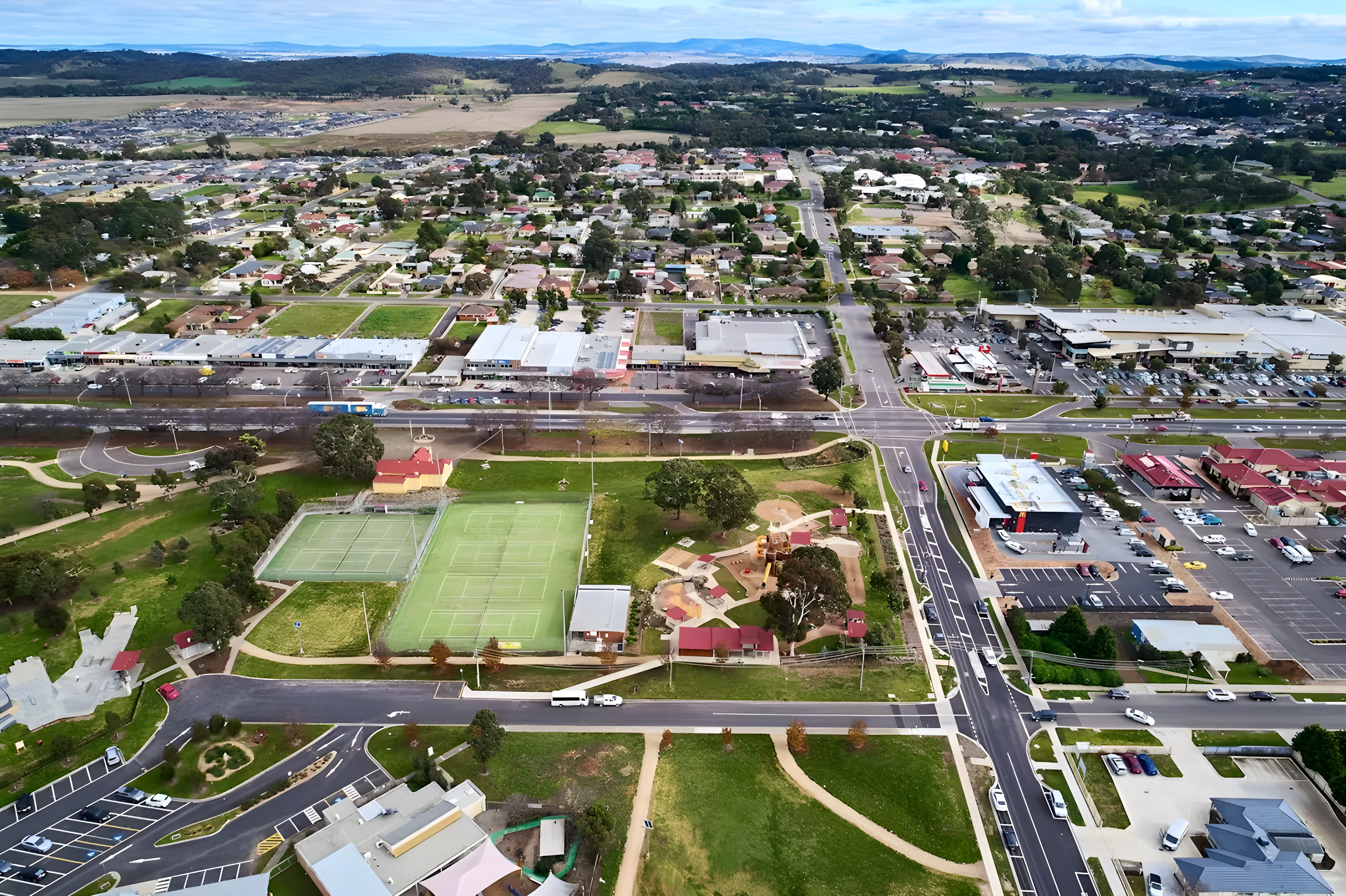
Drive an hour north up the Hume Freeway from Melbourne and the paddocks start opening up. Wallan sits at the foot of the Great Dividing Range in Mitchell Shire, a town that grew out of an 1858 post office and stayed quietly rural for most of its life. That has changed fast. New estates like Wallara Waters and the Hidden Valley area have pushed the population well past twenty thousand, with more housing rolling out every year.
The result is a township halfway through a transformation. The old main street still feels country. The new estates feel suburban. A billion-dollar redevelopment of Wallan Plaza and a new transport hub are reshaping the centre, and a brand-new primary school opened in Wallara Waters in 2026. The community forming through all of this is still figuring out who it is.
Mortgage stress, commute fatigue and the loneliness of brand-new estates run quietly under the surface here. Buyers stretched into a seven-figure spend in some of the newer streets and now watch the rates and the petrol bill climb. The drive south on the Hume in peak hour can stretch the daily commute well past the V/Line schedule. In the newest cul-de-sacs, neighbours who moved in last year still don't quite know each other. Youth disconnection and men's mental health surface in the same patterns common to fast-growing fringe towns.
The anchors are the junior footy and netball clubs, the Wallan Farmers Market, the local primary schools and the slow social gravity of school gates and Friday-night sport. Historical and community groups have worked hard to hold a country-town identity through a decade of change. None of it is glamorous. All of it is doing the work of stitching a community together in real time.
Wallan carries the demographic markers that make outer-fringe planting work. A population growing at 6.9% per year. Median age of 33. Almost six in ten households are families with children. Young adults make up 27.9% of the population, broadly in line with the national figure but in a community where most are coupled up and raising kids. The pipeline of new residents is steady and looks set to continue as the Wallan Plaza redevelopment, the new transport hub and ongoing estate releases reshape the town through the rest of the decade.
The missional gap is genuine. No Pentecostal or charismatic church operates within the township. The closest contemporary Christian options for a young family are a half-hour down the Hume. For a community whose identity is still being formed, the chance to be part of that formation, rather than arriving after it has set, is a rare window.
The challenge is honest. Wallan is not a hipster suburb or a cultural hub. The crowd is tradies, healthcare workers, commuters and country-town locals. Building here means showing up at the oval, the school gate and the farmers market over years, and trusting that depth of relationship is the soil this kind of place actually grows in.
Wallan tracks close to the national picture rather than ahead of it. Christian affiliation sits at 41.8% and non-religious at 40.3%, almost a dead heat, and broadly in line with the country as a whole. The cultural posture is practical and family-focused rather than aggressively secular. Most residents aren't hostile to faith so much as untouched by it. For young families pouring into new estates with no inherited church habit, faith is one option among many on a crowded weekend, and rarely the default one.

The contemporary Christian presence inside Wallan itself is thin. Wallan Gateway Church is the main evangelical option in town, with the Uniting and Catholic parishes covering the more traditional end of the spectrum. There is no Pentecostal or charismatic church operating within the township. The closest established options sit 25 to 30 minutes south at Planetshakers North Campus in South Morang and at multi-campus churches around Mernda, Doreen and South Morang.
That distance matters. A young family in a new Wallara Waters estate trying to get to a Sunday service in South Morang faces a 30-minute drive each way before kids' programs even start. The gap is most pronounced for the families flooding into the new estates: young, time-poor, looking for a contemporary expression of faith with strong children's and youth ministry, and currently more than half an hour from the nearest one.
Cost of Living and Housing. Median house prices sit around six hundred thousand dollars, with new house-and-land packages in estates like Wallara Waters drawing first-home buyers priced out of inner Melbourne. Rents land near $470 a week for a house. Most homes are owner-occupied. Mortgage stress is real for those who stretched into a new build at peak rates.
Schools and Kids. Wallan Primary, Wallan Secondary College and the Catholic system anchor the public picture, with the new Muyan Primary School opening in Wallara Waters in 2026. Kilmore is ten minutes north for Assumption College, Kilmore International School and St Patrick's Primary. Childcare and kindergartens are stretched but expanding alongside the housing.
Weekend Life. Saturdays revolve around junior sport, the local footy and netball clubs, and a monthly farmers market that pulls people out of the new estates and into the older town centre. Hanging Rock, the Macedon Ranges and the wineries of Heathcote and Lancefield are all inside an hour. Plenty of locals keep horses on the bigger blocks at the edge of town.
Town Centre and Vibe. The strip along the Hume highway frontage carries the old country-town bones, with Wellington Square Shopping Centre, Coles, Woolworths and a handful of family-run cafes and takeaway shops doing the daily trade. The billion-dollar Wallan Plaza redevelopment, due late 2025, is set to add a much bigger retail and dining footprint and shift the centre of gravity.
Nightlife and Culture. Quiet. A pub or two, the Hidden Valley restaurant and bar, and a handful of clubs cover the after-dark options. For anything more, locals head south to Craigieburn or Epping Plaza, or down to Melbourne on the V/Line for a proper night out. Most evenings here are home, family, garage, kids' bedtime.
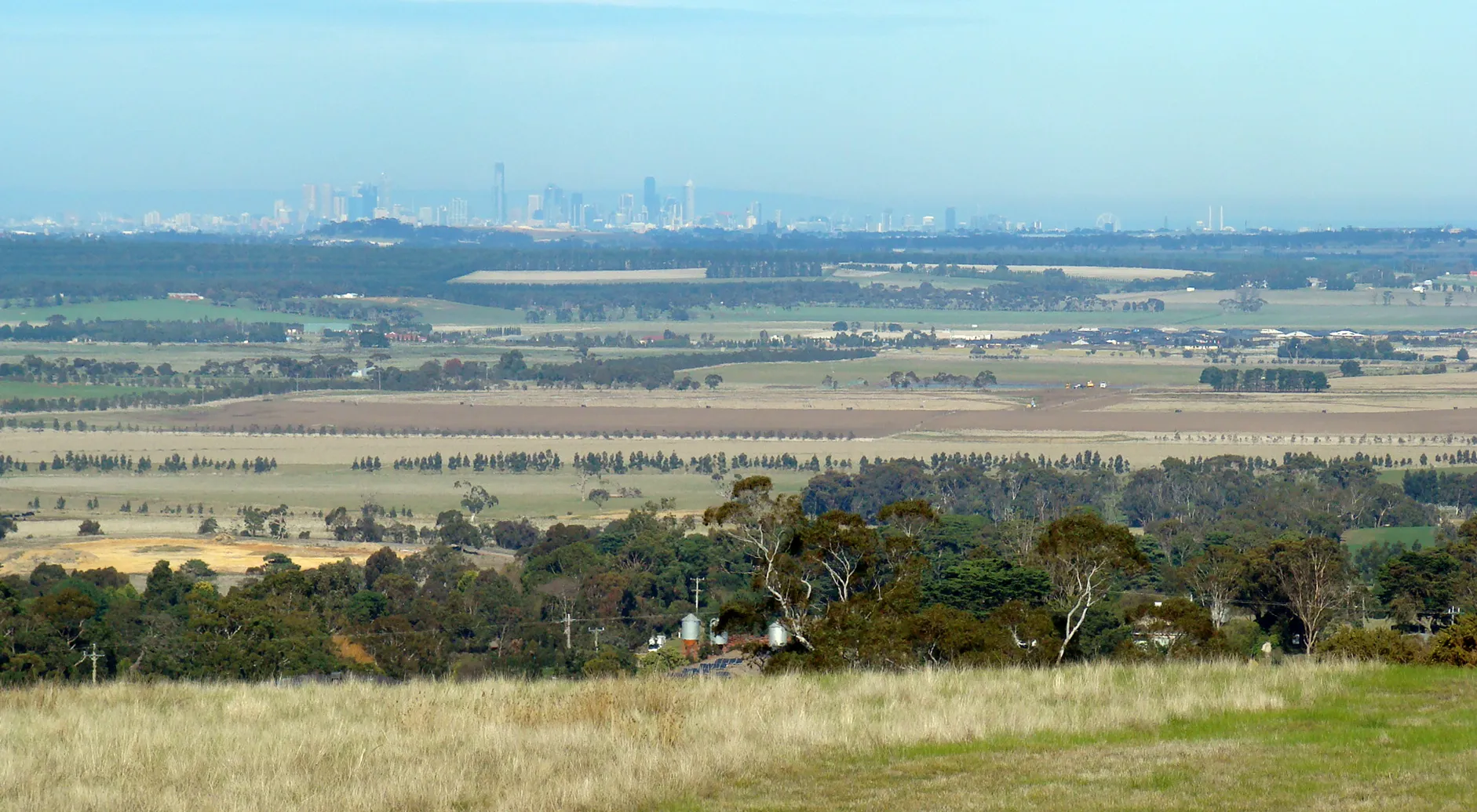
Melbourne CBD. About 47 kilometres south. The V/Line train from Wallan station runs direct to Southern Cross, with the trip taking around 50 to 60 minutes. Many residents commute daily.
Craigieburn and Epping. 20 to 25 minutes down the Hume Freeway for big-format retail, Craigieburn Central, Costco and the major shopping that the local centre doesn't yet provide.
Kilmore. 10 minutes north on the Northern Highway. The historic town that locals lean on for private schools, specialist health services and the closest taste of regional Victoria proper.
Macedon Ranges and Hanging Rock. 30 to 40 minutes west. Day-trip country for wineries, picnics and the kind of weekend escape that doesn't require packing the car for two days.
Melbourne Airport. Around 35 minutes south via the Hume. Closer than for most outer-Melbourne suburbs, and one of the practical reasons families keep choosing Wallan over places further out again.
Saturday morning at the local oval, the carpark fills with utes, dual-cab trade vehicles and family SUVs. Kids in footy and netball uniforms, parents holding takeaway coffees from the strip near the station. Tradies make up a big slice of the workforce here. Healthcare workers, transport and logistics staff, and a steady flow of office commuters who ride the V/Line south every morning round out the picture. Households are mostly couple families with children. The median age is 33, well below the national median, and the proportion of families with kids at home is one of the highest in the region.
The cultural mix is predominantly Anglo-Australian, with English, Irish and Scottish heritage dominant and smaller pockets of Italian and other European backgrounds. First Nations residents make up 6.7% of the population, a notably higher share than most outer-Melbourne suburbs and a meaningful presence in the community fabric. Many newer arrivals are young couples in their late twenties and thirties making the leap from Craigieburn or Epping in search of more land for their money. Multi-generational locals whose grandparents farmed the area still carry the institutional memory of the old Wallan, even as the town reshapes itself around them.
Country-town comfortable. At home in trade culture, Friday-night footy talk and the slower rhythm of a regional main street. Has the patience to build relationships over years, not months, and the resilience to hold a vision through the awkward middle phase of a fringe town becoming a city.
A planter with young kids of their own would have a natural in. Someone who can show up at junior sport, walk into the farmers market and remember names, and build something that feels like Wallan rather than imported from inner-city Melbourne. Polished and performance-driven would feel out of place. Real, present and unpretentious will land.