
West End is Brisbane's bohemian inner south. A peninsula of old Queenslanders, riverfront parks, Greek and Vietnamese kitchens, and apartment towers rising over Boundary Street. Young, secular, culturally alive, and largely untouched by contemporary church.
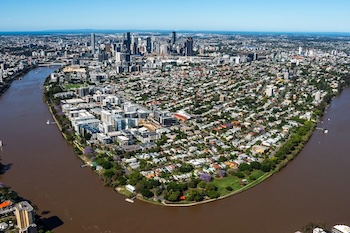
Drive across the Victoria Bridge from the CBD, turn south, and you're in West End. A river-bound peninsula three kilometres from central Brisbane, known to the Jagera and Turrbal people as Kurilpa, place of the water rat. Workers' cottages on narrow streets, a Greek club that's been here since the 1950s, Vietnamese pho shops on Hardgrave Road, and apartment towers climbing along Montague Road.
The 4101 postcode has been Brisbane's bohemian heart for decades. Now it's also one of the city's fastest-densifying inner suburbs, with new buildings rising next to heritage Queenslanders. Saturday mornings, the Davies Park markets fill with locals walking home laden with produce. The character is shifting; the soul is still here.
The ache here is the speed of change. Long-term residents watch character cottages disappear into apartment blocks and the rents climb past what artists and working people can pay. Loneliness runs underneath the busyness; in a suburb of share houses and one-bedroom apartments, you can know the names of three baristas and none of your neighbours. Climate anxiety, mental health, and the precariousness of inner-city renting weigh on the young adult majority.
The anchors are real and varied. Davies Park markets every Saturday. The Souths Logan Magpies playing rugby league at Davies Park. Paniyiri at Musgrave Park each May. The library, the river paths, Orleigh Park. The Greek Club, the Vietnamese restaurants, the small live music venues. Community here is built around place, food and shared streets, not institutions.
The demographic shape is unusual and significant. Nearly 6,000 young adults in 15 square kilometres of riverbound peninsula, growing at 9.2% per year, in a community that is overwhelmingly secular but culturally rich and relationally hungry. The lifestyle and walkability that draws them in also leaves many of them lonely, anxious and searching.
The gap is specific. No Pentecostal-charismatic church is currently embedded on the peninsula. The contemporary evangelical presence is real but limited. A church that learns to inhabit West End, to eat at its tables, walk its streets, take its questions seriously and proclaim Jesus with both warmth and conviction, has room to grow.
This will not be easy. West End is sceptical, opinionated, and resistant to anything that feels imported. But the soil is honest. People here will engage with a real Jesus, offered by real people, in their actual neighbourhood. The opportunity is to build something that belongs.
West End is one of the most secularised parts of Brisbane. Christian affiliation sits at 29.2%, well below the national 43.9%, and over half of residents (54.4%) tick no religion. The texture is not aggressive secularism but soft post-Christianity layered with strong cultural-religious roots in the Greek Orthodox and Vietnamese Catholic communities. Young adults here are largely spiritually curious but allergic to anything that feels institutional, hierarchical, or politically conservative. Faith communities that survive here do so by being deeply local, deeply hospitable, and unembarrassed about Jesus.

The contemporary church footprint on the West End peninsula is thin. Hillsong's Brisbane City campus sits across the river in the CBD. City on a Hill Brisbane meets in the Performing Arts Centre at Brisbane State High and serves a strong young-adult and young-family contemporary evangelical congregation. Beyond those, the visible expression on the peninsula itself is liturgical and traditional, with the heritage Uniting, Anglican and Catholic parishes, plus migrant-language congregations including Greek Evangelical and a Cantonese Alliance plant.
What's missing is a Pentecostal-charismatic expression embedded in West End itself, walking distance from Boundary Street, fluent in the cultural codes of inner-city Brisbane: secular, creative, multicultural, sceptical of religion but open to encounter. A community that takes the Spirit seriously without taking itself too seriously, and that knows how to belong to this peninsula rather than commute into it.
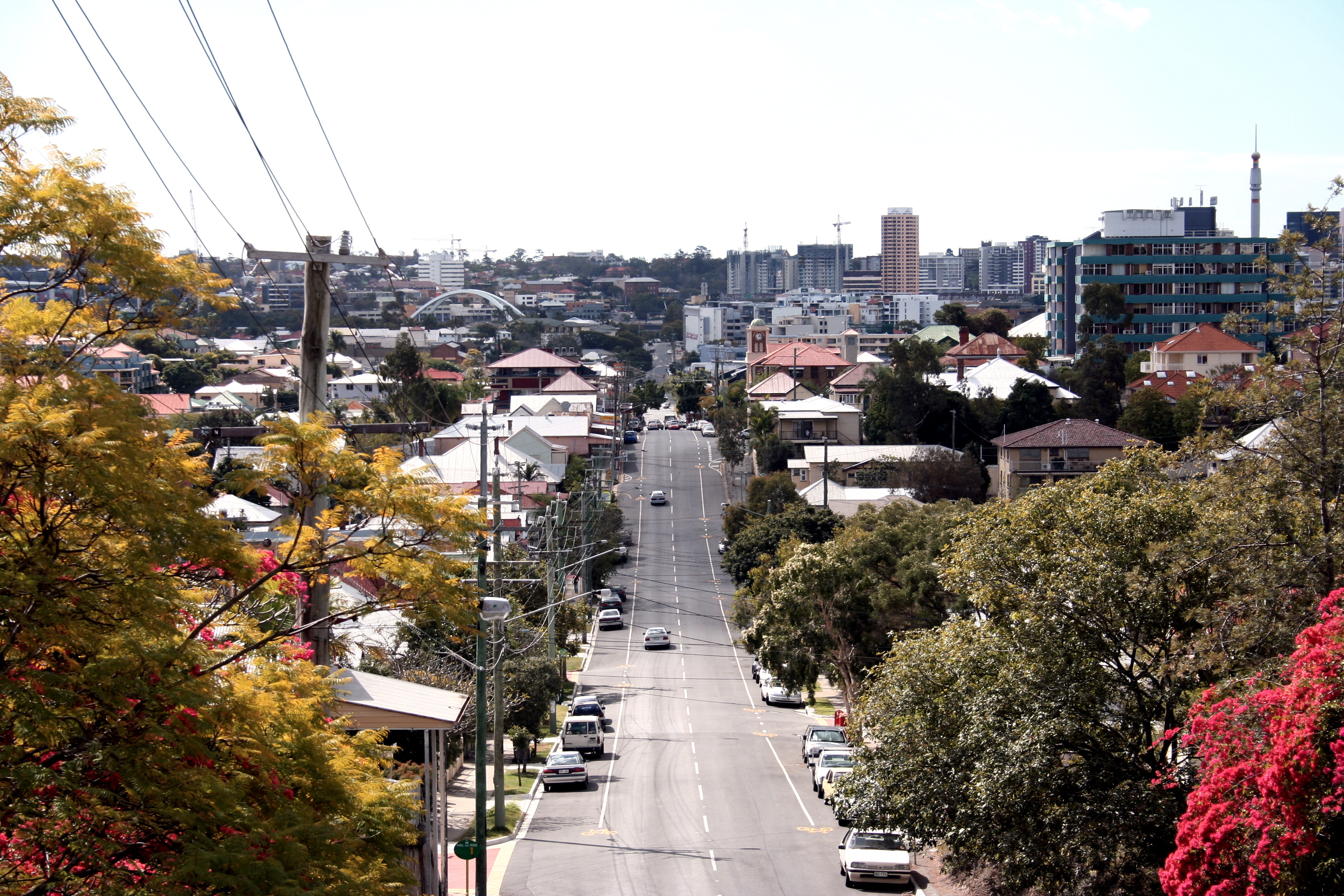
Cost of Living and Housing. West End is expensive. Median house prices sit well above the Brisbane average, with three-bedroom character homes around the 1.6 million mark and four-bedroom Queenslanders pushing close to 2 million. Apartments dominate the rental market, especially along Montague Road. Most residents here rent rather than own, and they pay inner-city money to do it.
Schools and Kids. West End State School sits at the heart of the suburb, and Brisbane State High, one of Queensland's top academically selective schools, is just across the boundary in South Brisbane. The catchment for State High is one of the most fought-over in the city. St Francis of Assisi Catholic primary serves the parish community. Families who stay tend to commit hard.
Weekend Life. Saturday mornings belong to the Davies Park markets. Locals walk in with empty bags, walk out with sourdough, vegetables, coffee, and live music in their ears. Orleigh Park along the river fills with kids on bikes, dogs off leash, and rowers from the Commercial Rowing Club, which has been on this stretch of water since 1877.
Town Centre and Vibe. Boundary Street is the spine. Cafes, vintage shops, Vietnamese kitchens, an independent cinema feel, and the heritage Kurilpa library on the corner. Hardgrave Road and the West Village precinct round out the everyday shopping. Walk score sits among the highest in Brisbane; most residents barely need a car.
Nightlife and Culture. Live music venues, small bars, and a long-running theatre scene. The Paniyiri Greek Festival fills Musgrave Park every May with around 50,000 visitors. Queensland Ballet is based in the suburb. South Bank's restaurants, galleries and the State Library sit ten minutes' walk away across Grey Street.
Brisbane CBD. Two to three kilometres across the river. Walk it across the Kurilpa Bridge in twenty minutes, ride the CityCat from Hoogley Street, or take the CityGlider bus straight up Boundary Street.
South Bank Parklands and QPAC. Ten minutes on foot. The cultural precinct, the Brisbane Convention Centre, the State Library, GOMA and the Queensland Museum are essentially West End's back garden.
University of Queensland (St Lucia). Across the river by ferry from Hill End, or fifteen minutes by car. A constant feeder of students and young adults into the West End rental market.
Mater Hospital and Princess Alexandra Hospital. Five to ten minutes by car. Two of Brisbane's major medical precincts, employing thousands of West End residents.
Brisbane Airport. Twenty to twenty-five minutes by car via the Clem7 and Airport Link tunnels.
Gold Coast and Sunshine Coast. An hour or so south to the Gold Coast beaches, ninety minutes north to Noosa. Both reachable for a long weekend.
Sunday afternoon at Orleigh Park, the picnic blankets are spread out and the conversations roll in half a dozen languages. Young professionals from UQ and the CBD. Artists and creatives who've held on through the gentrification. Long-time Greek families whose grandparents bought houses here in the 1960s. Vietnamese shopkeepers, students from QUT and Griffith, share-house renters in their twenties, and a noticeably visible Aboriginal and Torres Strait Islander community for whom Kurilpa has been home for generations.
The demographic skew is sharp. Median age sits at 33 years, well below the national 38, with nearly 40% of residents in the 15 to 34 bracket. Families with children make up just 27% of the population, against a national average above 40%. Indigenous residents make up 4.6%, double the Brisbane average. This is a suburb of single people, couples without kids, share-house renters, and a few committed family pockets, all squeezed onto a riverbound peninsula.
Urbane, hospitable, comfortable in difference. Reads books, drinks good coffee, can hold a conversation about climate, art, race and Jesus in the same evening. Not threatened by progressive politics or queer neighbours. Knows how to listen before preaching.
Probably best as a couple or small core team rather than a lone planter. Renters themselves, or willing to be. Patient with slow growth. Allergic to hype. Carries a deep prayer life and a confidence in the Spirit that doesn't need to perform. Will struggle here if their natural ministry rhythm is built around suburban families, large kids' programs, or polished production.