
Wolli Creek barely existed twenty years ago. Today it's a vertical suburb of glass towers next to the Cooks River, full of young professionals and international students, twelve minutes from Sydney CBD and five from the airport.
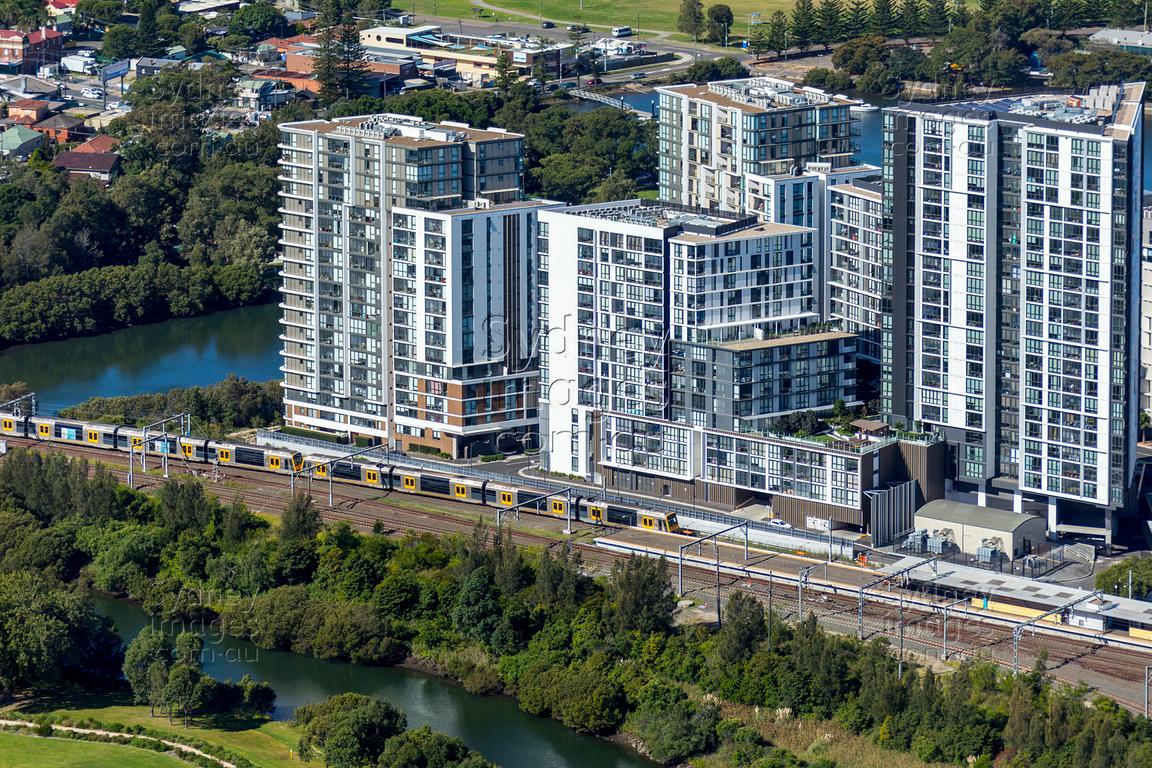
Step out of Wolli Creek station and the suburb stacks above you in glass and concrete. Twenty years ago this was industrial swampland on the wrong side of the Princes Highway. Today it's one of the densest pieces of inner-southern Sydney, built almost entirely from scratch around a single train interchange between the city and the airport.
The Bonar Street precinct keeps growing, with thousands of apartments still in the pipeline. Cahill Park and the Cooks River foreshore give the towers a green edge. Most residents rent. Most are under 35. Most were born overseas. The community here is still working out who it is.
The ache here is invisible from the outside. Behind every glass balcony is someone navigating a new country, a new job, a long-distance relationship, or the strange isolation of living thirty floors up surrounded by strangers. International students arrive without family. Young professionals work long hours and order in. Mortgage and rent stress are real on inner-Sydney prices. Suicide and mental health concerns sit quietly under the surface in a suburb where almost no one has deep roots.
What anchors there are tend to be ethnic and informal. Chinese, Brazilian and Latin American community networks operate in the towers themselves. The Village Square restaurants double as social hubs after work. Cahill Park hosts weekend cricket and informal kickabouts. The Cooks River cycleway is a daily ritual for many. But there is no town hall, no RSL, no long-running sports club, no school P&C anchoring the community. The connective tissue most Australian suburbs rely on simply isn't here yet.
Wolli Creek is one of the densest concentrations of young, multicultural, unreached people anywhere in southern Sydney. Six and a half thousand fifteen-to-thirty-four-year-olds live within a single square kilometre, most born overseas, most without any meaningful Christian connection, almost all walking distance from a single train station. The transport position means a planter could realistically draw from Tempe, Arncliffe, Mascot and Sydenham as well.
The cultural moment is unusually open. International students from China, Latin America and South Asia are at the most spiritually searching point of their lives, far from home and rebuilding identity. Young Australian professionals in the towers are quietly lonely, anxious and asking bigger questions than their feeds suggest. A church that meets people in their own language, at walking distance from their apartment, with an honest community of friends, would meet a real and unmet hunger.
It will not be easy. Transience cuts both ways, venue costs are punishing, and building any sense of permanent community in a renter suburb takes years. But the demographic, the spiritual openness and the geographic concentration line up here in a way that very few Sydney locations match.
Wolli Creek skews noticeably more secular than the national average, with nearly half of residents claiming no religion and Christian affiliation sitting well below the national figure. The picture is not so much hostility to faith as functional indifference: the typical resident is young, mobile, professionally focused, and faith was never part of the move. Many residents come from non-Christian or post-Christian backgrounds in their countries of origin, and the suburb itself offers almost no inherited Christian memory to push back against.

Within Wolli Creek itself there is no contemporary Pentecostal or evangelical church. The closest options sit a few minutes' drive south in Rockdale, with Bay City Church (ACC) the most established Pentecostal presence in the broader St George area, and Potter's House also active in Rockdale. Catholic provision through St Francis Xavier Arncliffe and St Joseph's Rockdale serves the older migrant communities. There is currently nothing aimed at the demographic that actually fills the towers: international students, young professionals, twenty-somethings from Asia and Latin America who would never drive to a church but would walk five minutes from their apartment to one.

Cost of Living and Housing. Wolli Creek is almost entirely apartments. A two-bedroom unit a short walk from the station can still be found around the eight-hundred-thousand mark, which by inner-Sydney standards is rare. Rent absorbs most paychecks. Owner-occupiers are a minority; this is a renter's suburb, and most leases turn over fast.
Schools and Kids. Families with children make up well under half the national average here, and the suburb reflects that. There is no public primary inside Wolli Creek itself; most kids head to Arncliffe Public, Tempe Public or Marrickville West, with St Francis Xavier Arncliffe the local Catholic option. Playgrounds at Cahill Park and Discovery Point fill on weekends, but this is not a school-gate community.
Weekend Life. Saturday mornings the Cooks River cycleway fills with runners, prams and roadies in lycra. The Wolli Creek Regional Park bushland trail runs west toward Bardwell Valley. Brunch happens in the Village Square cafes, or a five-minute drive away in Marrickville's much bigger food scene.
Town Centre and Vibe. The Village Square at the base of the towers is the centre of gravity: Woolworths, a few banks, dumpling shops, bubble tea, Korean barbecue, Brazilian bakeries. Most signage is bilingual. The vibe is functional more than charming, but on a warm evening with the river path lit up, it works.
Nightlife and Culture. There isn't much late-night life in Wolli Creek itself. People walk to Tempe for a craft beer, or train one stop to Sydenham and Marrickville for live music, breweries and the inner-west scene. Late-night supper means Chinese hot pot or Vietnamese noodles within the towers themselves.
Sydney CBD. Twelve to fifteen minutes by train on the T4 or T8 line. Wolli Creek is one of the best-connected commuter suburbs in Sydney.
Sydney Airport. One stop on the airport line, around five minutes door to terminal. A defining feature of the suburb and a major draw for cabin crew, FIFO workers and international students.
UNSW and University of Sydney. Twenty to thirty minutes by bus or a combination of train and light rail. A significant chunk of residents are tertiary students or recent graduates.
Westfield Hurstville and Rockdale Plaza. Ten to fifteen minutes by car or train for full-service shopping that the small Village Square cannot cover.
Brighton-Le-Sands and Botany Bay beaches. Around ten minutes by car. The closest stretch of coast for an after-work swim or a sunset walk.
Marrickville and the Inner West. Five to ten minutes by car or one train stop. Where Wolli Creek residents go for the food, music and pub scene the suburb itself doesn't have.
On a weekday morning the platform at Wolli Creek station fills with commuters in their twenties and thirties: tech workers heading to the city, nurses bound for RPA or St George, cabin crew rolling suitcases toward the airport, university students with headphones in. More than seven in ten residents were born overseas. The largest group by far is Chinese, with significant Colombian, Brazilian, Nepalese, Indian and Vietnamese communities woven through the towers. English is one language among many spoken in the lifts.
This is a young, single, transient suburb. The median age sits around thirty, more than half of residents are between fifteen and thirty-four, and families with children make up a much smaller share than the national picture. Many people are here for a season: a first apartment after moving out of home, a landing pad after arriving in Australia, a base while studying, a convenient stop before the next move. The flip side is real loneliness and the question of who actually belongs to whom in a place where neighbours change every six months.
Cross-cultural by instinct, not just by training. Comfortable in a Mandarin conversation, a Portuguese one and an Australian one in the same evening. At home in apartment lifts, hotpot restaurants and the bottom of a Cooks River walking trail. Bivocational-friendly, because rents and venue costs in this part of Sydney are unforgiving.
Patient with transience. The planter who thrives here accepts that half the congregation may be gone in eighteen months and disciples them anyway. Skilled at building belonging quickly: meals in apartments, walking groups, language-friendly small groups. Not threatened by a community where Christianity is foreign rather than fading.