
Zetland is the heart of Sydney's Green Square renewal: 12,000 mostly-young professionals living in new apartment towers four kilometres from the CBD, where industrial pasts have given way to one of Australia's largest urban transformations.
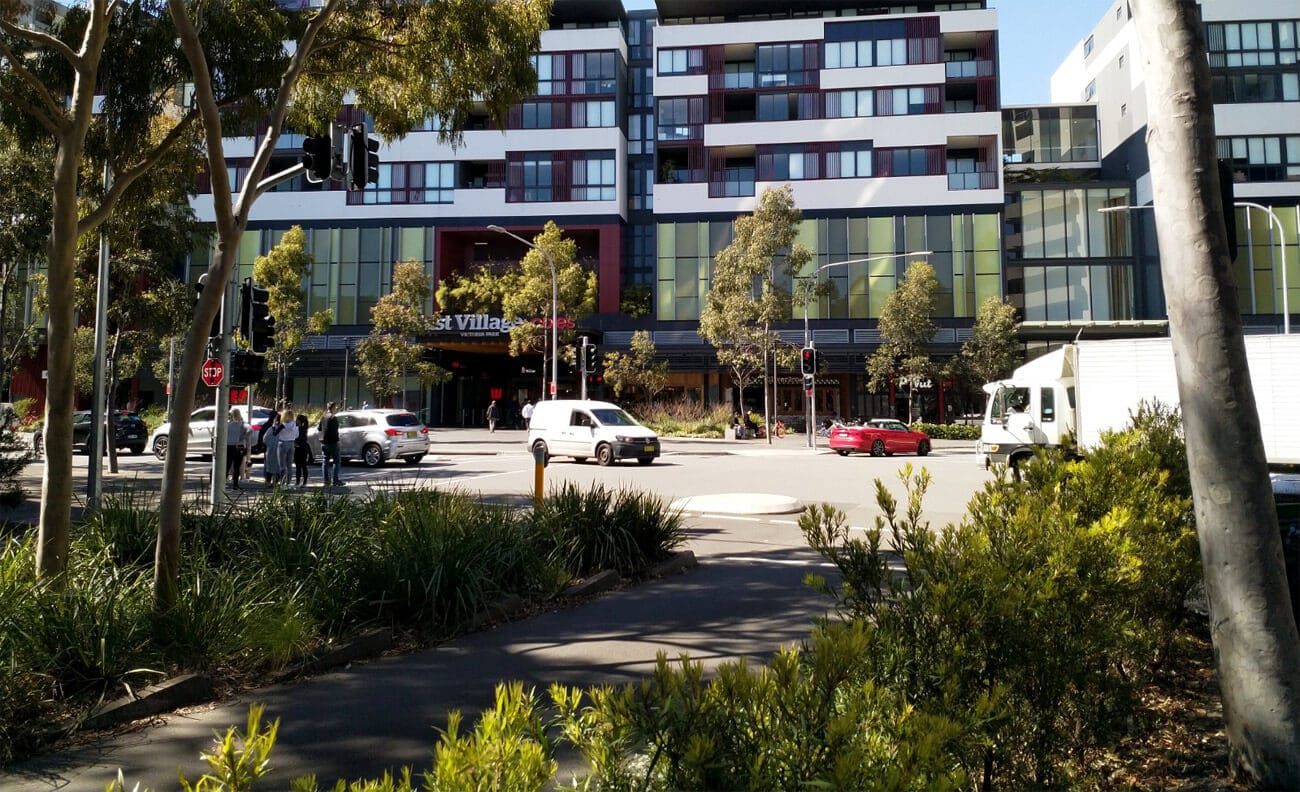
A decade ago, Zetland was warehouses, panel beaters and the old Victoria Park Racecourse. Today it's apartment towers, rooftop gardens and a brand-new town centre rising around Green Square Station. The City of Sydney has poured roughly half a billion dollars into the public realm here. Mirvac, Meriton, Deicorp and Greystar have poured billions more.
By 2030 the broader Green Square area is projected to be home to 50,000-plus new residents. The library is already underground. The aquatic centre is already swimming. What's still being figured out, in all that construction, is what kind of community forms when 13,000 strangers move into the same square kilometre at once.
The ache here is loneliness in plain sight. Thirty per cent of households are single-person. Two-thirds of adults have never married. People live two metres above and below each other and barely know each other's names. Mortgage and rent stress is real even on professional incomes. Burnout is a recurring theme in the marketing language used to sell the apartments themselves, which says something. Many residents are first-generation migrants navigating a new country in a tower of strangers.
The anchors are still emerging. The Green Square Library and plaza. The Gunyama Park pool. The Joynton Avenue Creative Centre. The community gardens at Tote Park and Joynton Park. Resident action groups, run-clubs, dog parks, the East Village atrium on a wet Saturday. None of it deeply rooted yet. All of it doing real work.
Zetland sits at the meeting point of three powerful currents: extreme demographic youth, rapid population growth, and one of the highest secular rates in the country. Six in ten residents are aged 15 to 34. The population is on track to roughly double across the broader Green Square area within a decade. More than half hold no religious affiliation. There is no contemporary Pentecostal church planted in the heart of these towers.
The cultural moment matters. This is a generation reading about loneliness, burnout and meaning in long-form essays and TikTok therapy, living it in glass apartments four floors apart. Spiritual curiosity is rising, particularly among the second-generation Chinese-Australian community for whom Christian faith is a fresh question rather than an inherited assumption.
The challenge is honest: secular ground is hard, costs are high, transience is real, and gathering people who barely know their neighbours takes years not months. The opportunity is equally honest. A church that lands well here lands in the centre of one of Australia's youngest, densest, most globally-connected mission fields, with thirty more years of growth still ahead of it.
More than half of Zetland residents tick "no religion" on the census, well above the national rate, and Christian affiliation sits at 28.3% against a national average closer to 44%. This is one of the most secular postcodes in the country, but the texture is more interesting than the headline. A large slice of that secular majority comes from a Chinese-born population for whom Christianity is unfamiliar rather than rejected, and a younger professional cohort that is post-Christian rather than anti-Christian. Curious, busy, lonely, open if asked well.

The contemporary church presence in the Green Square area is real but thin for the population it serves. Hillsong's Waterloo city campus sits roughly a kilometre away and draws large numbers, but its scale and brand mean it operates at a different register than a local plant. Sydney Anglican has placed Grace City Church on Bourke Street and one1seven Church in Redfern-Waterloo, both gospel-centred and growing. Beyond those, the area's other churches are heritage Catholic, Uniting and Salvation Army congregations not aimed at the apartment-tower demographic.
The gap is a Spirit-filled, contemporary, locally-rooted church that speaks the language of secular young professionals, that knows how to gather Mandarin- and Cantonese-speaking residents alongside Anglo and South-Asian neighbours, and that lives at street level in the towers rather than commuting in for a service. With 33,000 new homes still to come across the broader area, that gap will widen before it narrows.
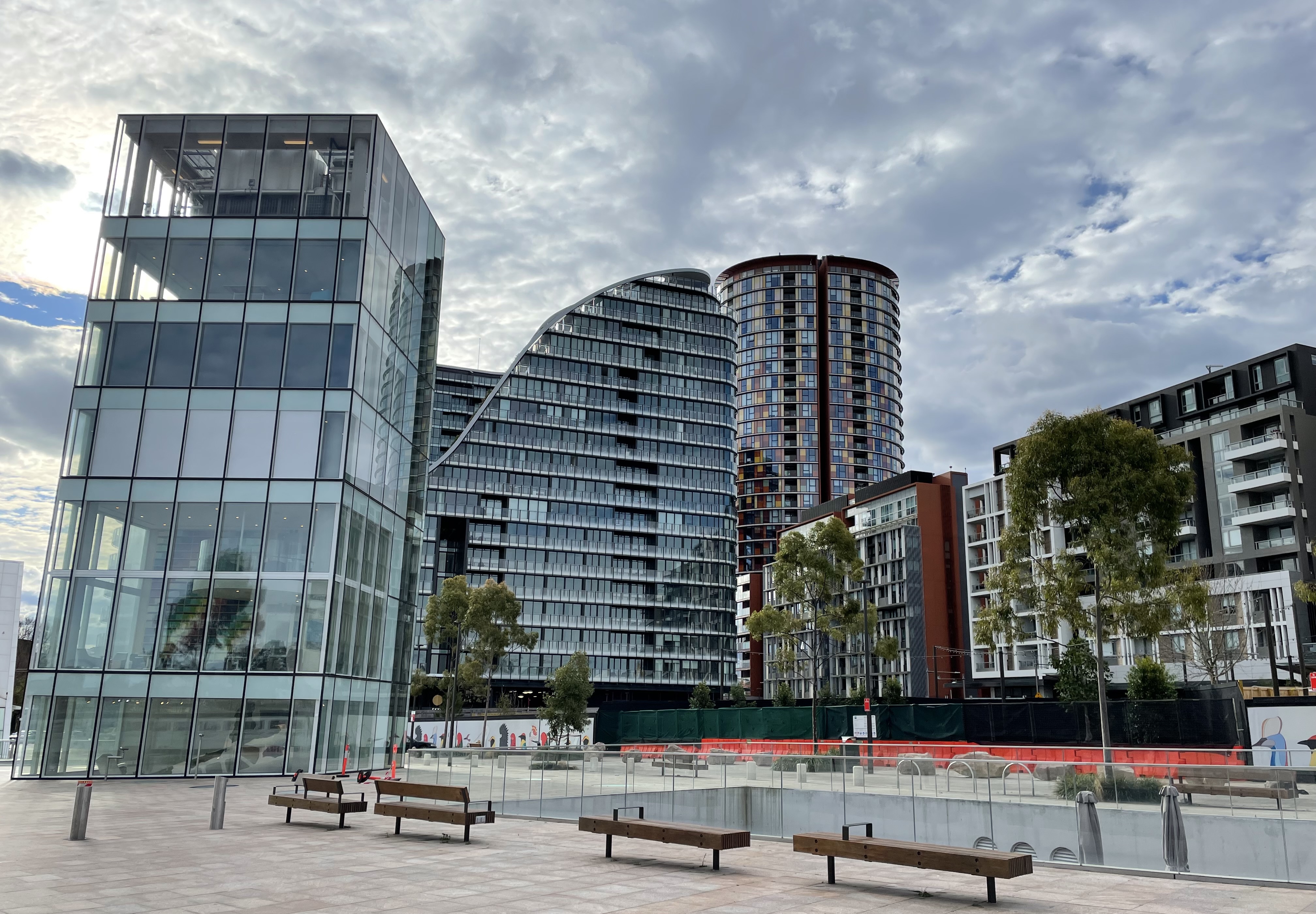
Cost of Living and Housing. Zetland is apartments, almost entirely. Median rent in the area sits around $600 a week, household incomes are well above the Sydney average, and most residents are renters rather than owners. New one-bedrooms start around the high six figures and quickly climb past a million for two-bedders with a view. Houses barely exist.
Schools and Kids. Family numbers are low for a reason: this is not yet a kid-heavy suburb. The closest options are Yudi Gunyi School and the surrounding Waterloo, Alexandria and Bourke Street public schools. A new primary school is planned for the former South Sydney Hospital site on Joynton Avenue to cope with the growing population.
Weekend Life. Saturdays revolve around East Village shopping centre, the Drying Green park, the Gunyama Park aquatic centre, and laps of the cafes spilling out of converted warehouses in Alexandria. Centennial Park, Moore Park and the beaches at Coogee and Bondi are all a short drive or bus ride away.
Town Centre and Vibe. The Green Square town centre is the gravitational pull: the underground library, the plaza, the new retail. The vibe is contemporary, dense, multicultural, walkable. Bourke Street and Joynton Avenue carry most of the foot traffic. Construction cranes are still part of the skyline.
Nightlife and Culture. Surry Hills, Redfern and the CBD are minutes away by train. The local scene leans toward small bars, urban distilleries, dumpling shops and converted-warehouse cafes in adjacent Alexandria. Joynton Avenue Creative Centre and a handful of small galleries handle the local arts side.
Sydney CBD. Four kilometres north. Eight minutes by train from Green Square Station, around 25 minutes by bus through Surry Hills.
Sydney Airport. Two stops south on the T8 Airport line. Around ten minutes door to terminal.
Bondi and the Eastern Beaches. Twenty minutes by car. Forty minutes via bus and train. Coogee is closer.
University of Sydney and UNSW. Both within a fifteen-minute bus or bike ride. UTS is one stop from Central. The student presence is real but not dominant.
Royal Prince Alfred Hospital. Around fifteen minutes by car through Camperdown. St Vincent's in Darlinghurst is closer for emergencies.
Centennial Park and Moore Park. Ten minutes by car or bike. The closest large green space and the venue for SCG cricket and Allianz Stadium events.
Walk into the East Village food court at lunchtime on a weekday and the picture comes into focus quickly. Mandarin and Cantonese threading through every conversation. Dumpling queues. Young couples in activewear meeting between meetings. The Zetland area has, for years, been one of the most Chinese suburbs in New South Wales, and that's still the dominant cultural presence, alongside renters and buyers from across South-East Asia, the subcontinent and a steady flow of expat professionals from the UK, Ireland and Brazil.
Demographically this is one of the youngest suburbs in Australia. Median age 30. Six in ten residents aged 15 to 34. Most have a university degree, most work in professional or managerial roles, most rent. Family households are unusually rare. So are kids. The picture is single professionals, couples without children, share-house mid-twenties, and a smaller layer of older downsizers from the eastern suburbs choosing apartment life over a house and lawn.
Urban-comfortable, culturally fluent, theologically clear. At ease with a Mandarin conversation in the lift, a Tinder-dating thirty-year-old at a coffee, and a downsizing baby boomer at a dinner. Someone who reads the city, walks the streets, and finds the third places.
Probably a couple or single in their late twenties to forties. Probably already living in or near the inner city. Comfortable in apartment life, comfortable with density, comfortable with secular friends. Patient. The harvest here is real but slow, and the soil is busy.